
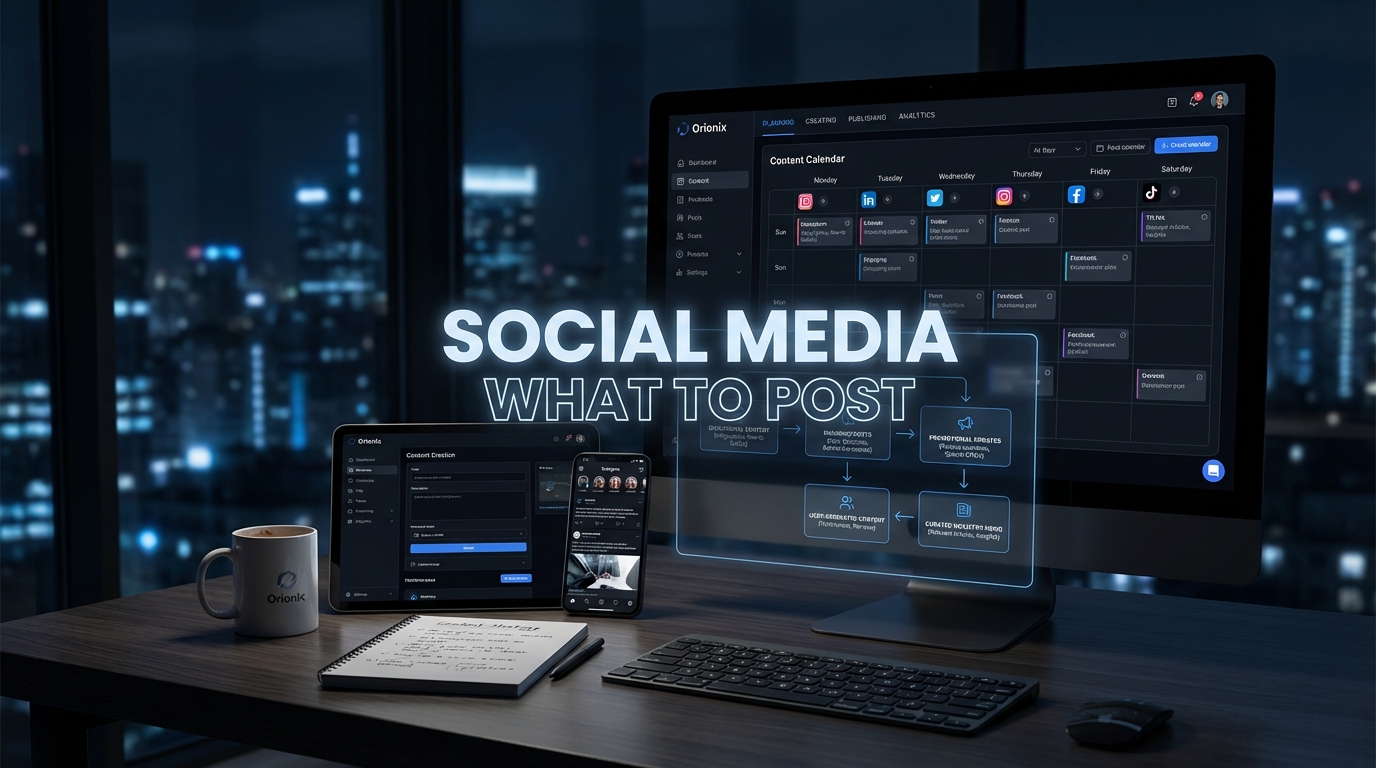
TL;DR: When deciding what to post on social media, focus on educational content, behind-the-scenes glimpses, user-generated content, industry news, and engaging questions. Mix promotional posts with value-driven content using the 80/20 rule. A centralized platform like Orionix helps streamline planning and publishing across multiple channels, ensuring consistent, strategic content delivery.
Frequently Asked Questions
What should I post on social media to engage my audience?
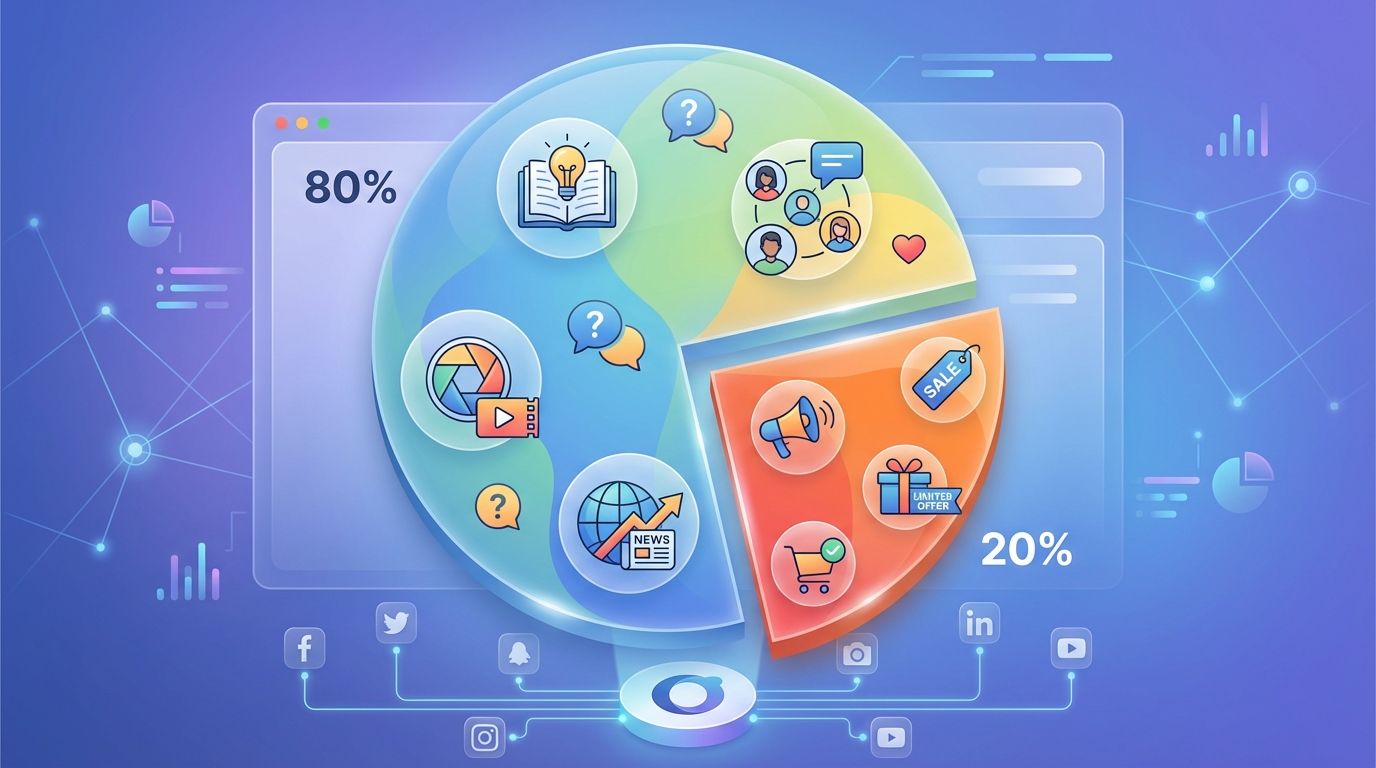
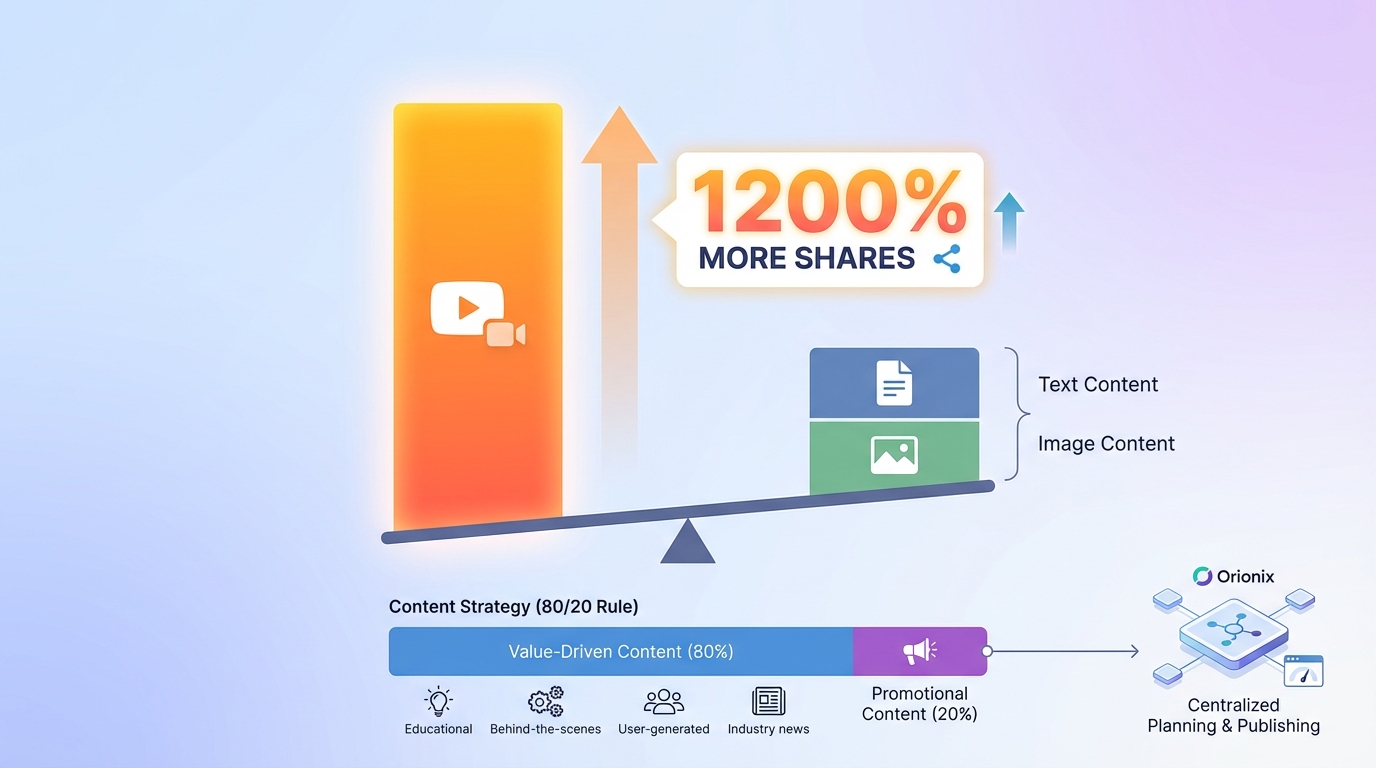
Post a mix of educational content, behind-the-scenes glimpses, user-generated content, industry news, and promotional material following the 80/20 rule (80% value-driven, 20% promotional). Include visual content like images, videos, and infographics. Use content calendars and platforms like Orionix to plan and schedule posts consistently across multiple social media platforms, ensuring your content aligns with audience interests and peak engagement times.
What are the best times to post on Instagram for maximum engagement?
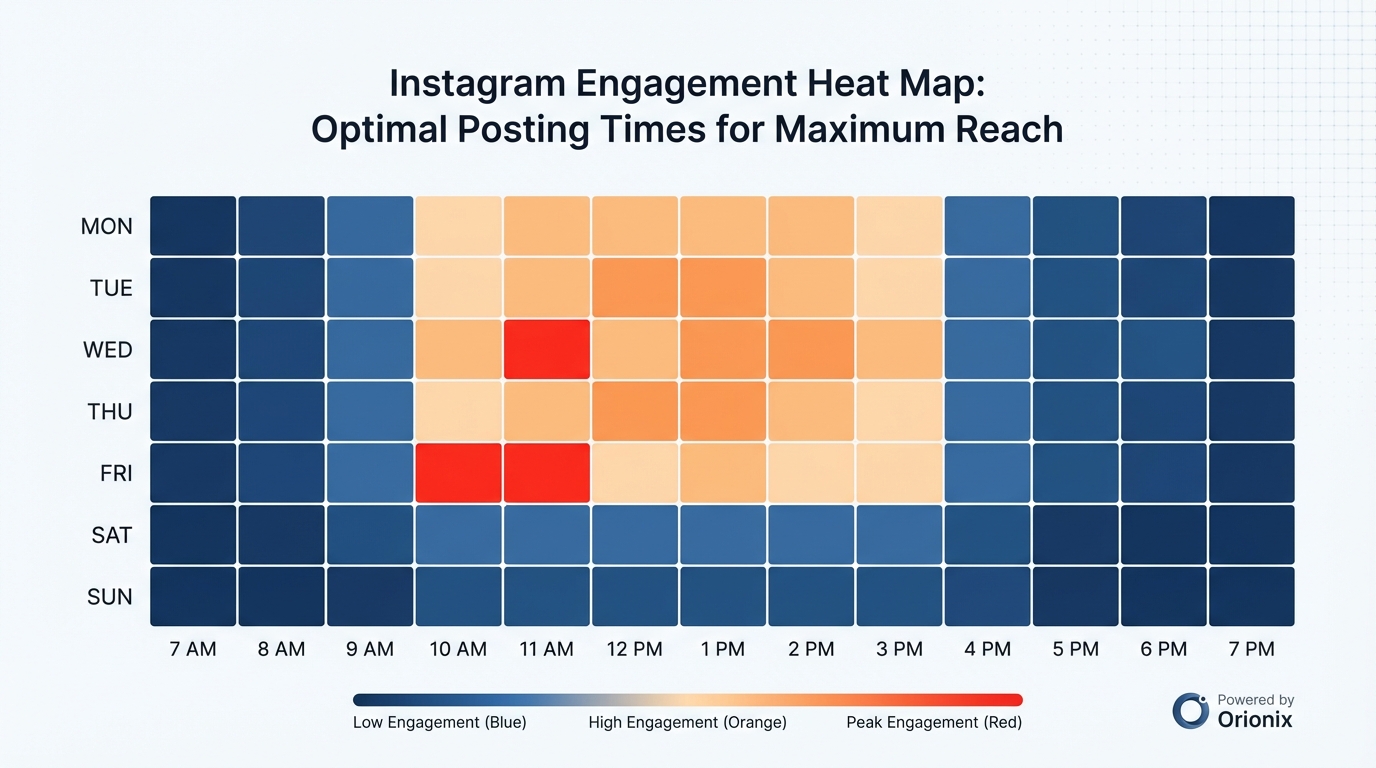
The best times to post on Instagram are typically weekdays between 10 AM-3 PM, with peak engagement occurring on Wednesdays at 11 AM and Fridays at 10-11 AM. However, optimal posting times vary by industry and audience demographics. Analyze your Instagram Insights to identify when your specific followers are most active, and use scheduling tools to consistently post during these high-engagement windows for better reach and interaction.
How can social media marketing platforms help streamline content creation?
Social media marketing platforms like Orionix centralize content planning, creation, and publishing across multiple channels through a single dashboard. These tools enable batch content creation, automated scheduling, cross-platform posting, performance analytics, and team collaboration. By streamlining workflows, they save time, maintain consistency, reduce manual errors, and allow marketers to focus on strategy rather than repetitive tasks, making digital marketing more efficient and effective.
What types of content perform best on social media platforms?
Video content, especially short-form videos, consistently performs best across social media platforms, generating 1200% more shares than text and images combined. Other high-performing content types include carousel posts, user testimonials, interactive polls, educational infographics, trending topic commentary, and authentic behind-the-scenes content. The key is matching content format to platform strengths while maintaining authenticity and providing genuine value to your target audience.
How do you delete an Instagram account permanently?
To permanently delete an Instagram account, visit instagram.com/accounts/remove/request/permanent/ while logged in (deletion isn’t available in-app). Select a reason for deletion, re-enter your password, and click ‘Permanently delete my account.’ Note that deletion is irreversible after 30 days, and all photos, videos, comments, and followers will be permanently removed. Alternatively, you can temporarily deactivate Instagram to hide your profile without losing data.
How to deactivate Instagram temporarily instead of deleting it?
To deactivate Instagram temporarily, log in via web browser, go to your profile, click ‘Edit Profile,’ scroll down and select ‘Temporarily deactivate my account’ at the bottom right. Choose a reason from the dropdown menu, re-enter your password, and confirm. Your profile, photos, and comments will be hidden until you reactivate by logging back in. Unlike deletion, deactivation preserves all your content and can be reversed anytime.
What is the difference between social media marketing and digital marketing?
Social media marketing is a subset of digital marketing that focuses specifically on promoting content and engaging audiences through social platforms like Instagram, Facebook, and LinkedIn. Digital marketing encompasses all online marketing efforts, including email marketing, SEO, paid advertising, content marketing, and website optimization. While social media marketing builds community and brand awareness, digital marketing represents the broader strategy of reaching customers through all digital channels and touchpoints.
How often should I post on social media platforms for business growth?
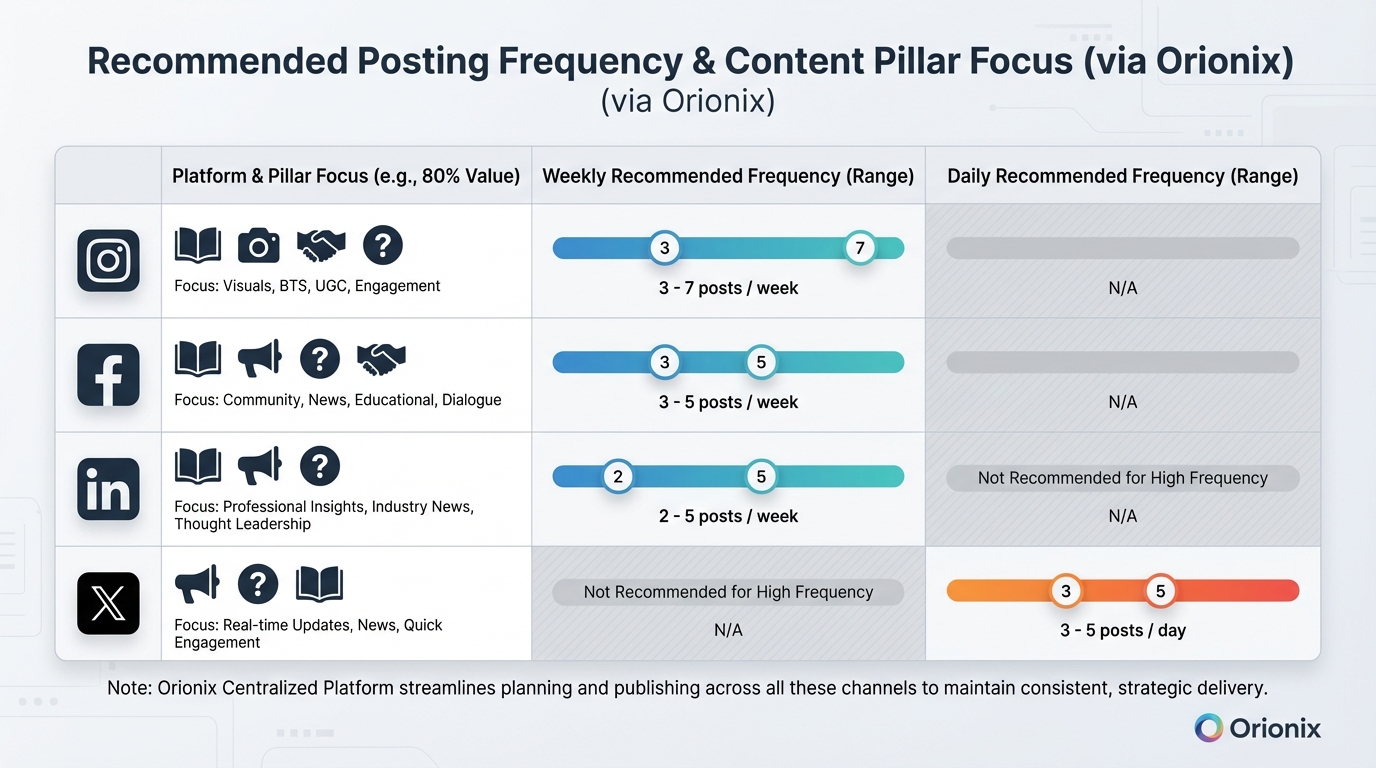
Optimal posting frequency varies by platform: Instagram 3-7 times weekly, Facebook 3-5 times weekly, LinkedIn 2-5 times weekly, and Twitter/X 3-5 times daily. Consistency matters more than frequency—regular posting builds audience expectations and algorithm favor. Use content management platforms like Orionix to maintain consistent schedules without overwhelming your team. Monitor engagement metrics to find your sweet spot, as quality content posted consistently outperforms high-frequency, low-value posts.
Understanding Social Media Content Strategy: What to Post for Maximum Engagement
Deciding what to post on social media can feel overwhelming, especially when you’re managing multiple platforms and trying to maintain consistent engagement. Whether you’re a seasoned marketer or just starting with social media marketing, understanding what content resonates with your audience is crucial for building a strong online presence. The question of « social media what to post » is one that every content creator, brand, and digital marketing professional faces daily. 📱
The landscape of social media platforms continues to evolve rapidly, and what worked yesterday might not work tomorrow. From Instagram’s visual storytelling to LinkedIn’s professional insights, each platform demands a unique content approach that aligns with user expectations and algorithmic preferences.
In this comprehensive guide, we’ll explore proven content strategies, optimal posting times, and practical frameworks that will transform your social media presence from mediocre to memorable. Let’s dive into the art and science of creating content that actually connects with your audience.
The Foundation: Understanding Your Audience and Platform
Know Your Audience Before You Post 🎯
Before creating any content, you need to understand who you’re speaking to. Your audience’s demographics, interests, pain points, and online behavior should inform every piece of content you create.
- Demographics matter: Age, location, profession, and income level influence content preferences
- Behavioral patterns: When your audience is online affects visibility and engagement
- Content consumption habits: Some audiences prefer video, others gravitate toward infographics or text posts
- Platform-specific expectations: LinkedIn users expect professional content, while Instagram users want visual storytelling
Platform-Specific Content Requirements
Each social media platform has unique characteristics that should guide your content strategy. Understanding these nuances is essential for marketing digital marketing success.
| Platform | Best Content Types | Optimal Post Length | Engagement Driver |
|---|---|---|---|
| Photos, Reels, Stories, Carousels | 125-150 characters | Visual appeal, hashtags | |
| Videos, Photos, Links, Live streams | 40-80 characters | Emotional connection | |
| Articles, Industry insights, Professional updates | 150-300 words | Value and expertise | |
| Twitter/X | News, Opinions, Threads | 71-100 characters | Timeliness, conversation |
| TikTok | Short videos, Trends, Tutorials | 15-60 seconds | Entertainment, authenticity |
The 7 Essential Content Pillars for Social Media Success
1. Educational Content: Teach Your Audience Something Valuable 📚
Educational content positions you as an authority in your field while providing genuine value to your followers. This type of content typically generates high engagement and shares because it solves problems or answers questions.
- How-to guides and tutorials (check out our guide on Instagram How-To Videos)
- Industry tips and best practices
- Step-by-step processes
- Myth-busting posts that clarify common misconceptions
- Quick tips and hacks related to your niche
2. Entertainment Content: Keep Your Audience Engaged 🎭
People use social media and platforms primarily for entertainment. Content that makes people laugh, smile, or feel good performs exceptionally well across all platforms.
- Memes relevant to your industry
- Behind-the-scenes glimpses of your business
- Fun challenges or interactive polls
- Relatable content that resonates with your audience’s daily experiences
- User-generated content showcasing customer experiences
3. Inspirational Content: Motivate and Uplift ✨
Inspirational content creates emotional connections with your audience. It’s particularly effective for building brand loyalty and fostering a community around shared values.
- Success stories and testimonials
- Motivational quotes with branded visuals
- Transformation posts showing before-and-after results
- Personal stories that demonstrate resilience or growth
- Community spotlights featuring customers or team members
4. Promotional Content: Drive Conversions Strategically 💼
While promotional content is necessary for business growth, it should comprise only 20-30% of your total content mix. The key is making promotional posts valuable rather than pushy.
- Product launches with compelling storytelling
- Limited-time offers with clear value propositions
- Service highlights demonstrating benefits
- Case studies showing real results
- Special announcements that create urgency
5. Conversational Content: Build Community Engagement 💬
Content that sparks conversations helps build a loyal community around your brand. This type of content prioritizes engagement over reach.
- Questions that encourage audience participation
- Polls and surveys gathering opinions
- Fill-in-the-blank posts
- Debate topics relevant to your industry
- Caption contests or creative challenges
6. News and Trending Content: Stay Relevant ⚡
Timely content demonstrates that your brand is current and engaged with the broader conversation. This content type can significantly boost visibility when executed well.
- Industry news and updates
- Commentary on trending topics
- Seasonal content tied to holidays or events
- Real-time responses to current events
- Trend participation that aligns with your brand
7. User-Generated Content: Amplify Your Community 🌟
User-generated content (UGC) serves as authentic social proof while making your followers feel valued. It’s one of the most cost-effective content strategies available.
- Customer photos and videos featuring your products
- Reviews and testimonials
- Community challenges with branded hashtags
- Reposted content with proper credit
- Customer success stories
Timing Matters: When to Post on Social Media
Understanding the Best Time to Post on Instagram and Other Platforms ⏰
Knowing what to post is only half the battle; understanding when to post is equally crucial. The best time to post on Instagram and other platforms varies based on your specific audience, but general patterns exist.
For those looking to grow their presence organically, our guide on How to Instagram Followers Free offers valuable strategies that complement optimal posting times.
| Platform | Best Days | Best Times (EST) | Worst Times |
|---|---|---|---|
| Tuesday-Friday | 9 AM, 12 PM, 7 PM | Sundays after 8 PM | |
| Wednesday-Friday | 9 AM-2 PM | Saturdays | |
| Tuesday-Thursday | 8 AM-10 AM, 12 PM | Weekends | |
| Twitter/X | Monday-Friday | 8 AM, 12 PM, 5 PM | Weekends after 3 PM |
| TikTok | Tuesday-Thursday | 6 AM, 10 AM, 10 PM | Monday mornings |
Factors Influencing Optimal Posting Times
The best times to post on Instagram and other platforms depend on several variables that you should test and refine over time.
- Audience location: Time zones significantly impact when your content gets seen
- Industry specifics: B2B audiences behave differently than B2C consumers
- Platform algorithms: Each platform prioritizes recent, engaging content differently
- Historical performance: Your own analytics reveal when YOUR audience is most active
Content Formats That Drive Engagement
Video Content: The Engagement Powerhouse 🎥
Video content consistently outperforms other formats across virtually all social media platforms. Short-form video, in particular, has become essential for social media marketing success.
- Reels and TikToks: 15-60 second videos that entertain or educate
- Live streams: Real-time connection with your audience
- Stories: Ephemeral content that creates urgency (learn How to Stop Sharing Instagram Stories to Facebook if you want platform-specific control)
- Long-form content: In-depth tutorials or interviews for YouTube
- Video testimonials: Authentic customer experiences
Static Images: Still Powerful When Done Right 📸
Despite the rise of video, well-crafted images remain highly effective, especially when they tell a story or provide clear value.
- High-quality product photography
- Infographics that simplify complex information
- Quote graphics with branded design
- Before-and-after comparisons
- Carousel posts that tell a sequential story
Text-Based Content: Don’t Underestimate Words ✍️
Text posts, particularly on LinkedIn and Twitter, can generate significant engagement when they provide genuine insight or spark meaningful conversations.
- Thought leadership posts sharing unique perspectives
- Personal stories that humanize your brand
- Lists and tips formatted for easy scanning
- Questions that encourage discussion
- Industry commentary and analysis
Creating a Balanced Content Calendar
The 80/20 Rule for Social Media Content 📊
A successful content strategy balances value-driven content with promotional material. The widely accepted 80/20 rule suggests that 80% of your content should educate, entertain, or inspire, while only 20% should directly promote your products or services.
For Entry Level Social Media Marketing professionals, understanding this balance is crucial for building sustainable audience growth.
Weekly Content Mix Framework
Here’s a practical framework for distributing content types throughout the week:
| Day | Content Type | Purpose | Format |
|---|---|---|---|
| Monday | Motivational | Start the week positively | Quote graphic or story |
| Tuesday | Educational | Provide value | Tutorial or tip post |
| Wednesday | Conversational | Boost engagement | Poll or question |
| Thursday | Behind-the-scenes | Build connection | Story or video |
| Friday | Entertainment | End week on fun note | Meme or lighthearted content |
| Weekend | User-generated | Community spotlight | Repost or testimonial |
Adapting Your Strategy Based on Analytics
Your content calendar should be flexible and data-driven. Regularly analyze which posts perform best and adjust your strategy accordingly.
- Track engagement rates for different content types
- Monitor which topics resonate most with your audience
- Test different posting times and frequencies
- Analyze competitor content for inspiration and differentiation
- Use platform-specific insights to refine your approach
Platform-Specific Content Strategies
Instagram Content Strategy 📷
Instagram remains one of the most powerful platforms for visual storytelling and brand building. Understanding how to maximize your presence requires knowledge beyond just posting pretty pictures.
If you’re looking to expand your reach, check out our guide on Free Instagram Views to boost your visibility organically. Additionally, learning How to Follow Hashtags on Instagram can help you stay connected with trending topics in your niche.
- Feed posts: High-quality images and carousels that tell stories
- Reels: Short, engaging videos that leverage trending audio
- Stories: Daily behind-the-scenes content and quick updates
- IGTV/Long-form video: Detailed tutorials and in-depth content
- Live streams: Real-time Q&As and product launches
LinkedIn Content Strategy 💼
LinkedIn content should establish thought leadership and professional credibility. The platform rewards authentic, value-driven content that sparks professional conversations.
- Industry insights and trend analysis
- Professional development tips
- Company culture and team highlights
- Long-form articles demonstrating expertise
- Career advice and mentorship content
Facebook Content Strategy 👥
Facebook’s diverse user base requires a balanced approach that combines community building with strategic promotion.
- Community-focused posts that encourage discussion
- Video content, especially native uploads
- Event promotion and community gatherings
- Customer testimonials and reviews
- Live videos for product demonstrations
TikTok and Short-Form Video Strategy 🎬
TikTok and similar short-form video platforms demand authenticity, creativity, and trend awareness.
- Participate in trending challenges relevant to your brand
- Create educational content in entertaining formats
- Show personality and authenticity over polish
- Use trending sounds strategically
- Engage with comments to boost algorithmic visibility
Content Creation Best Practices
Writing Compelling Captions That Convert ✍️
Your visual content may capture attention, but your captions drive action. Effective captions combine storytelling, value, and clear calls-to-action.
- Hook them immediately: The first line determines whether people read more
- Tell stories: Narratives create emotional connections
- Add value: Every caption should teach, entertain, or inspire
- Include clear CTAs: Tell people exactly what action to take
- Use strategic spacing: Break up text for easy scanning
Visual Consistency and Branding 🎨
Consistent visual branding makes your content instantly recognizable and professional. For more on creating cohesive visuals, explore our guide on Social Media Backgrounds.
- Maintain consistent color schemes across posts
- Use branded templates for recurring content types
- Apply consistent filters or editing styles
- Include logo or watermark strategically
- Create platform-specific visual guidelines
Hashtag Strategy for Maximum Reach 🏷️
Strategic hashtag use expands your content’s reach beyond your existing followers. The key is balancing popular, niche, and branded hashtags.
- Mix hashtag sizes: Combine high-volume and niche tags
- Research competitors: See which hashtags work in your industry
- Create branded hashtags: Build community around unique tags
- Stay relevant: Only use hashtags directly related to your content
- Platform-specific limits: Instagram allows 30, LinkedIn recommends 3-5
Managing and Maintaining Your Social Media Presence
Account Management Essentials 🔧
Effective social media marketing requires more than just posting content. You need to understand platform management, including when and how to make account changes.
Sometimes managing your presence means knowing when to step back. If you need to take a break, learn How to Deactivate Instagram temporarily. For permanent changes, understanding how can you delete an Instagram account or how do you delete an Instagram account is important for account lifecycle management.
Engagement Management Strategies
Posting content is just the beginning. Active engagement with your audience builds community and signals to algorithms that your content is valuable.
- Respond to comments within the first hour of posting
- Ask follow-up questions to extend conversations
- Engage with other accounts in your niche daily
- Monitor mentions and tagged posts
- Handle negative feedback professionally and promptly
Managing Your Following and Followers
Maintaining a healthy follower base sometimes requires pruning. Learn How to Unfollow on Instagram to keep your feed relevant, and understand How to Block Someone on Instagram when necessary for account security.
If you’re wondering about privacy features, our guide on Can You See Who Views Your Instagram Profile clarifies what information is available. Additionally, knowing How to Know If Someone Blocked You on Instagram or How to Know If Someone Deactivated Their Instagram can help you understand engagement patterns.
Advanced Content Strategies for Growth
Repurposing Content Across Platforms 🔄
Creating unique content for every platform is unsustainable. Smart marketers repurpose content strategically to maximize efficiency without sacrificing quality.
- Blog to social: Break blog posts into multiple social posts
- Video to multiple formats: Turn long videos into clips, quotes, and stills
- Podcast to text: Transcribe audio content for LinkedIn articles
- User feedback to content: Turn common questions into educational posts
- Evergreen content refresh: Update and repost high-performing content
Leveraging User-Generated Content at Scale
Building a UGC strategy creates a sustainable content pipeline while strengthening community bonds.
- Create branded hashtags for customers to use
- Run contests that encourage content creation
- Feature customer stories regularly
- Always request permission and give proper credit
- Incentivize sharing with recognition or rewards
Seasonal and Event-Based Content Planning
Planning content around seasons, holidays, and industry events keeps your content calendar full and relevant.
| Quarter | Key Events | Content Themes | Planning Timeline |
|---|---|---|---|
| Q1 | New Year, Valentine’s Day | Fresh starts, goal setting, love | Plan in November |
| Q2 | Spring, Mother’s Day, Memorial Day | Renewal, appreciation, summer prep | Plan in February |
| Q3 | Summer, Independence Day, Back-to-school | Freedom, adventure, preparation | Plan in May |
| Q4 | Halloween, Thanksgiving, Holidays | Gratitude, celebration, giving | Plan in August |
Measuring Success and Optimizing Performance
Key Metrics to Track 📈
Understanding which metrics matter helps you optimize your content strategy effectively. Not all engagement is created equal.
- Reach: How many unique users saw your content
- Engagement rate: Percentage of audience interacting with content
- Click-through rate: How many people take action on your CTAs
- Conversion rate: Percentage of social traffic that converts
- Share rate: How often people share your content
- Follower growth rate: Speed of audience expansion
A/B Testing Your Content
Continuous testing reveals what resonates with your specific audience, allowing you to refine your strategy based on data rather than assumptions.
- Test different posting times for the same content type
- Compare caption lengths and styles
- Experiment with various content formats
- Try different CTA placements and wording
- Test visual styles and color schemes
Using Analytics to Inform Strategy
Every platform provides analytics tools that offer insights into content performance. Use these insights to continuously improve.
- Review analytics weekly to spot trends
- Identify your top-performing content and create more like it
- Understand which content types drive conversions vs. engagement
- Track audience demographics to ensure you’re reaching target users
- Monitor competitor performance for benchmarking
Tools and Resources for Content Creation
Essential Content Creation Tools 🛠️
The right tools streamline content creation and improve quality. Here are categories of tools every social media manager needs:
- Design tools: Canva, Adobe Creative Suite, Figma for visual content
- Video editing: CapCut, InShot, Adobe Premiere for video content
- Scheduling platforms: Later, Buffer, Hootsuite for planning and automation
- Analytics tools: Sprout Social, Iconosquare for performance tracking
- Content inspiration: BuzzSumo, Answer the Public for topic research
For comprehensive SEO and content strategy, tools like AI Search Engine Optimization Tools can help optimize your content for discoverability. Additionally, understanding SEO and Keyword Research ensures your social content supports broader digital marketing goals.
Content Planning Resources
Staying organized requires robust planning systems that keep your content calendar full and your team aligned.
- Content calendar templates (Google Sheets, Notion, Trello)
- Brand style guides for consistency
- Content briefs outlining post requirements (learn more about SEO Content Briefs)
- Asset libraries for quick access to visuals
- Approval workflows for team collaboration
Industry-Specific Content Strategies
B2B vs. B2C Content Approaches
Business models significantly influence content strategy. B2B and B2C audiences have different needs, pain points, and decision-making processes.
| Aspect | B2B Strategy | B2C Strategy |
|---|---|---|
| Tone | Professional, authoritative | Casual, relatable |
| Content Focus | Education, ROI, expertise | Entertainment, lifestyle, emotion |
| Best Platforms | LinkedIn, Twitter, YouTube | Instagram, TikTok, Facebook |
| Content Length | Longer, detailed | Shorter, snackable |
| Decision Cycle | Long, multiple touchpoints | Short, impulse-friendly |
Service-Based Business Content
Service providers face unique challenges in showcasing intangible offerings. For example, Social Media Marketing for Plumbers demonstrates how traditional service businesses can leverage social platforms effectively.
- Before-and-after transformations
- Client testimonials and case studies
- Educational content demonstrating expertise
- Behind-the-scenes process videos
- FAQ content addressing common concerns
Content Creator Strategies
Individual creators need different approaches than businesses. Our guide on Social Media Platforms for Content Creators explores platform selection and optimization for personal brands.
Building a Career in Social Media Content
Skills and Opportunities in Social Media Marketing 💼
The demand for skilled social media professionals continues to grow. Understanding the landscape helps you position yourself for success.
For those interested in pursuing this career path, explore opportunities in Social Media Marketing Jobs. If you’re just starting out, our guide on Entry Level Social Media Marketing provides valuable insights for breaking into the field.
When applying for positions, knowing how to craft an effective Social Media Marketing Cover Letter can set you apart from other candidates.
Essential Skills for Social Media Success
- Content creation and copywriting
- Visual design and video editing
- Analytics and data interpretation
- Community management and customer service
- Strategic thinking and planning
- Trend awareness and adaptability
- Understanding of paid advertising
Common Content Mistakes to Avoid
Pitfalls That Damage Engagement ⚠️
Even experienced marketers make mistakes that hurt their social media performance. Awareness helps you avoid these common traps.
- Over-promotion: Pushing sales too frequently alienates followers
- Inconsistent posting: Irregular schedules confuse algorithms and audiences
- Ignoring analytics: Creating content without data leads to wasted effort
- Poor quality visuals: Low-resolution or poorly composed images hurt credibility
- Neglecting engagement: Posting without responding kills community building
- Copying competitors: Lack of originality makes you forgettable
- Ignoring platform differences: Cross-posting identical content performs poorly
Content Quality vs. Quantity
The eternal debate between posting frequency and content quality has a nuanced answer: both matter, but quality should never be sacrificed for quantity.
- Start with 3-5 quality posts per week rather than daily mediocre content
- Focus on one platform and do it well before expanding
- Batch create content to maintain quality while building consistency
- Use scheduling tools to maintain presence without burnout
- Repurpose high-quality content across platforms strategically
Future Trends in Social Media Content
Emerging Content Formats and Technologies 🚀
Staying ahead of trends positions you as an innovator rather than a follower. Here are trends shaping the future of social media content.
- AI-generated content: Tools creating personalized content at scale
- Augmented reality filters: Interactive experiences driving engagement
- Live shopping: Shoppable live streams merging entertainment and commerce
- Long-form video revival: Platforms encouraging deeper content consumption
- Authenticity over polish: Raw, unedited content gaining preference
- Niche community focus: Smaller, engaged audiences valued over mass reach
Adapting to Algorithm Changes
Platform algorithms constantly evolve, but fundamental principles remain constant. Focus on creating genuine value and fostering real connections.
- Prioritize engagement over vanity metrics
- Build community through authentic interaction
- Create content that encourages saves and shares
- Stay informed about platform updates and best practices
- Diversify across multiple platforms to reduce dependency
Streamline Your Social Media Content Strategy
Understanding what to post on social media is just the beginning. The real challenge lies in consistently creating, scheduling, and managing content across multiple platforms while maintaining quality and engagement. 🎯
Whether you’re managing content for a personal brand, small business, or enterprise, having the right systems in place makes all the difference. From planning your content calendar to analyzing performance metrics, every step requires careful attention and strategic thinking.
The content strategies outlined in this guide provide a comprehensive framework for social media success. Remember that the best content strategy is one that evolves with your audience, adapts to platform changes, and remains authentic to your brand voice.
Ready to take your social media content to the next level? Visit Orionix to discover how our centralized platform can help you plan, create, and publish compelling content across all your social channels from a single dashboard. Stop juggling multiple tools and start creating content that truly connects with your audience. 🚀
Article created using IntentRank