
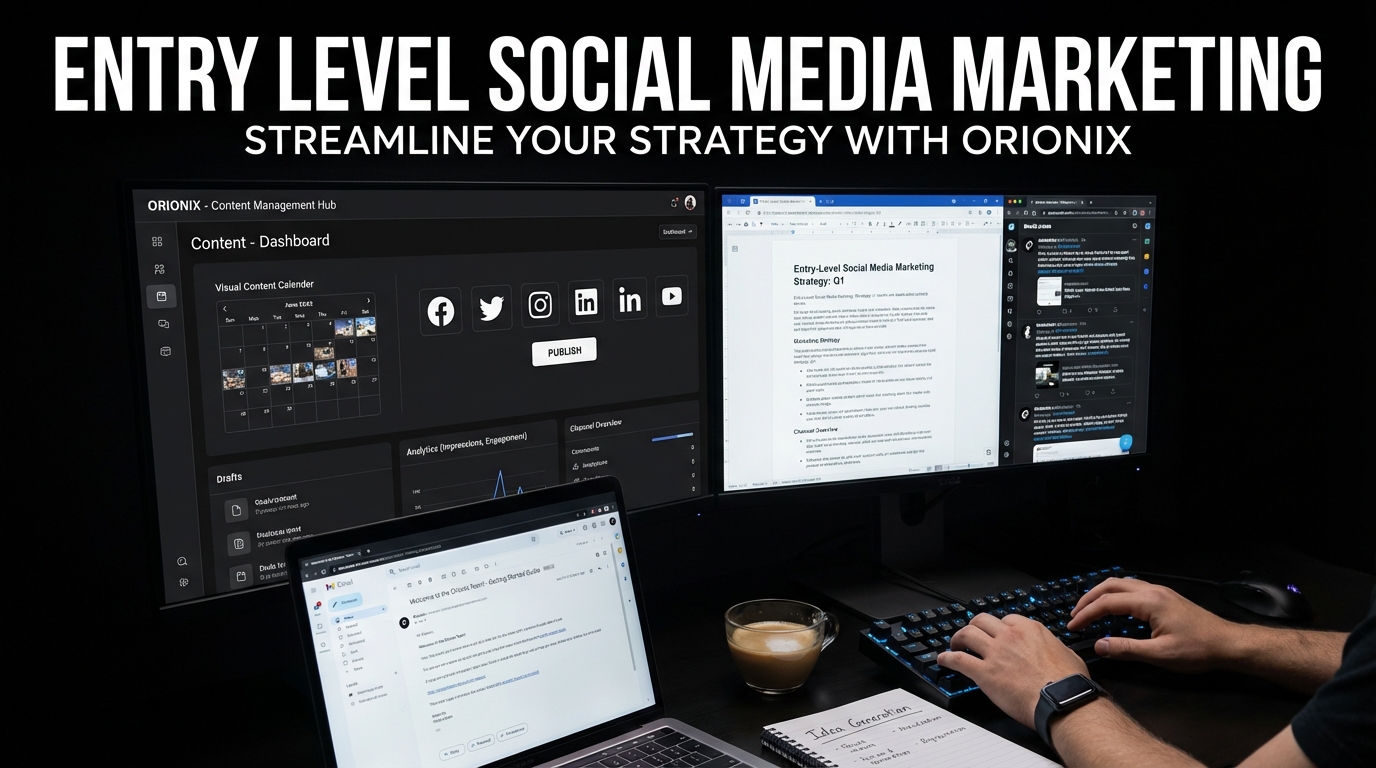
TL;DR: Entry level social media marketing involves managing brand presence on platforms like Facebook, Instagram, and LinkedIn through content creation, scheduling, and audience engagement. Beginners should master platform basics, analytics tracking, and content calendars. Tools like Orionix’s centralized dashboard help streamline multi-channel posting and simplify the content management process for those starting their social media marketing careers.
Frequently Asked Questions

What does entry level social media marketing involve?
Entry level social media marketing involves creating and scheduling content, monitoring social media platforms, engaging with audiences, and analyzing basic metrics. Beginners typically use centralized platforms to manage multiple accounts, learn content planning strategies, and understand best practices for each platform. These roles focus on building foundational skills in digital marketing while supporting broader marketing campaigns across channels like Instagram, Facebook, and Twitter.
How can entry level marketers manage multiple social media platforms efficiently?
Entry level marketers can manage multiple social media platforms efficiently by using centralized dashboards that allow planning, creating, and publishing content from one location. These platforms streamline workflows by enabling bulk scheduling, cross-platform posting, and unified analytics. This approach saves time, reduces errors, and helps beginners maintain consistent brand presence across all channels without switching between multiple apps or accounts.
What are the best times to post on Instagram for entry level social media marketing?
The best times to post on Instagram are typically weekdays between 10 AM-3 PM, with peak engagement on Wednesdays at 11 AM and Fridays at 10-11 AM. However, optimal timing varies by audience demographics and location. Entry level marketers should test different posting schedules using analytics tools, monitor engagement patterns, and adjust their content calendar accordingly to maximize reach and interaction with their target audience.
How do you delete an Instagram account for social media marketing clients?
To permanently delete an Instagram account, log in through a web browser, navigate to the Delete Your Account page, select a reason from the dropdown menu, re-enter your password, and click ‘Permanently delete my account.’ For temporary removal, you can deactivate Instagram instead by going to Settings, selecting ‘Account,’ then ‘Temporarily deactivate account.’ This is useful when managing client transitions or consolidating social media platforms.
What social media marketing skills should entry level candidates learn first?
Entry level candidates should first learn content creation, copywriting, basic graphic design, and platform-specific best practices. Understanding analytics, scheduling tools, community management, and hashtag strategies is essential. Familiarity with centralized content management platforms helps streamline workflows. Additionally, learning audience targeting, engagement tactics, and how different social media platforms function will build a strong foundation for digital marketing career growth.
How to deactivate Instagram temporarily for social media marketing management?
To deactivate Instagram temporarily, open Instagram on a mobile browser or desktop, go to your profile, click ‘Edit Profile,’ scroll down and select ‘Temporarily disable my account.’ Choose a reason for deactivating, enter your password, and confirm. This hides your profile, posts, and comments until reactivation. Social media marketers use this feature when restructuring accounts, during brand transitions, or when taking strategic breaks from specific platforms.
What tools help entry level social media marketing professionals manage content?
Entry level social media marketing professionals benefit from centralized platforms that offer single-dashboard management for planning, creating, and publishing content across multiple channels. These tools typically include content calendars, scheduling features, analytics dashboards, and collaboration capabilities. Using such platforms helps beginners organize campaigns efficiently, maintain consistent posting schedules, track performance metrics, and manage various social media platforms without overwhelming complexity or switching between multiple applications.
Why is centralized content management important for entry level social media marketing?
Centralized content management is crucial for entry level social media marketing because it simplifies complex workflows, reduces time spent switching between platforms, and minimizes posting errors. A single dashboard allows beginners to plan campaigns holistically, maintain brand consistency, schedule posts across all social media platforms simultaneously, and access unified analytics. This streamlined approach helps entry level marketers work more efficiently while learning digital marketing fundamentals and managing multiple client accounts.
Breaking Into Entry Level Social Media Marketing: Your Complete Career Starter Guide

Starting a career in entry level social media marketing opens doors to one of the fastest-growing fields in digital marketing. With businesses increasingly relying on social media platforms to connect with audiences, the demand for skilled marketing professionals continues to surge. Whether you’re a recent graduate, career changer, or someone passionate about social media and digital marketing, this comprehensive guide will equip you with everything you need to launch your career. 🚀
Entry level positions in social media marketing offer unique opportunities to work with diverse brands, develop creative content strategies, and make measurable impacts on business growth. The field combines creativity with analytics, making it perfect for those who enjoy both artistic expression and data-driven decision-making.
In this guide, we’ll explore the essential skills, responsibilities, and strategies you need to succeed in entry level social media marketing roles while navigating the ever-evolving landscape of digital marketing.
Understanding Entry Level Social Media Marketing Roles

Entry level social media marketing positions serve as the foundation for building a successful career in marketing digital marketing. These roles typically involve managing brand presence across multiple social media platforms, creating engaging content, and analyzing performance metrics to optimize strategies.
Common Entry Level Job Titles
The social media marketing field offers various entry points for newcomers. Understanding these different roles helps you target your job search effectively and align your skills with employer expectations.
- Social Media Coordinator: Manages day-to-day posting schedules and community engagement
- Digital Marketing Assistant: Supports broader marketing campaigns with social media components
- Content Creator: Focuses on developing visual and written content for social platforms
- Community Manager: Handles audience interactions and builds online communities
- Social Media Analyst: Tracks metrics and provides insights on campaign performance
Key Responsibilities in Entry Level Positions
Understanding what employers expect from entry level social media marketing professionals helps you prepare effectively. These responsibilities form the core of most junior positions in the field.
| Responsibility | Description | Skills Required |
|---|---|---|
| Content Creation | Develop posts, graphics, and videos for various platforms | Copywriting, design basics, video editing |
| Scheduling & Publishing | Plan and post content at optimal times | Time management, platform knowledge |
| Community Management | Respond to comments, messages, and mentions | Communication, customer service |
| Analytics Tracking | Monitor performance metrics and create reports | Data analysis, reporting tools |
| Trend Research | Stay updated on platform changes and industry trends | Research skills, adaptability |
Essential Skills for Social Media Marketing Success
Building a strong skill set is crucial for breaking into entry level social media marketing. The most successful professionals combine creative abilities with technical knowledge and analytical thinking. 💡
Technical Skills Every Beginner Needs
Mastering the technical aspects of social media platforms and digital marketing tools sets you apart from other candidates. These skills demonstrate your ability to execute campaigns effectively and measure results.
- Platform Expertise: Deep understanding of Facebook, Instagram, Twitter, LinkedIn, TikTok, and emerging platforms
- Content Management Systems: Familiarity with scheduling tools like Hootsuite, Buffer, or Orionix
- Analytics Tools: Proficiency in native platform analytics, Google Analytics, and social listening tools
- Design Software: Basic skills in Canva, Adobe Creative Suite, or similar graphic design platforms
- Video Editing: Ability to create and edit short-form video content for Reels, Stories, and TikTok
Soft Skills That Drive Career Growth
Technical knowledge alone isn’t enough in social media marketing. The ability to communicate effectively, think creatively, and adapt quickly determines long-term success in this dynamic field.
Strong writing skills enable you to craft compelling copy that resonates with target audiences across different social media platforms. Creativity helps you develop unique content strategies that cut through the noise of crowded social feeds.
Time management becomes critical when juggling multiple accounts, campaigns, and deadlines. Successful social media marketers also possess excellent interpersonal skills for collaborating with team members and communicating with online communities.
Understanding Platform-Specific Strategies
Each social media platform requires unique approaches and best practices. Knowing when and how to post on different platforms maximizes engagement and reach.
For Instagram success, understanding the best times to post on Instagram can significantly impact your content’s visibility. Research shows that posting during peak engagement hours—typically Tuesday through Friday between 10 AM and 3 PM—often yields better results. However, the best time to post on Instagram varies by audience demographics and industry.
Learning how to follow hashtags on Instagram helps you stay current with industry trends and discover content opportunities. Similarly, mastering techniques like how to repost on Instagram enables you to share user-generated content and build community relationships.
Building Your Social Media Marketing Portfolio
Creating a compelling portfolio demonstrates your capabilities to potential employers. Even without professional experience, you can showcase your understanding of social media marketing principles through personal projects and case studies. 📱
Creating Sample Campaigns
Develop mock campaigns for real or fictional brands to demonstrate your strategic thinking. Include content calendars, sample posts, and analytics projections that show your understanding of campaign planning.
Choose diverse brands across different industries to showcase versatility. Document your creative process, target audience research, and content strategy decisions to provide context for your work.
Managing Your Personal Brand
Your own social media presence serves as a living portfolio. Maintain professional profiles that reflect your expertise in social media marketing while showcasing your personality and unique perspective.
- Optimize your LinkedIn profile with relevant keywords and accomplishments
- Create a professional Instagram account demonstrating content creation skills
- Share industry insights and commentary on Twitter to establish thought leadership
- Develop a personal website or blog featuring case studies and marketing analysis
- Engage authentically with brands and professionals in your target industry
Gaining Practical Experience
Hands-on experience, even unpaid, significantly strengthens your candidacy for entry level positions. Volunteer to manage social media for local nonprofits, small businesses, or community organizations.
Freelance projects through platforms like Fiverr or Upwork help you build a client base while developing real-world skills. Internships, though competitive, provide valuable mentorship and industry connections that accelerate career growth.
Mastering Social Media Platforms for Marketing
Deep platform knowledge distinguishes competent social media marketers from exceptional ones. Each platform serves different purposes and requires tailored strategies for maximum impact. 🎯
Instagram Marketing Fundamentals
Instagram remains one of the most powerful platforms for visual storytelling and brand building. Understanding its features and best practices is essential for any social media marketer.
Learning how to create engaging Instagram videos helps you leverage the platform’s emphasis on video content. Reels particularly offer exceptional organic reach opportunities for brands willing to embrace short-form video.
Managing Instagram accounts also requires understanding administrative tasks. Knowing how to deactivate Instagram accounts temporarily or permanently becomes relevant when managing client accounts or conducting platform audits. Similarly, understanding how to close your Instagram account completely helps you advise clients on account management decisions.
Questions like how can you delete an Instagram account or how do you delete an Instagram account often arise when consolidating brand presence or managing multiple test accounts during campaign development.
Facebook Marketing Strategies
Despite changing demographics, Facebook remains crucial for reaching diverse audiences and leveraging powerful advertising tools. The platform excels at community building through Groups and detailed audience targeting through Ads Manager.
Understanding Facebook’s integration with Instagram is essential. Many marketers encounter issues where Instagram isn’t sharing to Facebook properly, requiring troubleshooting knowledge. Learning how to disconnect Instagram from Facebook also helps manage cross-platform posting strategies effectively.
Emerging Platform Opportunities
Staying ahead of platform trends gives you competitive advantages in the job market. TikTok continues expanding beyond Gen Z audiences, offering opportunities for brands willing to embrace authentic, entertaining content.
LinkedIn has evolved beyond professional networking into a content powerhouse for B2B marketing. Twitter (X) remains valuable for real-time engagement and customer service despite ongoing platform changes.
| Platform | Primary Use Case | Content Type | Best For |
|---|---|---|---|
| Visual storytelling | Photos, Reels, Stories | B2C brands, lifestyle, fashion | |
| Community building | Mixed media, long-form | Broad demographics, local businesses | |
| Professional networking | Articles, thought leadership | B2B, recruitment, professional services | |
| TikTok | Entertainment, trends | Short-form video | Younger audiences, viral marketing |
| Twitter/X | Real-time updates | Text, images, threads | News, customer service, tech |
Understanding Social Media Analytics and Metrics
Data-driven decision making separates amateur social media users from professional marketers. Learning to interpret analytics and adjust strategies based on performance metrics is fundamental to entry level social media marketing success. 📊
Key Performance Indicators (KPIs)
Different metrics serve different purposes in social media marketing. Understanding which KPIs matter for specific campaign goals helps you demonstrate ROI and optimize performance.
- Engagement Rate: Measures audience interaction relative to follower count
- Reach and Impressions: Tracks how many people see your content
- Click-Through Rate (CTR): Indicates content effectiveness at driving action
- Conversion Rate: Measures how many social visitors complete desired actions
- Follower Growth Rate: Shows audience expansion over time
- Share of Voice: Compares brand mentions against competitors
Using Analytics Tools Effectively
Native platform analytics provide valuable insights, but third-party tools offer deeper analysis and cross-platform reporting. Familiarity with these tools enhances your value to employers.
Google Analytics tracks social traffic to websites, revealing which platforms drive the most valuable visitors. Social listening tools monitor brand mentions and sentiment across the web, helping identify opportunities and potential crises.
Tools like social media influencer management platforms help coordinate campaigns and track performance across multiple accounts and platforms from a single dashboard.
Creating Performance Reports
Translating data into actionable insights distinguishes great marketers from good ones. Develop clear, concise reports that highlight key findings and recommendations rather than overwhelming stakeholders with raw numbers.
Use data visualization to make complex information accessible. Include context by comparing current performance against past periods and industry benchmarks. Always connect metrics back to business objectives and campaign goals.
Content Strategy Development for Beginners
Strategic content planning ensures consistent, purposeful social media presence. Even entry level positions require understanding how to develop and execute content strategies aligned with business goals. ✍️
Creating Content Calendars
Content calendars provide structure and ensure consistent posting across social media platforms. They help balance different content types, maintain brand voice, and plan around important dates and campaigns.
Start by identifying key themes and pillars that align with brand values and audience interests. Map out monthly topics, then break them down into weekly themes and daily posts. Include variety in content formats—educational posts, entertainment, promotional content, and user-generated content.
Consider seasonality, industry events, and cultural moments when planning content. Build flexibility into your calendar for timely responses to trends and real-time marketing opportunities.
Understanding Content Types and Formats
Diversifying content keeps audiences engaged and serves different purposes within your overall strategy. Each format offers unique advantages for achieving specific marketing objectives.
| Content Type | Purpose | Best Platforms | Engagement Level |
|---|---|---|---|
| Educational Posts | Build authority, provide value | LinkedIn, Instagram, Facebook | Medium-High |
| Behind-the-Scenes | Humanize brand, build connection | Instagram Stories, TikTok | High |
| User-Generated Content | Build community, social proof | All platforms | Very High |
| Promotional Content | Drive sales, announce offers | All platforms | Low-Medium |
| Interactive Content | Boost engagement, gather insights | Instagram Stories, Twitter | Very High |
Developing Brand Voice and Messaging
Consistent brand voice across social media platforms builds recognition and trust. Define tone, language style, and messaging guidelines that reflect brand personality while resonating with target audiences.
Consider whether your brand voice should be professional, playful, authoritative, or conversational. Document specific words and phrases to use or avoid. Create examples showing how to adapt voice across different platforms while maintaining consistency.
Community Management and Engagement
Building and nurturing online communities distinguishes social media marketing from traditional advertising. Active community management transforms followers into brand advocates and customers into loyal fans. 💬
Responding to Comments and Messages
Timely, authentic responses show audiences that real people care about their input. Develop response protocols for different scenarios—positive feedback, questions, complaints, and trolls.
Understanding platform-specific features helps manage interactions effectively. For example, knowing how to delete comments on Instagram helps moderate conversations and maintain positive community environments when necessary.
Set realistic response time expectations. While immediate replies aren’t always possible, acknowledging messages within 24 hours demonstrates commitment to customer service. Use saved responses for common questions while personalizing each interaction.
Handling Negative Feedback
How brands respond to criticism often matters more than the criticism itself. Develop protocols for addressing complaints professionally while protecting brand reputation.
- Respond promptly and acknowledge the person’s concern
- Take heated discussions to private messages when appropriate
- Offer solutions rather than making excuses
- Know when to escalate issues to management
- Learn from feedback to improve products and services
Building Authentic Relationships
Social media marketing succeeds when it prioritizes relationship building over broadcasting. Engage genuinely with followers by asking questions, soliciting feedback, and celebrating community achievements.
Recognize and reward loyal community members through features, shoutouts, or exclusive access. Understanding tools like Instagram follower export tools helps identify your most engaged followers for targeted relationship building.
Participate in broader industry conversations beyond your own profiles. Comment thoughtfully on other accounts’ posts, share valuable content from others, and contribute to relevant hashtag conversations.
Landing Your First Social Media Marketing Job
Breaking into entry level social media marketing requires strategic job searching, compelling application materials, and strong interview performance. Understanding what employers seek helps you position yourself effectively. 🎯
Crafting Your Resume and Cover Letter
Your application materials should demonstrate both your passion for social media and your understanding of marketing principles. Quantify achievements whenever possible, even from volunteer or personal projects.
Creating a strong social media marketing cover letter helps you stand out by connecting your skills to specific employer needs. Research each company’s social media presence and reference specific campaigns or strategies you admire.
Highlight relevant coursework, certifications, and self-directed learning that demonstrates initiative. Include links to your portfolio, personal brand accounts, and any published content that showcases your expertise.
Preparing for Interviews
Social media marketing interviews typically combine behavioral questions with practical assessments of your platform knowledge and strategic thinking.
Prepare to discuss current social media trends and how they impact marketing strategies. Be ready to critique the company’s existing social presence and suggest improvements. Bring examples of campaigns you’ve created or admire, explaining what makes them effective.
| Common Interview Question | What They’re Really Asking | How to Prepare |
|---|---|---|
| « What’s your favorite social media campaign? » | Do you stay current with industry trends? | Prepare 2-3 recent examples with analysis |
| « How would you handle negative comments? » | Can you maintain professionalism under pressure? | Develop response framework with examples |
| « What metrics matter most? » | Do you understand business objectives? | Connect metrics to specific campaign goals |
| « How do you stay updated on platform changes? » | Are you committed to continuous learning? | Share specific resources and learning habits |
Networking and Industry Connections
Many entry level positions are filled through referrals and networking rather than traditional job postings. Building industry connections accelerates your job search and career growth.
Attend marketing conferences, webinars, and local meetups to connect with professionals in the field. Join social media marketing groups on LinkedIn and Facebook where members share job opportunities and advice.
Follow and engage with marketing leaders on social media platforms. Share thoughtful comments on their content and participate in Twitter chats related to marketing digital marketing topics.
Continuing Education and Career Development
The social media landscape evolves constantly, making continuous learning essential for long-term success. Staying current with platform updates, algorithm changes, and emerging trends keeps your skills relevant and marketable. 📚
Valuable Certifications and Courses
Professional certifications demonstrate commitment to your craft and fill knowledge gaps. While not always required, they strengthen your resume and provide structured learning paths.
- Meta Blueprint Certification: Official training for Facebook and Instagram advertising
- Google Digital Garage: Free courses covering digital marketing fundamentals
- HubSpot Social Media Certification: Comprehensive social media strategy training
- Hootsuite Social Marketing Certification: Platform-specific training and best practices
- LinkedIn Learning: Extensive library of social media and marketing courses
Staying Current With Industry Trends
Following industry publications, thought leaders, and marketing blogs helps you anticipate changes and adapt strategies proactively. Subscribe to newsletters from Social Media Examiner, Social Media Today, and Marketing Land.
Experiment with new features and platforms before they become mainstream. Early adopters often gain advantages as algorithms favor new content types and platforms reward pioneering users.
For those interested in broader digital marketing strategies, resources like SEO and keyword research guides complement social media skills by improving content discoverability across channels.
Advancing Beyond Entry Level
Entry level positions serve as stepping stones to more specialized or senior roles. Common career progression paths include Social Media Manager, Content Strategist, Digital Marketing Manager, or specialized roles in paid social advertising or influencer marketing.
Develop expertise in specific areas that interest you—whether that’s video production, analytics, community building, or paid advertising. Seek mentorship from senior team members and take on stretch projects that expand your capabilities.
Document your achievements and impact throughout your career. Track metrics that demonstrate how your work contributed to business growth, making it easier to negotiate raises and promotions.
Industry-Specific Social Media Marketing
Different industries require tailored approaches to social media marketing. Understanding sector-specific strategies helps you target job searches and develop specialized expertise that commands higher compensation. 🎪
Restaurant and Hospitality Marketing
The food and beverage industry relies heavily on visual storytelling and local engagement. Social media marketing for restaurants emphasizes mouth-watering food photography, behind-the-scenes content, and user-generated reviews.
Location-based features on Instagram and Facebook help restaurants reach nearby customers. Time-sensitive promotions and special event announcements drive immediate traffic, while consistent posting maintains top-of-mind awareness.
E-commerce and Retail
Retail brands leverage social media platforms as both marketing channels and direct sales platforms. Shoppable posts, influencer partnerships, and user-generated content drive purchase decisions.
Understanding how to boost visibility through strategies like gaining free Instagram Reel views helps e-commerce brands expand reach organically while building authentic audiences.
B2B and Professional Services
Business-to-business marketing requires different approaches focused on thought leadership, industry expertise, and relationship building. LinkedIn dominates B2B social strategies, though Twitter and Instagram play supporting roles.
Content emphasizes educational value, industry insights, and problem-solving rather than entertainment. Longer sales cycles require nurturing prospects through multiple touchpoints before conversion.
Tools and Resources for Social Media Marketers
The right tools streamline workflows, improve efficiency, and enable better results. Building your toolkit with essential software and resources positions you for success in entry level social media marketing roles. 🛠️
Content Creation and Design Tools
Creating professional-quality content doesn’t require expensive software. Many free and affordable tools enable beginners to produce engaging visuals and videos.
- Canva: User-friendly design platform with templates for all social formats
- Adobe Express: Simplified design tool for quick graphics and videos
- CapCut: Free video editing app popular for TikTok and Reels
- Unsplash/Pexels: Free stock photography for social media posts
- Grammarly: Writing assistant ensuring error-free copy
Scheduling and Management Platforms
Managing multiple social media platforms efficiently requires centralized scheduling and publishing tools. These platforms save time and ensure consistent posting schedules.
Comprehensive platforms like Orionix offer centralized dashboards for planning, creating, and publishing content across various channels, streamlining the entire content management process for busy marketers.
Understanding what includes social media platform features helps you choose tools that support your specific needs and workflow preferences.
Analytics and Reporting Tools
Data analysis tools transform raw metrics into actionable insights. Native platform analytics provide starting points, but third-party tools offer deeper analysis and competitive intelligence.
Google Analytics tracks social traffic to websites, revealing which platforms drive conversions. Social listening tools monitor brand mentions and industry conversations across the web. Competitive analysis tools reveal what strategies work for competitors in your space.
For marketers interested in comprehensive digital strategies, exploring SEO marketing tools provides complementary capabilities that enhance social media efforts through improved search visibility.
Common Challenges and How to Overcome Them
Every social media marketer faces obstacles, especially when starting out. Understanding common challenges and their solutions helps you navigate difficulties and grow professionally. 💪
Managing Multiple Accounts and Platforms
Juggling various social media platforms, each with unique requirements and audiences, overwhelms many beginners. Develop systems and workflows that maintain quality while managing volume.
Use scheduling tools to batch-create content during dedicated production time. Create platform-specific templates that speed up content adaptation. Set boundaries around when you check and respond to messages to prevent burnout.
Dealing With Algorithm Changes
Social media platforms constantly update algorithms, sometimes dramatically impacting reach and engagement. Rather than fighting changes, adapt strategies to align with new priorities.
Diversify your social media presence across multiple platforms to reduce dependence on any single algorithm. Focus on creating genuinely valuable content that generates engagement regardless of algorithmic preferences. Build email lists and owned media channels to maintain direct audience access.
Proving ROI and Value
Demonstrating social media’s business impact challenges many entry level marketers, especially when results don’t translate directly to immediate sales. Connect social metrics to broader business objectives.
Track the customer journey from social media touchpoints through conversion. Use UTM parameters to attribute website traffic and sales to specific social campaigns. Document qualitative benefits like improved brand sentiment, customer service efficiency, and competitive positioning.
| Challenge | Impact | Solution Strategy |
|---|---|---|
| Content burnout | Decreased creativity and consistency | Build content libraries, repurpose existing content |
| Negative comments | Brand reputation risk | Develop response protocols, focus on resolution |
| Limited budget | Restricted reach and resources | Prioritize organic strategies, leverage user content |
| Keeping up with trends | Outdated strategies | Schedule regular learning time, follow industry leaders |
| Measuring success | Unclear performance picture | Define clear KPIs aligned with business goals |
The Future of Social Media Marketing Careers
Understanding where the industry is heading helps you develop skills that remain valuable as the field evolves. Emerging trends and technologies create new opportunities for forward-thinking marketers. 🚀
Emerging Technologies and Platforms
Artificial intelligence increasingly influences content creation, audience targeting, and performance optimization. Marketers who understand AI tools gain competitive advantages through improved efficiency and insights.
Virtual and augmented reality create immersive brand experiences, though adoption remains early stage. Short-form video continues dominating, with platforms prioritizing this format in algorithms and features.
Social commerce grows as platforms integrate shopping features more seamlessly. The line between content and commerce blurs, requiring marketers to think like both storytellers and salespeople.
Skills That Will Matter Most
While specific platforms and tactics change, certain capabilities remain valuable regardless of technological shifts. Adaptability tops the list—successful marketers embrace change rather than resisting it.
Strategic thinking becomes increasingly important as social media matures beyond tactical execution. Understanding how social efforts connect to broader business objectives and customer journeys differentiates strategic marketers from tactical executors.
Data literacy grows more critical as analytics tools become more sophisticated. The ability to extract insights from data and translate them into actionable strategies separates good marketers from great ones.
Career Opportunities Beyond Traditional Roles
Social media marketing skills open doors to diverse career paths. Influencer marketing, social commerce, community building, and creator economy roles offer alternatives to traditional brand-side positions.
Freelancing and consulting provide flexibility and variety for self-directed professionals. Agency work exposes you to multiple clients and industries, accelerating skill development. In-house positions offer deeper brand immersion and strategic involvement.
Take Your Social Media Marketing Career to the Next Level
Starting your journey in entry level social media marketing opens doors to an exciting, dynamic career filled with creative challenges and meaningful impact. The skills you develop—from content creation to analytics, community management to strategic planning—position you for success in the ever-evolving digital landscape. 🌟
Success in social media marketing requires continuous learning, authentic engagement, and strategic thinking. By mastering platform-specific strategies, developing strong analytical capabilities, and building genuine connections with audiences, you’ll differentiate yourself in a competitive job market.
Remember that every expert started as a beginner. Focus on building your portfolio, networking with industry professionals, and staying current with emerging trends and technologies. The combination of creativity, data-driven decision making, and genuine passion for social media creates the foundation for a rewarding career.
Ready to streamline your social media marketing workflow and manage multiple platforms efficiently? Visit Orionix to discover how our centralized platform helps you plan, create, and publish content across all your channels from a single dashboard. Whether you’re managing your first client account or building your personal brand, the right tools make all the difference in your success. Start your free trial today and take the first step toward becoming a more efficient, effective social media marketer! 🚀
Article created using IntentRank