
TL;DR: Social media marketing positions include roles such as Social Media Manager, Content Creator, Community Manager, Social Media Strategist, and Paid Social Specialist. These professionals develop content strategies, manage brand presence, engage audiences, analyze metrics, and run advertising campaigns across platforms like Facebook, Instagram, LinkedIn, and Twitter to drive business growth.
Frequently Asked Questions

What are the main social media marketing positions in a company?
Key social media marketing positions include Social Media Manager, who oversees strategy and campaigns; Content Creator, responsible for producing engaging posts; Social Media Analyst, who tracks metrics and performance; Community Manager, handling audience engagement; and Social Media Strategist, developing long-term plans. Larger organizations may also have specialized roles like Paid Social Specialist and Influencer Marketing Manager to manage specific aspects of social media platforms.
What does a social media marketing manager do daily?
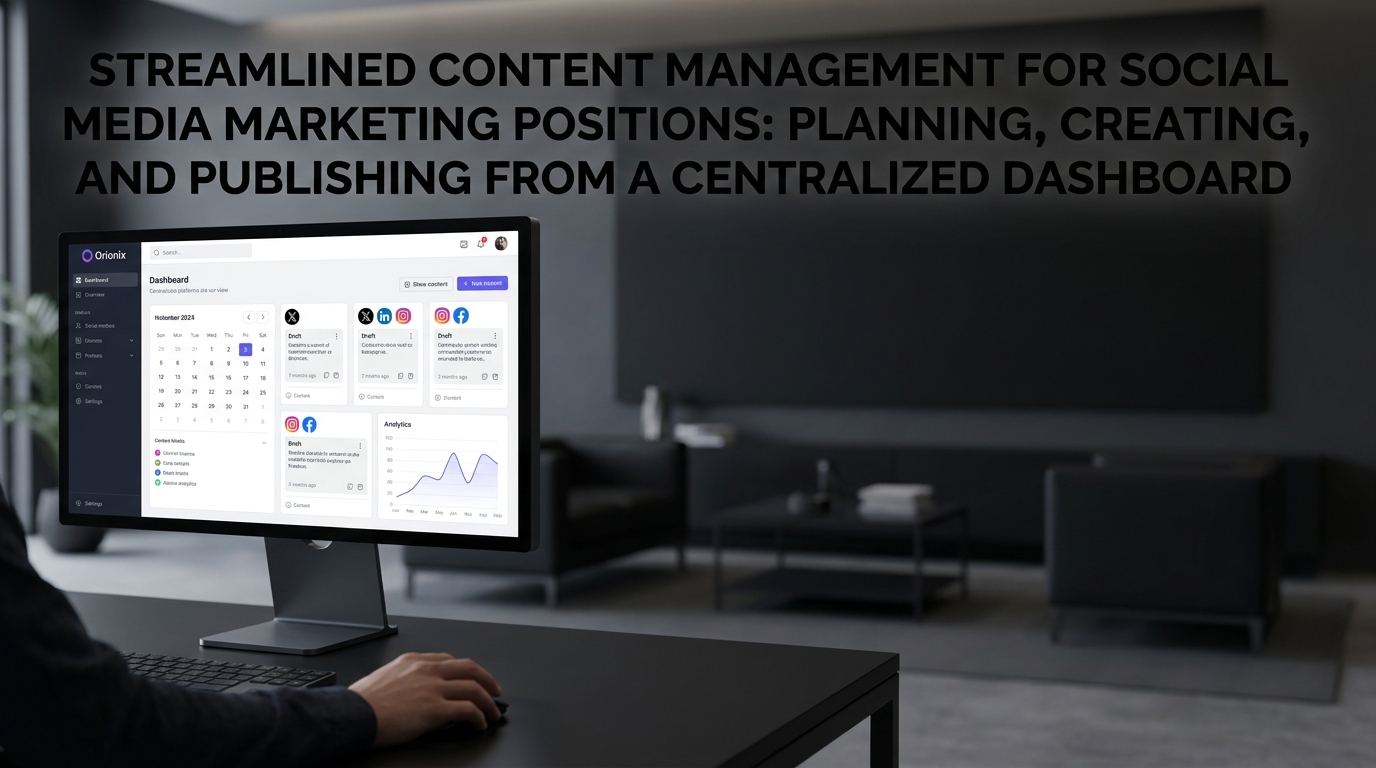
A social media marketing manager plans and schedules content across social media platforms, monitors engagement metrics, responds to comments and messages, and collaborates with content creators. They analyze performance data to optimize posting strategies, including determining the best times to post on Instagram and other platforms. Using centralized platforms like Orionix, they streamline content management by planning, creating, and publishing content through a single dashboard for efficient workflow.
What skills are required for social media marketing positions?
Essential skills for social media marketing positions include content creation and copywriting, analytics and data interpretation, graphic design basics, and understanding of marketing digital marketing principles. Professionals need platform-specific knowledge of Instagram, Facebook, TikTok, and LinkedIn, plus proficiency with scheduling tools. Strong communication, creativity, strategic thinking, and ability to adapt to algorithm changes are crucial. Experience with social media management platforms that centralize content planning enhances efficiency.
How much do social media marketing positions typically pay?
Social media marketing positions offer varied salaries based on experience and location. Entry-level coordinators earn $35,000-$50,000 annually, while mid-level managers make $50,000-$75,000. Senior social media strategists and directors can earn $75,000-$120,000 or more. Freelance social media specialists charge $25-$100+ per hour depending on expertise. Compensation often includes benefits and may increase with demonstrated ROI, specialized platform expertise, and proficiency in content management tools.
What is the career path for social media marketing positions?
The typical career path starts with Social Media Coordinator or Content Creator roles, advancing to Social Media Manager after 2-3 years. With experience, professionals move to Senior Social Media Manager or Strategist positions, then to Director of Social Media or Head of Digital Marketing. Some specialize in areas like paid social advertising or influencer marketing. Continuous learning about evolving social media platforms and mastering tools for content planning and publishing is essential for advancement.
How do social media marketing positions differ from digital marketing roles?
Social media marketing positions focus specifically on managing brand presence across social media platforms like Instagram, Facebook, and TikTok, including content creation, community engagement, and platform-specific strategies. Digital marketing roles encompass broader online marketing activities including SEO, email marketing, PPC advertising, and website optimization. While social media marketing is a subset of digital marketing, dedicated social media positions require deeper expertise in platform algorithms, content trends, and real-time audience interaction.
What tools do professionals in social media marketing positions use?
Social media marketing professionals use scheduling platforms like Orionix to plan, create, and publish content across multiple channels from a single dashboard. They also utilize analytics tools such as Sprout Social and native platform insights, design software like Canva and Adobe Creative Suite, and engagement monitoring tools like Hootsuite. Additional tools include hashtag research platforms, competitor analysis software, and collaboration tools for team coordination, all streamlining the content management process.
Are remote social media marketing positions widely available?
Yes, remote social media marketing positions are increasingly common and widely available. Since social media management primarily requires internet access and digital tools, many companies offer fully remote or hybrid arrangements. Freelance and contract positions are particularly abundant for remote work. Platforms that centralize content planning and publishing, like Orionix, make remote collaboration seamless. This flexibility has expanded opportunities for professionals worldwide, though some positions requiring in-person events or content creation may need occasional office presence.
Understanding Social Media Marketing Positions in Today’s Digital Landscape

The demand for social media marketing positions has skyrocketed as businesses recognize the critical importance of maintaining a strong online presence. These roles have evolved from simple post schedulers to strategic positions that drive brand awareness, customer engagement, and revenue growth across multiple social media platforms.
Whether you’re considering a career in digital marketing or looking to hire talent for your organization, understanding the landscape of social media marketing positions is essential. These roles now encompass everything from content creation and community management to data analysis and paid advertising campaigns.
The social media marketing field offers diverse opportunities for professionals at every career stage. From entry-level coordinators to senior strategists, each position plays a vital role in building and maintaining a brand’s digital presence across platforms like Instagram, Facebook, LinkedIn, and TikTok.
Core Social Media Marketing Positions and Their Responsibilities 🎯

Social Media Manager
The Social Media Manager serves as the primary architect of a brand’s social media presence. This position requires a blend of creativity, strategic thinking, and analytical skills to develop comprehensive social media strategies that align with business objectives.
Key responsibilities include:
- Developing and executing comprehensive social media strategies across multiple platforms
- Managing content calendars and determining the best times to post on Instagram and other channels
- Overseeing community management and engagement initiatives
- Analyzing performance metrics and adjusting strategies accordingly
- Collaborating with cross-functional teams including design, content, and customer service
Content Creator/Social Media Specialist
Content creators focus on producing engaging, platform-specific content that resonates with target audiences. This role has become increasingly important as social media platforms for content creators continue to evolve and demand high-quality, authentic content.
These specialists must understand the nuances of each platform, from Instagram’s visual storytelling to LinkedIn’s professional networking focus. They create everything from graphics and videos to written copy and interactive stories.
Community Manager
Community Managers serve as the voice of the brand, directly engaging with followers and building meaningful relationships. This position requires exceptional communication skills and the ability to handle both positive interactions and crisis situations professionally.
Daily tasks often include:
- Responding to comments, messages, and mentions across social media platforms
- Managing online communities and fostering engagement
- Monitoring brand sentiment and addressing customer concerns
- Identifying and engaging with brand advocates and influencers
- Understanding platform-specific features like Instagram’s restrict function for managing interactions
Entry-Level Social Media Marketing Positions and Career Paths 📈

Breaking Into the Industry
Entry level social media marketing positions provide excellent opportunities for newcomers to gain hands-on experience. These roles typically include Social Media Coordinator, Digital Marketing Assistant, or Content Marketing Associate positions.
Entry-level professionals often start by managing specific aspects of social media operations, such as scheduling posts, monitoring analytics, or assisting with content creation. This foundational experience is crucial for understanding how digital marketing and social media marketing work together to achieve business goals.
| Position | Primary Focus | Key Skills Required | Typical Salary Range |
|---|---|---|---|
| Social Media Coordinator | Content scheduling & basic analytics | Organization, basic design, communication | $35,000 – $50,000 |
| Digital Marketing Assistant | Campaign support & data entry | Attention to detail, multitasking, tech-savvy | $32,000 – $45,000 |
| Content Marketing Associate | Content creation & distribution | Writing, creativity, platform knowledge | $38,000 – $52,000 |
Career Progression Opportunities
The career path in social media marketing offers clear progression opportunities. Starting from entry-level positions, professionals can advance to mid-level roles like Social Media Strategist or Senior Content Manager within 2-3 years of dedicated experience.
With continued growth and proven results, professionals can reach senior positions such as Director of Social Media or Head of Digital Marketing. These leadership roles involve strategic planning, team management, and direct contribution to business growth objectives.
Specialized Social Media Marketing Positions 🎨
Industry-Specific Roles
Certain industries require specialized knowledge and tailored approaches to social media marketing. For example, social media marketing for restaurants demands understanding of food photography, local SEO, and real-time engagement during service hours.
Similarly, social media marketing for music artists requires knowledge of streaming platforms, fan engagement strategies, and event promotion. These specialized positions often command premium salaries due to their niche expertise.
Paid Social Media Specialist
Paid Social Media Specialists focus exclusively on advertising campaigns across social media platforms. This role requires deep understanding of platform algorithms, audience targeting, and budget optimization to maximize return on ad spend.
Core competencies include:
- Creating and managing paid campaigns on Facebook, Instagram, LinkedIn, and TikTok
- A/B testing ad creative and copy variations
- Analyzing campaign performance and optimizing for conversions
- Managing advertising budgets ranging from thousands to millions of dollars
- Staying current with platform policy changes and new advertising features
Social Media Analyst
Data-driven decision making has become essential in social media marketing, creating demand for dedicated analyst positions. These professionals transform raw data into actionable insights that guide strategy and demonstrate ROI to stakeholders.
Social Media Analysts work closely with managers and strategists to track KPIs, identify trends, and provide recommendations based on performance data. They must be proficient in analytics tools and capable of presenting complex data in accessible formats.
Essential Skills for Social Media Marketing Positions 💡
Technical Proficiencies
Modern social media marketing positions require a diverse technical skill set. Professionals must be comfortable using social media management tools like Hootsuite to streamline workflow and maintain consistent posting schedules across multiple platforms.
Understanding platform-specific features is equally important. For instance, knowing how to follow hashtags on Instagram helps marketers stay informed about trending topics and industry conversations that can inform content strategy.
| Skill Category | Entry-Level | Mid-Level | Senior-Level |
|---|---|---|---|
| Platform Knowledge | Basic features & posting | Advanced features & analytics | Strategic platform selection |
| Content Creation | Basic editing & scheduling | Advanced design & video editing | Creative direction & strategy |
| Analytics | Basic metrics tracking | Data analysis & reporting | Strategic insights & forecasting |
| Tools Proficiency | 1-2 management platforms | Multiple tools & integrations | Tool selection & implementation |
Soft Skills That Drive Success
While technical skills are essential, soft skills often differentiate exceptional social media marketers from average ones. Strong communication abilities enable professionals to craft compelling messages and collaborate effectively with cross-functional teams.
Adaptability is crucial in an industry where platforms constantly evolve and trends change rapidly. Social media marketers must stay curious, continuously learning about new features, algorithm updates, and emerging best practices.
- Creativity: Developing unique content that stands out in crowded feeds
- Time Management: Juggling multiple campaigns and deadlines simultaneously
- Problem-Solving: Addressing negative feedback and crisis situations effectively
- Strategic Thinking: Connecting social media activities to broader business objectives
- Empathy: Understanding audience needs and creating content that resonates
Platform-Specific Expertise and Best Practices 📱
Mastering Instagram Marketing
Instagram remains one of the most important platforms for social media marketing positions, requiring specialized knowledge of its unique features and best practices. Understanding the best time to post on Instagram can significantly impact content visibility and engagement rates.
Professionals must also know technical aspects like how to repost on Instagram properly to share user-generated content while respecting copyright and attribution. Additionally, troubleshooting common issues such as when a story is not available on Instagram demonstrates platform expertise.
Managing Multiple Social Media Platforms
Most social media marketing positions require managing presence across multiple platforms simultaneously. Each platform serves different purposes and attracts distinct demographics, requiring tailored content strategies.
Platform-specific considerations include:
- Instagram: Visual storytelling, Stories, Reels, and influencer partnerships
- LinkedIn: Professional content, thought leadership, and B2B marketing
- Facebook: Community building, groups, and diverse content formats
- TikTok: Short-form video, trending sounds, and authentic content
- Twitter/X: Real-time engagement, news sharing, and customer service
Search and Discovery Optimization
Social media marketers must understand how users discover content and profiles. This includes knowing how to look for someone on Instagram and optimizing profiles for searchability through strategic use of keywords, hashtags, and profile information.
Professionals should also educate their audiences on platform features. For instance, understanding whether you can see who views your Instagram profile helps set realistic expectations and build trust with followers.
Content Strategy and Planning for Social Media Roles 📅
Developing Effective Content Calendars
Successful social media marketing positions require strong organizational skills and strategic planning. Creating comprehensive content calendars ensures consistent posting schedules while allowing flexibility for real-time engagement and trending topics.
Understanding what to post on social media involves balancing promotional content with value-driven posts that educate, entertain, or inspire audiences. The most effective strategies follow the 80/20 rule: 80% valuable content and 20% promotional material.
Timing and Frequency Optimization
Determining the best times to post on Instagram and other social media platforms requires analyzing audience behavior patterns and engagement data. While general best practices exist, successful marketers customize posting schedules based on their specific audience analytics.
| Platform | Best Days | Optimal Times (EST) | Posting Frequency |
|---|---|---|---|
| Tuesday – Friday | 11 AM – 2 PM | 1-2 times daily | |
| Wednesday – Friday | 1 PM – 3 PM | 1 time daily | |
| Tuesday – Thursday | 8 AM – 10 AM | 2-5 times weekly | |
| TikTok | Tuesday – Thursday | 6 PM – 10 PM | 1-4 times daily |
Content Mix and Diversity
Professional social media marketers understand the importance of content variety. Mixing educational posts, behind-the-scenes content, user-generated content, and promotional material keeps feeds interesting and audiences engaged.
Different content types serve different purposes in the customer journey. Educational content builds authority, entertainment content increases reach, and promotional content drives conversions when strategically placed within a diverse content mix.
Account Management and Community Building 🤝
Managing User Interactions
Social media marketing positions involve significant community management responsibilities. This includes knowing when and how to manage problematic interactions, such as understanding the implications of restricting someone on Instagram versus blocking them entirely.
Professionals must balance maintaining positive community spaces while protecting brand reputation. This requires developing clear community guidelines and consistently enforcing them while remaining approachable and responsive to genuine concerns.
Profile Maintenance and Optimization
Regular profile maintenance ensures social media accounts remain current and optimized for discoverability. This includes updating bio information, refreshing profile images, and organizing highlights or featured content sections.
Social media marketers should also understand account lifecycle management, including how to deactivate Instagram temporarily or how to delete an Instagram account permanently when necessary for brand restructuring or platform consolidation.
Growing and Maintaining Follower Bases
Building authentic follower bases requires consistent effort and strategic engagement. While some may be tempted by shortcuts like free Instagram followers websites, professional marketers understand that organic growth through quality content and genuine engagement delivers better long-term results.
Effective follower management also includes regular audits to remove inactive or bot accounts. Knowing how to unfollow on Instagram efficiently helps maintain healthy follower-to-following ratios and keeps feeds relevant.
Location-Specific Social Media Marketing Opportunities 🌎
Regional Market Expertise
Some social media marketing positions focus on specific geographic markets, requiring localized knowledge and cultural understanding. For example, Miami social media marketing positions might emphasize bilingual content, Latin American cultural trends, and tourism-related campaigns.
Location-specific roles often involve managing geo-targeted advertising campaigns, partnering with local influencers, and creating content that resonates with regional audiences while maintaining brand consistency across markets.
Remote vs. In-Office Positions
The social media marketing field offers significant flexibility regarding work location. Many positions are now fully remote, allowing professionals to work from anywhere while managing global brand presences.
Remote position advantages include:
- Access to broader job markets and opportunities
- Flexible scheduling that accommodates global time zones
- Reduced commute time allowing for better work-life balance
- Ability to work during optimal posting times regardless of location
Analytics and Performance Measurement 📊
Key Performance Indicators (KPIs)
Social media marketing positions require strong analytical capabilities to measure campaign effectiveness and demonstrate ROI. Professionals must track various metrics including engagement rates, reach, conversions, and follower growth.
Understanding which metrics matter most depends on campaign objectives. Brand awareness campaigns focus on reach and impressions, while conversion-focused campaigns prioritize click-through rates and conversion metrics.
| Campaign Objective | Primary KPIs | Secondary KPIs | Success Benchmarks |
|---|---|---|---|
| Brand Awareness | Reach, Impressions | Share of voice, Brand mentions | 20%+ quarter-over-quarter growth |
| Engagement | Likes, Comments, Shares | Engagement rate, Save rate | 3-6% average engagement rate |
| Lead Generation | Click-through rate, Conversions | Cost per lead, Lead quality | Industry-specific benchmarks |
| Community Growth | Follower growth rate | Follower quality, Retention rate | 5-10% monthly growth |
Reporting and Insights Communication
Translating data into actionable insights is a crucial skill for social media marketing positions. Professionals must create clear, compelling reports that demonstrate value to stakeholders who may not understand technical metrics.
Effective reporting connects social media activities to business outcomes, showing how campaigns contribute to revenue, customer acquisition, or brand equity. Visual data presentations using charts and graphs make complex information accessible to non-technical audiences.
Emerging Trends in Social Media Marketing Careers 🚀
The Rise of Video-First Content
Social media marketing positions increasingly prioritize video content creation skills as platforms shift toward video-first algorithms. Short-form video expertise, particularly for TikTok and Instagram Reels, has become essential for modern marketers.
Professionals who can conceptualize, film, edit, and optimize video content have significant competitive advantages in the job market. This includes understanding video SEO, thumbnail optimization, and platform-specific video formats.
AI and Automation Integration
Artificial intelligence tools are transforming social media marketing positions by automating routine tasks and providing advanced analytics. However, human creativity and strategic thinking remain irreplaceable for developing authentic brand voices and meaningful connections.
Modern social media marketers must balance leveraging AI tools for efficiency while maintaining the human touch that creates genuine engagement. This includes using AI for content ideation and scheduling while personally crafting messages and responding to community interactions.
Influencer and Creator Economy
The creator economy has created new social media marketing positions focused on influencer partnerships and creator collaborations. These roles require relationship management skills, contract negotiation experience, and understanding of influencer marketing ROI measurement.
Brands increasingly work with micro and nano-influencers for authentic audience connections, creating demand for professionals who can identify, vet, and manage these partnerships effectively.
Salary Expectations and Compensation Trends 💰
Compensation by Experience Level
Social media marketing positions offer competitive salaries that increase significantly with experience and demonstrated results. Entry-level positions typically start between $35,000-$50,000 annually, while experienced professionals can earn $70,000-$100,000 or more.
Senior-level positions and director roles in major metropolitan areas or at large corporations can command salaries exceeding $150,000 annually, particularly when managing large teams or multi-million dollar budgets.
Additional Compensation Factors
Beyond base salary, many social media marketing positions offer performance bonuses tied to campaign success metrics. Freelance and agency roles may include project-based compensation or revenue sharing arrangements.
Factors influencing compensation include:
- Geographic location and cost of living adjustments
- Company size and industry sector
- Specialized skills such as paid advertising or video production
- Portfolio of successful campaigns and measurable results
- Management responsibilities and team size
Building Your Social Media Marketing Career 🎓
Education and Certification Options
While formal degrees in marketing or communications provide strong foundations, many successful social media marketers are self-taught or have completed specialized certifications. Platform-specific certifications from Facebook Blueprint, Google Digital Garage, and HubSpot Academy demonstrate expertise to potential employers.
Continuous learning is essential in this rapidly evolving field. Professionals should regularly update their skills through online courses, industry conferences, and hands-on experimentation with new platform features and tools.
Portfolio Development Strategies
Creating a compelling portfolio is crucial for landing social media marketing positions. This should showcase diverse content types, campaign results, and strategic thinking through case studies that demonstrate your impact on business objectives.
Consider managing personal brand accounts or volunteering for nonprofits to build portfolio pieces if you’re starting without professional experience. Document your strategies, tactics, and results to show potential employers your capabilities.
Networking and Professional Development
Building professional networks opens doors to social media marketing positions and career advancement opportunities. Engage with industry professionals on LinkedIn, attend marketing conferences, and participate in online communities to stay connected and informed.
Following industry leaders, participating in Twitter chats, and contributing to marketing blogs helps establish your expertise while learning from others. These activities demonstrate passion and commitment to potential employers.
Streamline Your Social Media Marketing Operations
Managing social media marketing positions effectively requires the right tools and platforms. Whether you’re hiring for these roles or working in one yourself, having centralized systems for content planning, creation, and publishing is essential for success.
Modern social media marketing demands efficiency and consistency across multiple platforms. The complexity of managing diverse content types, posting schedules, and engagement activities can overwhelm even experienced professionals without proper systems in place.
If you’re looking to optimize your social media marketing workflow or support your team with better tools, visit our website to discover how Orionix can help you plan, create, and publish content across all channels through a single, intuitive dashboard. Our platform is designed specifically for social media professionals who need to streamline their operations while maintaining quality and consistency.
Take control of your social media marketing efforts today and experience the difference that centralized content management can make for your brand’s online presence. Explore Orionix now and transform how you approach social media marketing. 🚀
Article created using IntentRank