
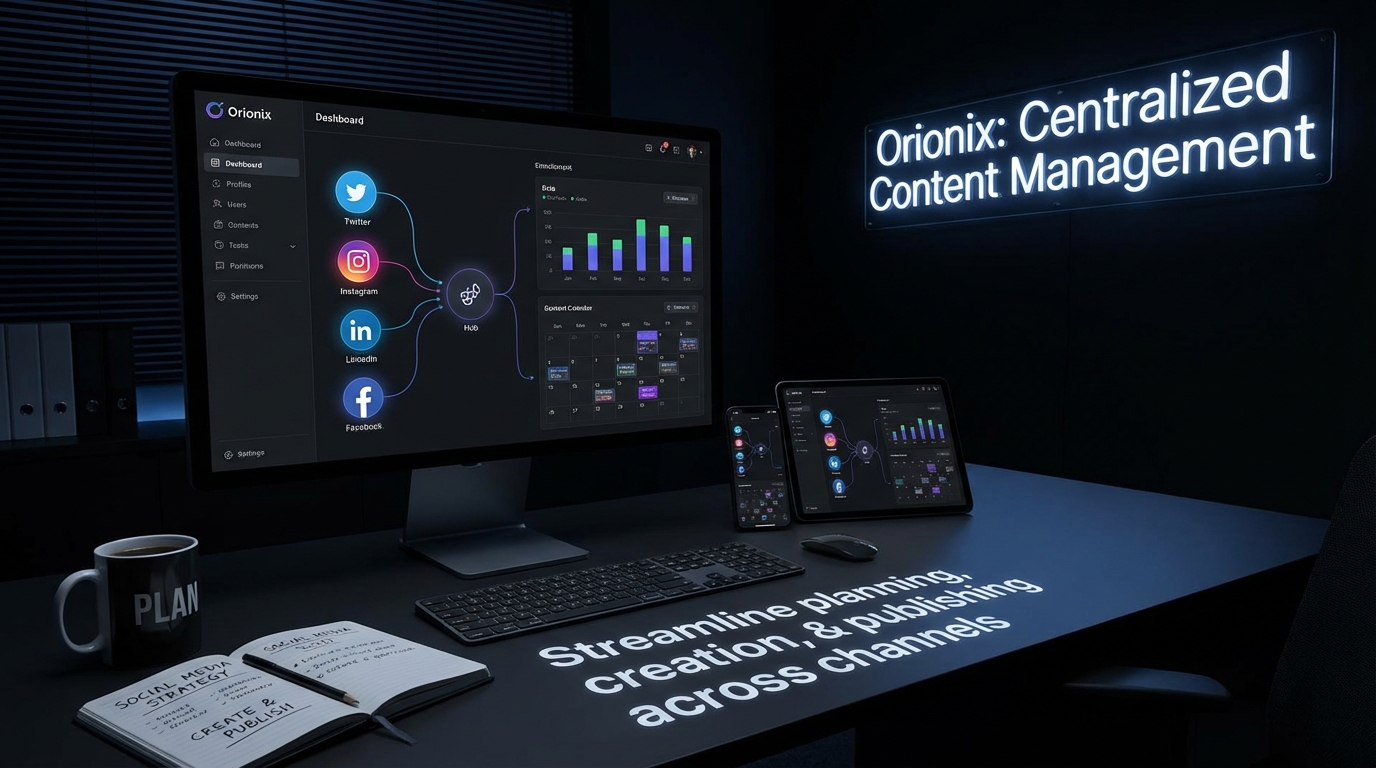
TL;DR: Social media and content management platforms like Orionix help businesses efficiently plan, create, and publish content across multiple channels from one centralized dashboard. This integration streamlines workflows, saves time, and ensures consistent brand messaging while enabling teams to manage their entire digital presence without switching between multiple tools or platforms.
Frequently Asked Questions

What is social media marketing and how does it help businesses?
Social media marketing is the practice of using social media platforms like Instagram, Facebook, and Twitter to promote products, services, or brands. It helps businesses increase brand awareness, engage directly with customers, drive website traffic, and generate leads. Through strategic content creation and targeted advertising, businesses can reach specific audiences, build community relationships, and achieve measurable marketing goals while tracking performance metrics in real-time.
What are the best times to post on Instagram for maximum engagement?
The best times to post on Instagram are typically Tuesday through Friday between 9 AM and 1 PM, with peak engagement occurring around 11 AM. However, optimal posting times vary by industry and audience location. Analyze your Instagram Insights to identify when your specific followers are most active. Generally, avoid posting late nights or early mornings. Testing different time slots and using scheduling tools helps maximize reach and engagement rates.
How can you delete an Instagram account permanently?
To permanently delete an Instagram account, log in via web browser and visit instagram.com/accounts/remove/request/permanent/. Select a reason for deletion from the dropdown menu, re-enter your password, and click ‘Permanently delete my account.’ Note that deletion is irreversible after 30 days, and all photos, videos, followers, and data will be lost. Alternatively, you can temporarily deactivate your account instead of permanent deletion.
What is the difference between social media and digital marketing?
Social media marketing is a subset of digital marketing that focuses specifically on social media platforms like Instagram, Facebook, and LinkedIn. Digital marketing encompasses all online marketing channels including email marketing, SEO, paid advertising, content marketing, and websites. While social media emphasizes engagement and community building, digital marketing uses broader strategies across multiple online channels to reach customers, drive conversions, and achieve comprehensive business objectives.
How do social media platforms benefit content management for businesses?
Social media platforms provide businesses with centralized spaces to distribute content, engage audiences, and build brand presence. Using unified management tools, businesses can schedule posts across multiple platforms, track performance analytics, respond to customer inquiries, and maintain consistent branding. This streamlined approach saves time, ensures coordinated messaging, and allows teams to manage all social media activities from a single dashboard, improving efficiency and content strategy execution.
Can you gain followers on Instagram for free without paid services?
Yes, you can gain Instagram followers organically through consistent, high-quality content, strategic hashtag use, engaging with your target audience, posting at optimal times, and creating shareable Reels and Stories. Collaborate with others in your niche, respond to comments promptly, and use Instagram features like polls and questions. While growth may be slower than paid methods, authentic engagement builds loyal followers who genuinely connect with your brand.
How to deactivate Instagram temporarily without losing your account?
To temporarily deactivate Instagram, log in via web browser, go to your profile, click ‘Edit Profile,’ then scroll down and select ‘Temporarily disable my account’ at the bottom right. Choose a reason from the dropdown, re-enter your password, and confirm. Your profile, photos, and comments will be hidden until you reactivate by logging back in. This option is ideal for breaks without permanent deletion.
What features should social media marketing platforms include for businesses?
Effective social media marketing platforms should offer content scheduling across multiple channels, unified dashboards for centralized management, analytics and performance tracking, team collaboration tools, content calendar visualization, and post approval workflows. Additional valuable features include hashtag suggestions, optimal posting time recommendations, competitor analysis, engagement monitoring, and integration with design tools. These capabilities streamline content creation, publication, and strategy optimization for businesses managing multiple social media accounts.
Understanding Social Media and Its Impact on Modern Business Growth

The landscape of social media and digital marketing has fundamentally transformed how businesses connect with customers, build brands, and drive revenue. With over 4.8 billion active social media users worldwide, according to CDP Institute’s research, these platforms have evolved from optional marketing channels into essential business tools that directly influence growth trajectories. 📈
Recent data from Pew Research Center reveals that YouTube dominates as the most widely used platform with 84% of U.S. adults using it, followed by Facebook at 71%. This widespread adoption presents unprecedented opportunities for businesses to reach target audiences, but success requires strategic planning and execution.
The relationship between social media and marketing digital marketing strategies has become increasingly sophisticated. Marketing leaders now recognize that social media can influence critical business goals like revenue generation and new customer acquisition, even when direct attribution remains challenging, as highlighted in Sprout Social’s 2025 Impact Report.
The Current State of Social Media Platforms in 2025

Platform Usage and Demographics 📊
Understanding which social media platforms your audience uses is fundamental to success. The Pew Research Center’s comprehensive survey of 5,022 U.S. adults (conducted February 5 to June 18, 2025) provides crucial insights into platform preferences.
| Platform | Usage Percentage | Primary Audience |
|---|---|---|
| YouTube | 84% | All demographics |
| 71% | Broad audience, local businesses | |
| 50% | Younger demographics, visual brands | |
| TikTok | 37% | Gen Z and millennials |
| 32% | International communication |
Growing shares of U.S. adults report using Instagram, TikTok, WhatsApp, and Reddit compared to previous years, indicating shifting user behaviors that marketers must track closely.
Emerging Platforms and Opportunities
Three newer platforms—Threads, Bluesky, and Truth Social—are each used by approximately one-in-ten or fewer U.S. adults currently. While these platforms represent smaller audiences, early adopters may find opportunities for engagement before saturation occurs.
For businesses looking to master social media and marketing, understanding platform-specific dynamics is essential. Each channel attracts distinct demographics and user behaviors that require tailored approaches.
Social Media and Content Strategy That Drives Results
The 80/20 Rule for Content Success 🎯
According to CDP Institute research, the most successful social media strategies follow the 80/20 rule: 80% valuable, educational, or entertaining content, and 20% promotional material. This approach builds trust and engagement before asking for sales.
Three key content types consistently perform well:
- Educational Content: Positions your business as an industry expert by sharing insights, tips, and behind-the-scenes content that helps audiences solve problems
- User-Generated Content: Builds trust and community by encouraging customers to share experiences, creating authentic social proof
- Consistent Branding: Ensures recognition across all platforms using consistent colors, fonts, and messaging aligned with overall brand identity
Video Content Dominance
Video content consistently outperforms static posts across all platforms. Research from Intentsify reveals that 35% of social media marketers report short-form video provides the highest ROI of all content types.
For B2B marketers specifically, LinkedIn video clips under 90 seconds—featuring webinar highlights, customer stories, or product walkthroughs—are trending in 2025. This aligns with broader patterns showing that short-form videos, live streams, and stories capture attention and drive higher engagement rates compared to other content formats.
Engagement Over Follower Count: The New Metric That Matters
Why Smaller Audiences Often Win 💪
Modern social media algorithms prioritize engagement over follower numbers. CDP Institute research emphasizes that a smaller, highly engaged audience often delivers better business results than a large, passive following.
This shift has significant implications for businesses trying to gain followers on Instagram for free or grow on other platforms. Quality trumps quantity in 2025.
Tactics to Boost Engagement
- Respond Promptly: Social media users expect quick responses, and engagement signals boost content visibility in algorithms
- Ask Questions: Simple questions about preferences, experiences, or opinions can significantly increase engagement rates
- Share Authentic Stories: People connect with genuine stories about business journeys, challenges, and successes
- Leverage First-Person Posts: According to Intentsify, posts from subject matter experts, founders, and leaders get significantly more engagement than brand posts alone on LinkedIn
For those managing multiple accounts and wondering about analytics, check out can you see who views your Instagram profile to understand platform limitations and focus on metrics that truly matter.
B2B Social Media Trends and Tactics for 2025
LinkedIn Remains the B2B Powerhouse 🏆
Research from Intentsify confirms that 70% of marketers report LinkedIn has generated a positive ROI for their organization, according to SocialPilot data. This makes LinkedIn the undisputed leader for B2B social media marketing.
However, the way to win on LinkedIn has evolved significantly:
| Strategy | Description | Expected Impact |
|---|---|---|
| First-Person Posts | Content from SMEs, founders, and leaders | Higher engagement than brand posts |
| Carousel Posts | Long-form content in digestible, swipeable format | Increased time on content |
| Short Videos | Under 90 seconds from webinars or demos | Maximum reach and engagement |
Intent Data: The Game Changer
The real breakthrough for B2B marketers in 2025 is intent data. Instead of hoping ads reach the right people, marketers can now use actual buying signals to focus campaigns. Intent data tools enable marketers to:
- Build audiences of accounts actively researching solutions or competitors
- Match content to buying stage (awareness vs. consideration vs. decision)
- Reduce wasted ad spend by cutting out accounts not showing intent
With social media ad spending projected to surpass $256 billion in 2025 according to The Business Research Company, precision targeting becomes increasingly critical for ROI.
Platform-Specific Strategies Across the Social Landscape
Instagram: Visual Storytelling and Timing ⏰
Instagram excels for visual storytelling and lifestyle brands, particularly effective for reaching younger demographics and showcasing products. For businesses leveraging Instagram for business, understanding optimal posting times is crucial.
While the best time to post on Instagram varies by audience, data consistently shows that engagement peaks during specific windows. Learn more about best times to post on Instagram to maximize your content’s reach.
TikTok: Explosive Reach for Authentic Content
TikTok offers explosive reach potential for creative, authentic content that resonates with Gen Z and increasingly millennial audiences. The platform’s 37% usage rate among U.S. adults represents significant growth and opportunity for brands willing to embrace its unique format.
Facebook: Community Building and Advanced Targeting
Facebook provides robust advertising tools and community-building features, making it effective for local businesses and detailed audience targeting. Despite concerns about declining organic reach, Facebook’s 71% usage rate among U.S. adults ensures it remains relevant for most marketing strategies.
X (Twitter): Niche but Powerful for Thought Leadership
According to Intentsify’s analysis, X isn’t where you’ll generate tons of leads directly, but it’s where you build trust and credibility. Exec-led thought leadership, timely takes on trends, and educational threads still perform well for brands with audiences on the platform.
Measuring Social Media Impact and Proving ROI
The Leadership Confidence Gap 📉
Sprout Social’s 2025 research of over 1,200 marketing leaders reveals a critical challenge: Most marketing leaders are confident social media can influence business goals like revenue and new customer acquisition, even if their metrics don’t show it yet. However, they’re uncertain if their own teams can tie social media to business outcomes.
This puts social marketers under increased pressure to prove ROI and gain leadership’s trust. The solution requires:
- Context Over Numbers: Leaders want social teams to share competitor insights, audience insights, performance data comparing against innovative brands, and intel on latest network updates
- Quality Over Volume: Marketing leaders and social managers are divided on whether they need to post more content—teams should prioritize quality content that speaks to audience truths
- Breaking Down Silos: Social data remains siloed, with leaders wanting teams outside of digital marketing to use social insights for decision-making
Infrastructure for Success
Teams need stronger integrations and more collaborative rituals to enable cross-departmental use of social data. This is where centralized platforms become invaluable for managing marketing digital marketing efforts across multiple channels.
For comprehensive guidance on building effective campaigns, explore social media marketing for small business strategies that scale.
Practical Tools and Resources for Social Media Management
Streamlining Your Workflow 🛠️
Managing multiple social media platforms efficiently requires the right tools. Social media management platforms like Hootsuite help streamline content creation and publishing across various channels through a single dashboard.
Key features to look for in management tools include:
- Multi-platform scheduling and publishing
- Analytics and reporting capabilities
- Team collaboration features
- Content calendar visualization
- Engagement tracking and response management
Account Management and Optimization
Understanding platform-specific features helps optimize your presence. For instance, knowing how to close your Instagram account or whether you can see if someone views your Instagram profile helps set realistic expectations for analytics and privacy.
When managing accounts, remember that how to deactivate Instagram differs from permanent deletion—temporary deactivation preserves your content while removing your profile from public view.
Industry-Specific Social Media Strategies
Tailoring Approaches by Sector 🎯
Different industries require customized social media approaches. For example, social media marketing for plumbers focuses on local SEO, before-and-after content, and customer testimonials, while tech companies might emphasize thought leadership and product demonstrations.
Professional services can benefit from understanding how to craft compelling applications, such as a strong social media marketing cover letter that showcases campaign results and strategic thinking.
Influencer Collaboration
Working with social media influencers requires tools to manage relationships across multiple channels. Centralized dashboards help track collaborations, measure impact, and maintain consistent communication.
The Future of Social Media and Digital Marketing Integration
Convergence of Channels 🔮
The future of social media and digital marketing lies in seamless integration across channels. As noted by Deloitte’s China Widener, who has over 25 years of professional experience in the technology, media, and telecommunication industry, technology-enabled business transformation requires understanding industry convergence.
Key trends shaping the future include:
- AI-Powered Personalization: Trustworthy AI will enable more sophisticated content targeting and creation
- Cross-Platform Attribution: Better tools for tracking customer journeys across multiple touchpoints
- Video-First Strategies: Continued dominance of video content across all platforms
- Privacy-First Marketing: Adapting to increased privacy regulations and user expectations
Optimizing Your Social Media Presence
To maximize impact, focus on optimizing your social media page for engagement and growth. This includes consistent branding, strategic content planning, and regular performance analysis.
Understanding broader social media sites and their unique characteristics helps inform where to invest time and resources for maximum return.
Integrating Social Media with Broader Marketing Efforts
SEO and Social Media Synergy 🔗
Social media signals increasingly influence search rankings, making integration with SEO strategies essential. Partnering with an SEO online marketing company can help align social media efforts with broader digital marketing goals.
For comprehensive digital strategy development, consider exploring online marketing company services that integrate social media with SEO, content marketing, and paid advertising for cohesive campaigns.
Leveraging Multiple Marketing Channels
Beyond social platforms, diversify your digital presence with:
- Email Marketing: Explore newsletter platforms to nurture leads captured through social media
- Visual Platforms: Utilize business Pinterest accounts for product discovery and traffic generation
- Content Marketing: Create valuable content that supports both social media and SEO goals
- Marketing Tools: Invest in comprehensive online marketing tools that integrate multiple channels
Understanding SEO and keyword research helps inform social media content topics that also drive organic search traffic.
Advanced Tactics for Social Media Growth
Organic Growth Strategies 📈
While paid advertising plays a role, organic growth remains valuable for building authentic communities. Rather than seeking shortcuts through free Instagram followers websites, focus on sustainable strategies that build genuine engagement.
Effective organic growth tactics include:
- Consistent posting schedules aligned with audience activity
- Engaging with comments and messages promptly
- Collaborating with complementary brands and influencers
- Creating shareable, valuable content that resonates with your audience
- Using platform-specific features like Stories, Reels, and Live videos
Content Creation and Visual Design
Creating eye-catching visuals is crucial for standing out. Learn how to create compelling signs for social media posts that grab attention in crowded feeds.
Analytics and Optimization
Regular analysis of performance metrics informs strategy refinement. Tools like website traffic checkers and page traffic checkers help understand how social media drives website visits and conversions.
For forecasting future performance, explore forecasting SEO traffic techniques that incorporate social signals into projections.
Competitive Intelligence and Market Positioning
Understanding Your Competition 🔍
Competitive analysis informs strategy development. Use tools to find competitor sites and analyze their social media approaches, content strategies, and engagement patterns.
Key competitive intelligence activities include:
- Monitoring competitor content performance and engagement rates
- Analyzing competitor advertising strategies and messaging
- Identifying gaps in competitor coverage that present opportunities
- Benchmarking your performance against industry leaders
As Sprout Social’s research indicates, marketing leaders want social teams to share competitor insights and performance data comparing against innovative brands—making competitive intelligence a priority for proving ROI.
Search Engine Marketing Integration
Combining social media with search engine marketing creates powerful synergies. Social media builds brand awareness and engagement, while SEM captures high-intent searches from users ready to convert.
Leverage SEO marketing tools to identify keywords and topics that perform well in both organic search and social media contexts.
Technical Infrastructure and Platform Selection
Building Your Technology Stack 💻
Success requires robust technical infrastructure. Whether you need web development, mobile apps, data analytics, or AI consulting, choosing the right technology partners supports scalable social media operations.
Consider platforms that offer:
- API integrations with major social networks
- Scalable infrastructure for growing content volumes
- Advanced analytics and reporting capabilities
- Security and compliance features for data protection
Stay informed about trends in technology that impact social media marketing, including AI, automation, and emerging platforms.
Event Marketing Integration
For businesses hosting events, integrate social media with event management. Platforms like event management systems help promote events across social channels and track attendee engagement.
Optimizing Your Social Media Operations with Centralized Management
The Power of Unified Platforms 🚀
Managing multiple social media accounts, content calendars, and analytics dashboards can overwhelm even experienced marketers. Centralized platforms streamline operations by consolidating planning, creation, and publishing into a single interface.
Benefits of centralized social media management include:
- Time savings through batch content creation and scheduling
- Consistent brand voice across all platforms
- Comprehensive analytics that reveal cross-platform insights
- Team collaboration features for approval workflows
- Reduced risk of errors or missed posts
As social media ad spending approaches $256 billion in 2025, efficiency and precision become increasingly important for maintaining competitive ROI.
Implementing SEO optimization services alongside social media efforts creates a comprehensive digital presence that captures audiences at multiple touchpoints throughout their customer journey.
Conclusion: Taking Action on Your Social Media Strategy
The relationship between social media and business success has never been stronger. With 4.8 billion active users worldwide, sophisticated algorithms prioritizing engagement, and proven ROI for businesses that execute strategically, social media represents one of the most powerful tools in modern marketing digital marketing arsenals.
Success requires understanding platform-specific dynamics, creating valuable content that resonates with audiences, measuring the right metrics, and continuously optimizing based on performance data. The 80/20 rule, video-first strategies, and engagement-focused approaches consistently deliver results across industries and business sizes.
Whether you’re managing social media platforms for B2B lead generation or consumer brand building, the fundamentals remain: provide value, build authentic relationships, and use data to inform decisions. As algorithms evolve and new platforms emerge, businesses that maintain strategic focus while adapting tactics will thrive. ✨
Ready to streamline your social media management and maximize your marketing impact? Visit our website to discover how Orionix’s centralized platform helps you plan, create, and publish content across all your channels through a single dashboard. Transform your social media operations from overwhelming to optimized, and start driving real business growth today. 🎯
Article created using IntentRank