


TL;DR: Pros and cons mean the advantages and disadvantages of something. The term « pros » refers to positive points or benefits, while « cons » refers to negative points or drawbacks. Weighing pros and cons helps you compare both sides before making a decision, ensuring you consider all factors and choose the best possible option.
Frequently Asked Questions
What does pros and cons mean?
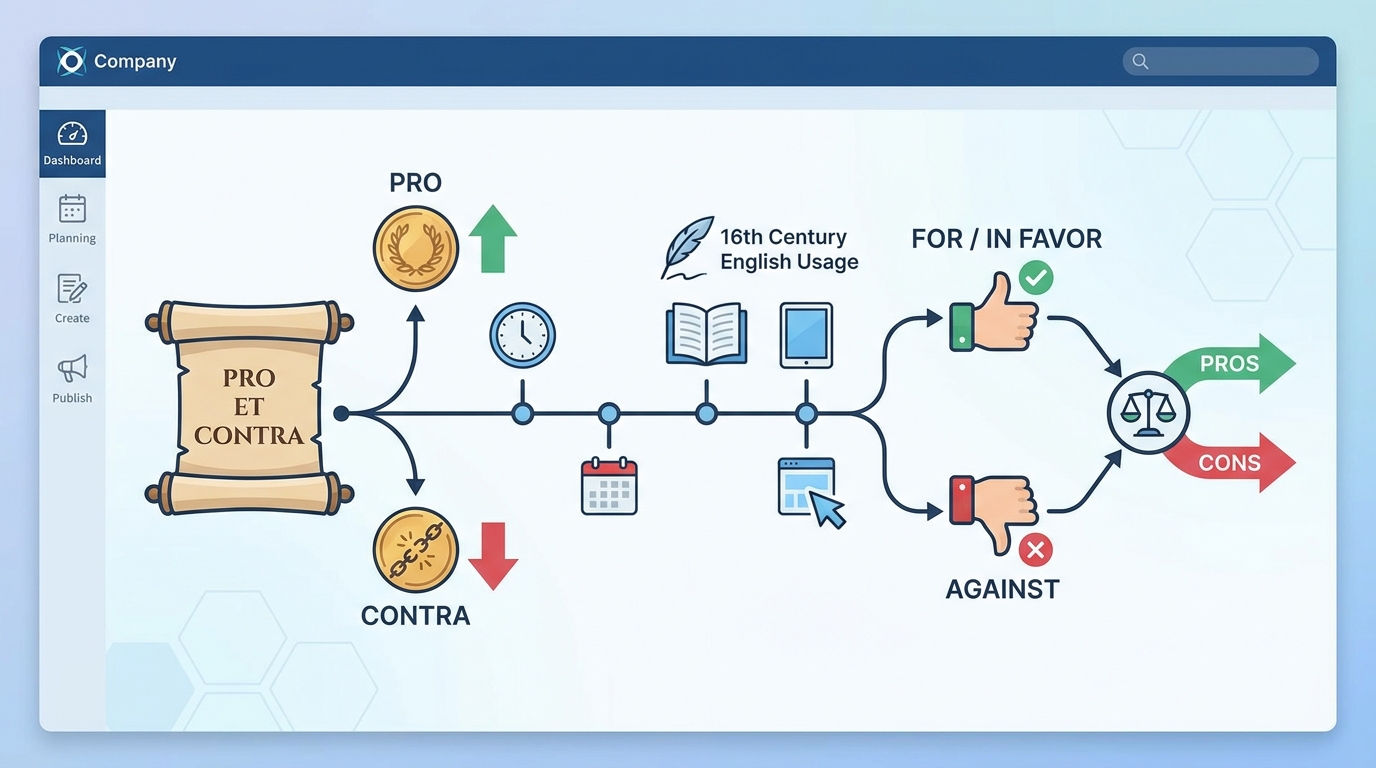
Pros and cons refers to the advantages and disadvantages of a decision, choice, or situation. « Pros » are the positive points or benefits, while « cons » are the negative points or drawbacks. The phrase originates from the Latin « pro et contra, » meaning « for and against. » People weigh pros and cons to make informed, balanced decisions before taking action.
How do you use pros and cons in a sentence?
You can use pros and cons to describe evaluating a decision. For example: « Let’s weigh the pros and cons before choosing a social media management platform. » The phrase works as a noun to summarize the good and bad aspects of any option, helping compare choices logically and clearly before deciding.
What is the difference between pros and cons?
The difference is simple: pros are the positive aspects, benefits, or reasons in favor of something, while cons are the negative aspects, drawbacks, or reasons against it. When making a decision, you list pros to show advantages and cons to show disadvantages, then compare both sides to choose the best option.
Where does the phrase pros and cons come from?
The phrase pros and cons comes from the Latin expression « pro et contra, » which means « for and against. » « Pro » means « for » or « in favor, » and « con » is short for « contra, » meaning « against. » The abbreviated English version has been used since the 16th century to describe weighing arguments on both sides.
Why is it important to weigh the pros and cons?
Weighing the pros and cons helps you make balanced, informed decisions by clearly seeing both benefits and drawbacks. This method reduces impulsive choices, highlights risks, and clarifies priorities. For example, when selecting social media management tools, comparing pros and cons ensures you pick the platform that best fits your goals and budget.
How do you create a pros and cons list?
To create a pros and cons list, write your decision at the top, then draw two columns labeled « Pros » and « Cons. » List all advantages under pros and all disadvantages under cons. Assign weight or importance to each point if needed, then compare the totals to make a clear, informed decision.
What are the pros and cons of social media marketing?
Pros of social media marketing include wider audience reach, cost-effectiveness, direct customer engagement, and brand awareness. Cons include time-consuming content creation, managing negative feedback, and keeping up with algorithm changes. Using platforms like Orionix to plan, create, and publish content across multiple channels from one dashboard helps maximize the pros while reducing the cons.
Are pros and cons the same as advantages and disadvantages?
Yes, pros and cons mean essentially the same thing as advantages and disadvantages. « Pros » equal advantages or benefits, and « cons » equal disadvantages or drawbacks. The terms are interchangeable, though « pros and cons » is more casual and commonly used in everyday conversation, while « advantages and disadvantages » sounds slightly more formal or academic.
What Does Pro and Cons Mean? A Complete Guide 📝
If you’ve ever weighed a big decision, you’ve likely made a « pros and cons » list. But what does pro and cons mean, exactly? The phrase refers to the advantages (pros) and disadvantages (cons) of a choice, situation, or option. Understanding this simple yet powerful decision-making framework can help you evaluate everything from career moves to which social media management platforms to use for your business.
In this guide, we’ll break down the meaning, origins, and practical uses of « pros and cons »—plus show how the concept applies to modern challenges like social media marketing and content planning.
The Meaning and Origin of « Pros and Cons »
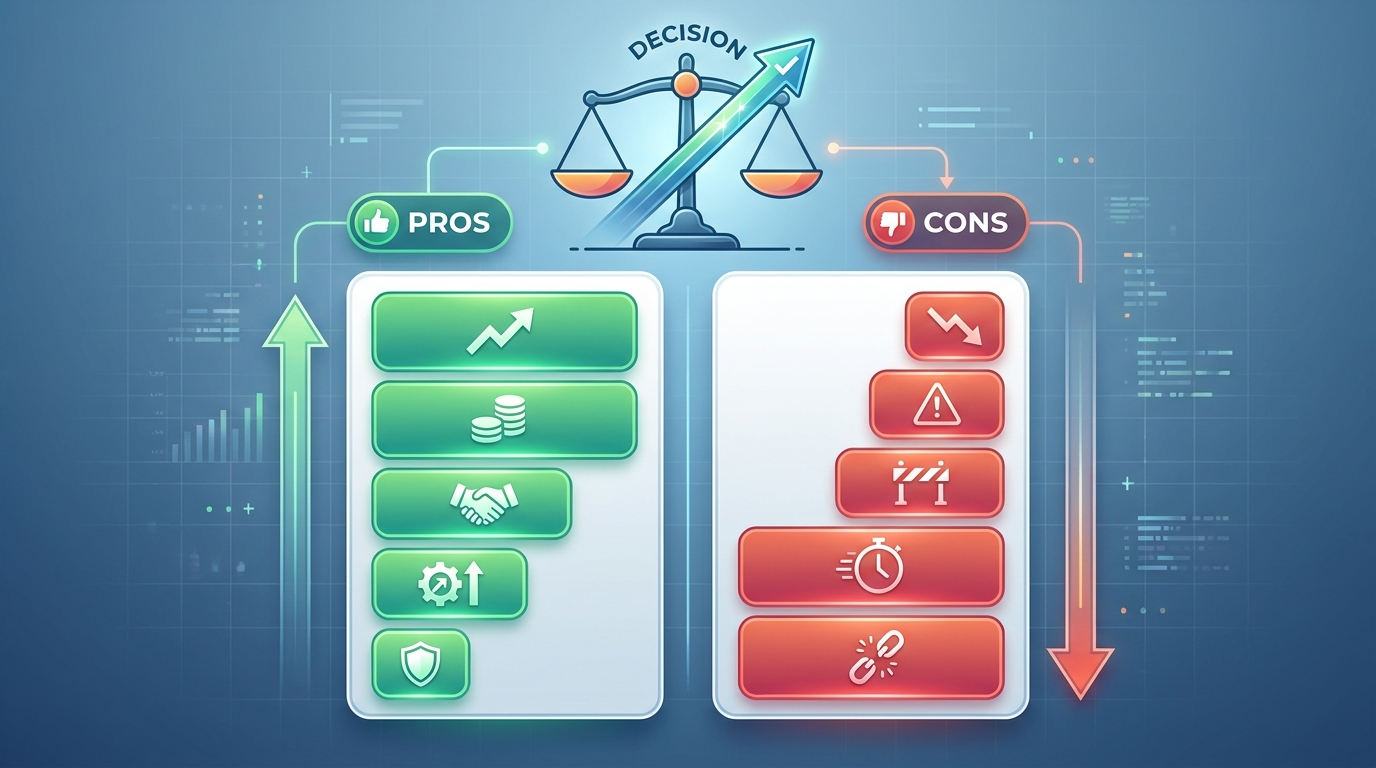
The term « pros and cons » comes from Latin. « Pro » means « for » and « con » is short for « contra, » meaning « against. » Together, they represent the arguments for and against something.
When someone lists pros and cons, they are systematically comparing the good points against the bad points. This method dates back centuries and remains one of the most reliable decision-making tools today.
Breaking Down the Terms
- Pros: The positive aspects, benefits, or advantages of a choice. 👍
- Cons: The negative aspects, drawbacks, or disadvantages. 👎
This mirrors how many abbreviations work in English. If you’ve wondered what does the suffix on mean in words, or what does and mean in text, you’ll notice how small linguistic elements carry big meaning—just like « pro » and « con » pack complex ideas into single syllables.
How a Pros and Cons List Works
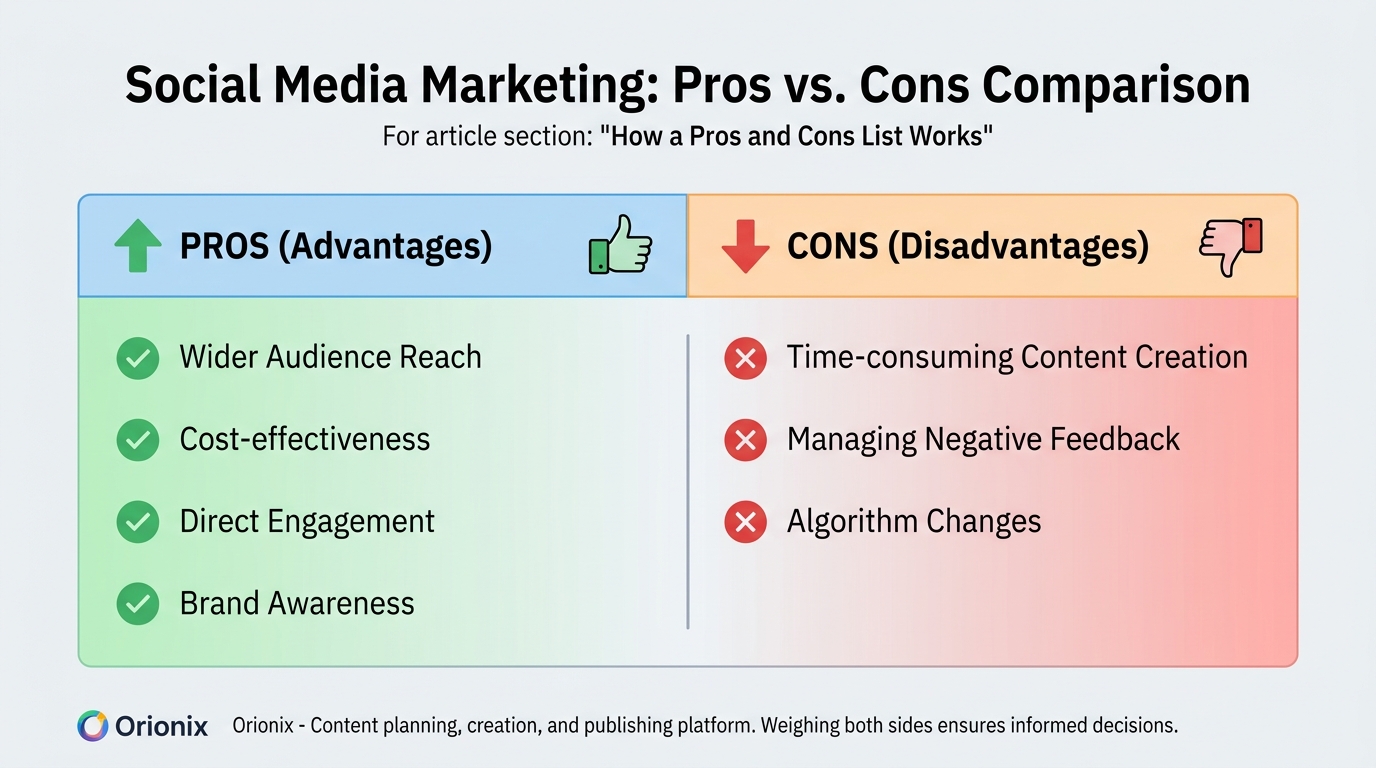
Creating a pros and cons list is straightforward. You divide a page into two columns—one for advantages and one for disadvantages—then fill in each side honestly.
Simple Steps to Build a Pros and Cons List
- Define the decision or question clearly.
- List every advantage you can think of under « Pros. »
- List every disadvantage under « Cons. »
- Weigh each item by importance (some points matter more than others).
- Compare the totals and lean toward the stronger side.
| Pros 👍 | Cons 👎 |
|---|---|
| Save time managing multiple accounts | Learning curve for new tools |
| Consistent posting schedule | Monthly subscription cost |
| Centralized analytics and reporting | Reliance on one platform |
Why Pros and Cons Matter in Everyday Decisions
The beauty of a pros and cons approach is its versatility. It works for personal choices, business strategy, and creative planning alike.
There’s even a related idea worth mentioning here: the reap what you sow definition. It means your actions have consequences—good or bad. A pros and cons list helps you anticipate those consequences before you act. 🌱
Common Situations for Weighing Pros and Cons
- Choosing between job offers
- Deciding whether to launch a new product
- Selecting the best sites for Instagram content scheduling
- Evaluating major purchases
- Comparing marketing strategies like paid search vs SEO for better ROI
Applying Pros and Cons to Social Media Marketing
For social media managers and content creators, understanding pros and cons is essential when choosing tools and strategies. Every platform, posting time, and content format has trade-offs.
Whether you’re focused on social media and audience growth, or fine-tuning your overall social media marketing plan, listing advantages and disadvantages keeps your decisions grounded in logic rather than guesswork.
Practical Social Media Decisions That Benefit From a Pros and Cons List
- Deciding the right dimensions for Instagram post images versus video content
- Learning how to repost on Instagram without losing engagement
- Figuring out how to erase posts on Facebook that no longer fit your brand
- Comparing organic reach against paid promotion
If you’re weighing tools for measuring performance, comparisons like Moz Pro vs Ahrefs and Ahrefs vs BuzzSumo demonstrate the pros-and-cons method in action for SEO tool selection.
Tips for Making Better Pros and Cons Lists
A basic list is helpful, but a well-structured one is far more powerful. Follow these tips to improve your decision-making accuracy.
Best Practices
- Assign weights: Score each pro and con from 1 to 5 based on importance.
- Be honest: Don’t inflate the pros just to justify what you already want.
- Consider the long term: Some cons are temporary; some pros are lasting.
- Get a second opinion: Others may spot points you missed.
- Revisit later: Sleep on major decisions and review your list fresh.
| Factor | Type | Weight (1-5) |
|---|---|---|
| Time savings | Pro | 5 |
| Subscription cost | Con | 3 |
| Better analytics | Pro | 4 |
Common Language Questions Related to Pros and Cons
Because « pros and cons » involves abbreviations, people often ask about similar linguistic shortcuts.
Understanding Abbreviations and Suffixes
Many wonder what does and mean in text—usually it’s just the connector « and, » but in slang it can join two ideas quickly. Similarly, questions about what does the suffix on mean relate to how endings change word meaning. « Con » being short for « contra » is a perfect example of how abbreviations become everyday words.
Conclusion: Turn Decisions Into Action 🚀
Now you know what pros and cons mean: a time-tested way to weigh advantages against disadvantages before making a choice. Whether you’re managing personal decisions or planning a full social media marketing strategy, this simple framework brings clarity and confidence.
Speaking of smarter decisions—if you manage content across multiple channels, the biggest « pro » you can add to your workflow is a unified platform. Orionix helps you plan, create, and publish content across all your social channels from a single dashboard, saving time and keeping your brand consistent.
Ready to tip the scales in your favor? Visit our website to see how Orionix streamlines your content workflow and eliminates the cons of juggling multiple tools.
Article created using IntentRank