
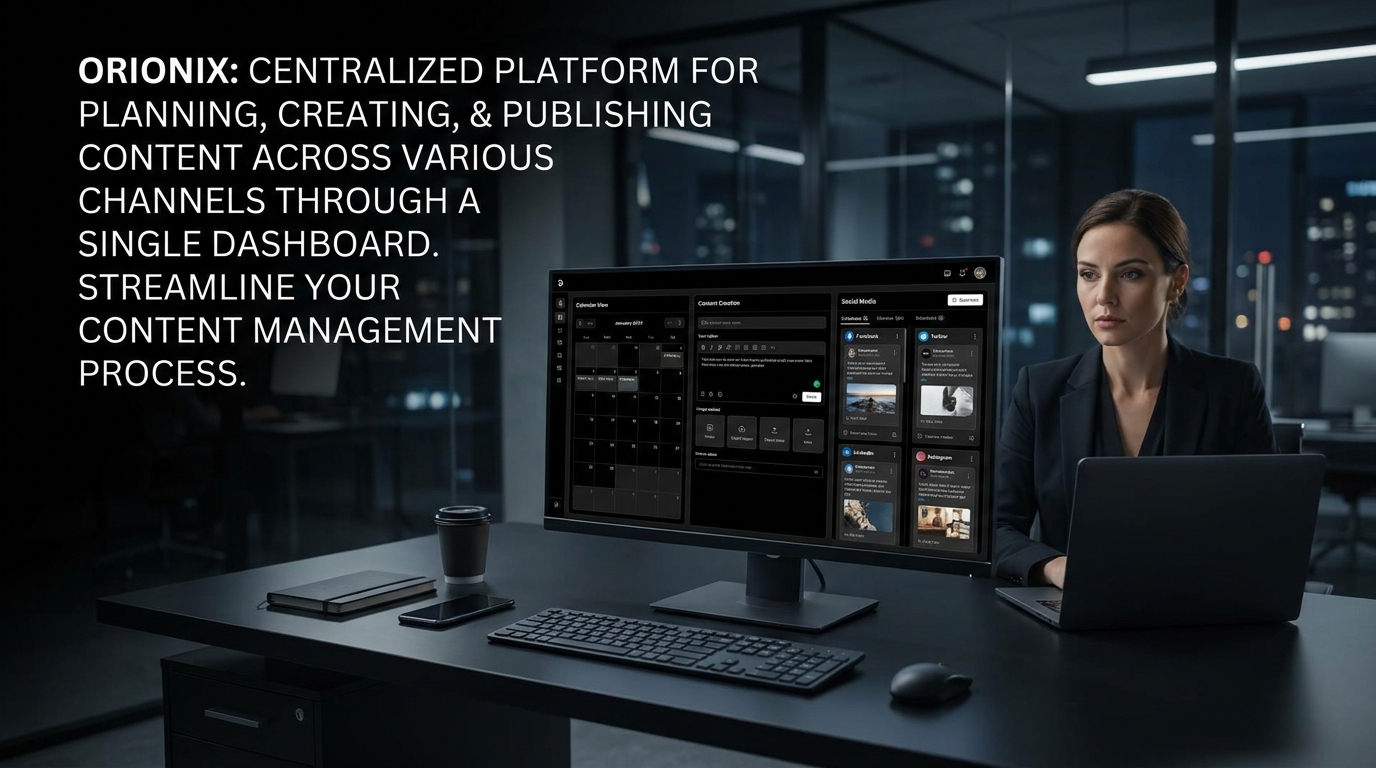
TL;DR: Social media management platforms are centralized tools that enable businesses to plan, create, schedule, and publish content across multiple social networks from a single dashboard. These platforms streamline workflow, save time, improve consistency, and provide analytics to optimize social media strategy. Solutions like Orionix help teams collaborate efficiently while managing all their social channels in one place.
Frequently Asked Questions
What are social media management platforms and how do they work?
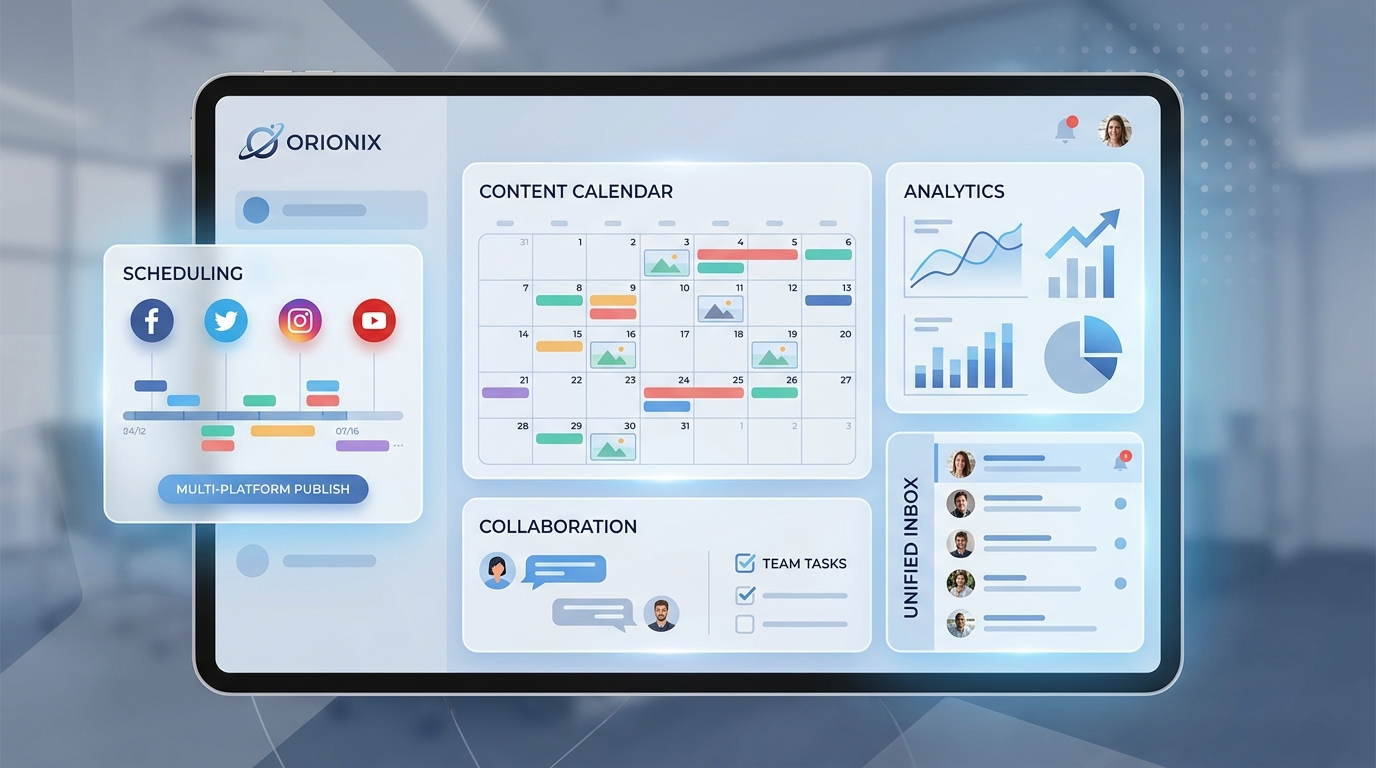
Social media management platforms are centralized software solutions that allow businesses to plan, create, schedule, and publish content across multiple social media channels from a single dashboard. They streamline workflows by eliminating the need to log into each platform separately, offer analytics tracking, and enable team collaboration. These tools help marketers save time and maintain consistent posting schedules across all their social media accounts.
What features should I look for in social media management platforms?
Essential features include multi-platform scheduling, content calendar visualization, analytics and reporting, team collaboration tools, and bulk content uploading. Look for platforms offering post preview capabilities, best time to post recommendations, content library management, and unified inbox for managing comments and messages. Advanced features may include AI-powered content suggestions, hashtag recommendations, and automated posting based on optimal engagement times.
How can social media management platforms improve my digital marketing strategy?
Social media management platforms enhance digital marketing by providing data-driven insights into audience engagement, optimal posting times, and content performance across channels. They enable consistent brand messaging, reduce manual workload through automation, and allow strategic planning through content calendars. These platforms help marketers identify trending topics, track competitor activity, and measure ROI, ultimately leading to more effective campaigns and better resource allocation.
What is the best time to post on Instagram using social media management platforms?
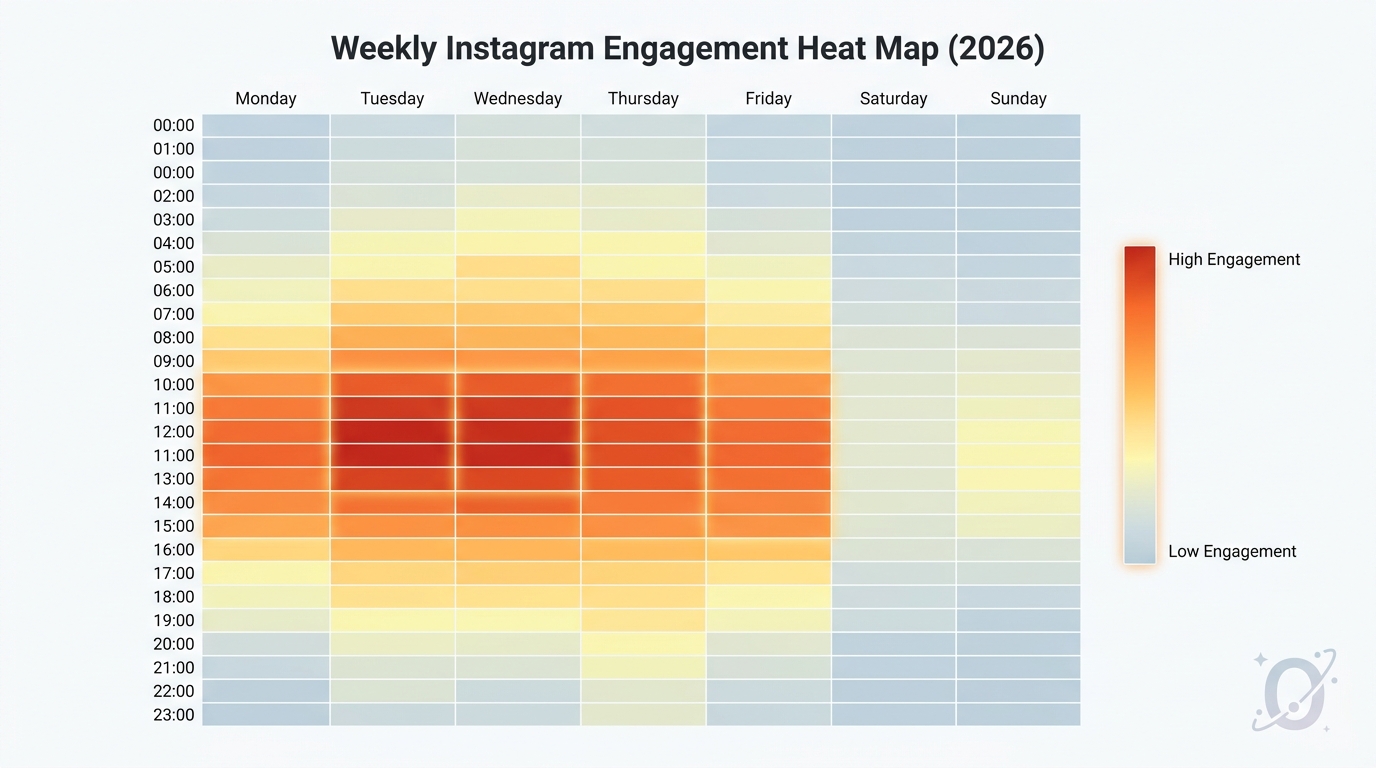
Social media management platforms typically recommend posting on Instagram between 10 AM-3 PM on weekdays, with peak engagement occurring around 11 AM-1 PM. However, optimal posting times vary by industry and audience demographics. Quality platforms analyze your specific audience’s activity patterns and suggest personalized best times to post. They often include auto-scheduling features that automatically publish content during these high-engagement windows for maximum visibility and interaction.
Can social media management platforms help manage multiple Instagram accounts?
Yes, social media management platforms excel at managing multiple Instagram accounts simultaneously from one dashboard. Users can switch between accounts, schedule posts for each, track individual analytics, and maintain separate content calendars. This is particularly valuable for agencies managing client accounts or businesses with multiple brand profiles. The platforms eliminate the need to constantly log in and out of different accounts or remember to deactivate Instagram sessions.
How do social media management platforms compare to posting directly on social media platforms?
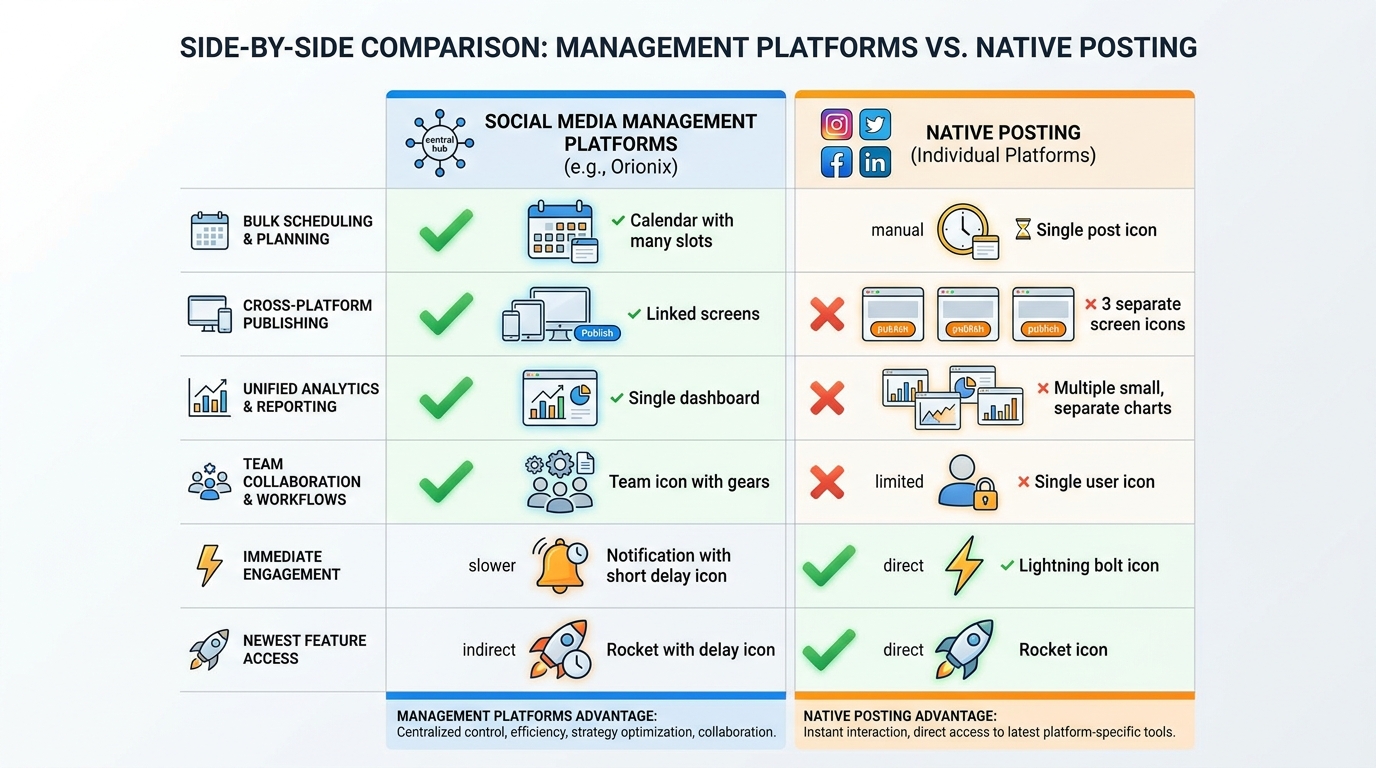
Social media management platforms offer significant advantages over native posting, including time savings through bulk scheduling, cross-platform publishing from one location, and advanced analytics. They provide content calendar visualization, team approval workflows, and performance comparisons across channels. While direct posting offers immediate engagement and access to newest features first, management platforms are superior for businesses requiring consistent scheduling, team collaboration, and comprehensive reporting across multiple social media platforms.
What is the cost of social media management platforms for businesses?
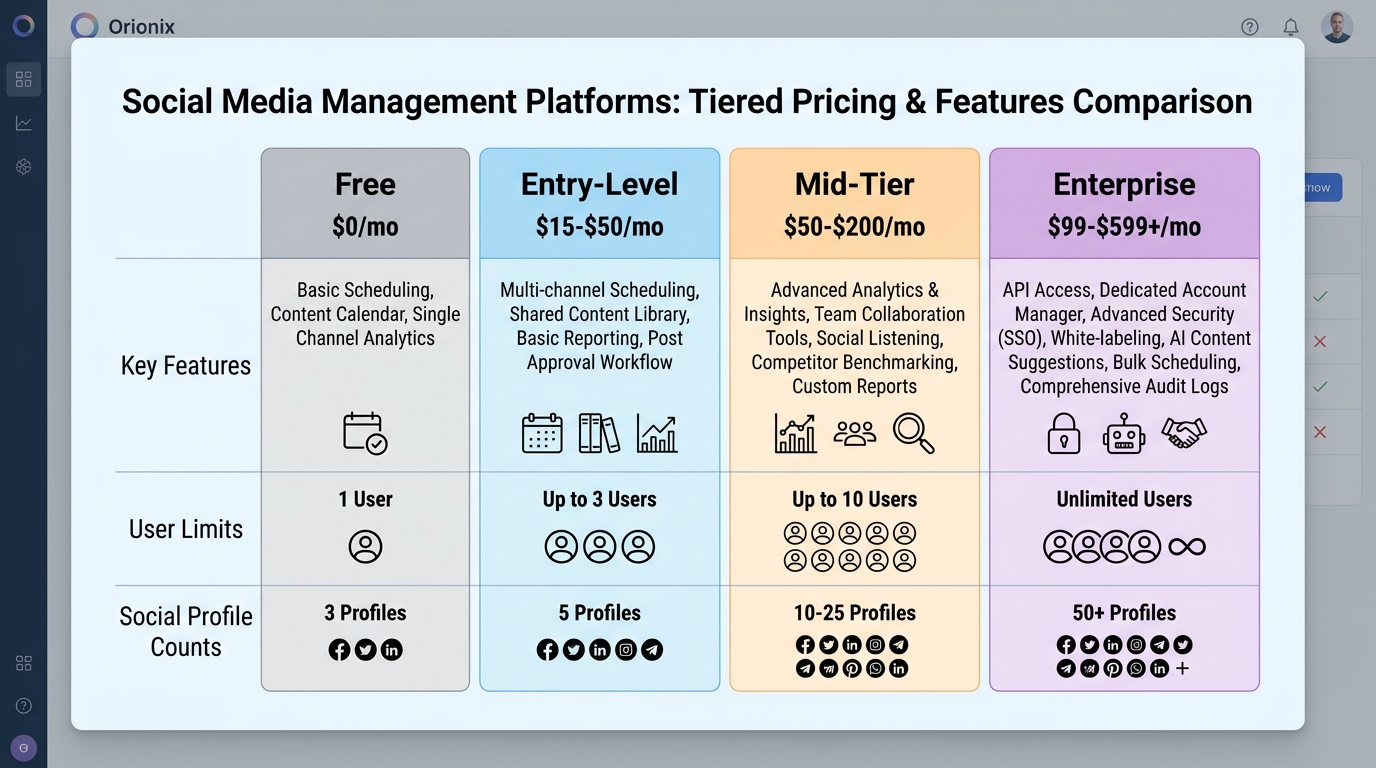
Social media management platforms typically range from free basic plans to $99-$599+ monthly for enterprise solutions. Entry-level plans ($15-$50/month) usually support 1-3 users and 5-10 social profiles. Mid-tier options ($50-$200/month) offer advanced analytics, team collaboration, and more profiles. Enterprise plans provide unlimited users, custom features, and dedicated support. Pricing depends on the number of social accounts, users, posts scheduled, and features required for your social media marketing needs.
How do social media management platforms handle content creation and scheduling?
These platforms provide intuitive content creation tools including image editors, caption templates, and media libraries for organizing assets. Users can draft posts, preview how they’ll appear on different social media platforms, and schedule them for optimal times. Bulk uploading allows scheduling weeks of content simultaneously. Many platforms offer content queues, recycling evergreen posts, and AI-powered suggestions. Calendar views help visualize your entire social media marketing strategy and prevent scheduling conflicts.
Understanding Social Media Management Platforms in 2026
In today’s fast-paced digital landscape, social media management platforms have become indispensable tools for businesses and content creators alike. These comprehensive solutions enable teams to streamline their social media marketing efforts, manage multiple accounts, and maintain a consistent brand presence across various social media platforms. 📱
With the explosion of digital marketing channels and the increasing complexity of social media and content strategies, managing your online presence manually is no longer feasible. Whether you’re a small business owner juggling multiple responsibilities or a dedicated social media manager overseeing enterprise accounts, the right platform can transform your workflow and dramatically improve your results.
This comprehensive guide explores everything you need to know about social media management platforms, from essential features to implementation strategies that drive real business outcomes.
What Are Social Media Management Platforms?
Social media management platforms are centralized software solutions that allow users to plan, create, schedule, publish, and analyze content across multiple social media platforms from a single dashboard. These tools eliminate the need to log in and out of different accounts, saving valuable time and reducing the risk of errors.
Modern platforms go far beyond simple scheduling. They integrate advanced features like content calendars, collaboration tools, analytics dashboards, and audience engagement capabilities that empower marketing teams to work more efficiently and strategically.
Core Functions of Management Platforms
- Content Scheduling: Plan and automate posts across multiple channels simultaneously
- Analytics & Reporting: Track performance metrics and generate comprehensive reports
- Team Collaboration: Enable multiple users to work together with approval workflows
- Engagement Management: Monitor and respond to comments, messages, and mentions
- Content Library: Store and organize media assets for easy access and reuse
Why Your Business Needs a Social Media Management Platform
The benefits of implementing a robust social media management solution extend far beyond convenience. These platforms deliver measurable business value that directly impacts your bottom line. 💼
Time Efficiency and Productivity
Managing multiple social media accounts manually can consume hours each day. A centralized platform reduces this time investment by up to 70%, allowing your team to focus on strategy and creative development rather than repetitive tasks.
For businesses exploring entry level social media marketing, these tools provide an accessible starting point without overwhelming beginners with complexity.
Consistency Across Channels
Maintaining a consistent brand voice and posting schedule across platforms becomes exponentially more challenging as your presence grows. Management platforms ensure your messaging remains cohesive while adapting content appropriately for each channel’s unique audience and format requirements.
This consistency is particularly crucial for social media marketing for restaurants and other local businesses where brand recognition drives customer loyalty.
| Task | Manual Process | With Platform | Time Saved |
|---|---|---|---|
| Daily Posting (5 platforms) | 45 minutes | 10 minutes | 78% |
| Weekly Analytics Review | 2 hours | 30 minutes | 75% |
| Content Planning | 3 hours | 1 hour | 67% |
| Engagement Management | 1 hour daily | 20 minutes daily | 67% |
Essential Features to Look For in Social Media Management Platforms
Not all social media management platforms are created equal. Understanding which features matter most for your specific needs ensures you invest in a solution that delivers maximum value. 🎯
Multi-Platform Integration
The best platforms support all major social media platforms including Facebook, Instagram, Twitter, LinkedIn, Pinterest, TikTok, and YouTube. This comprehensive integration allows you to manage your entire social presence from one location.
When evaluating platforms, verify they support the specific networks your audience uses most. For instance, social media marketing for music artists might prioritize platforms with strong audio and video capabilities.
Advanced Scheduling Capabilities
Look for platforms that offer intelligent scheduling features, including:
- Bulk upload and scheduling for multiple posts
- Optimal timing recommendations based on audience engagement data
- Recurring post scheduling for evergreen content
- Queue management for automated posting
- Time zone adjustments for global audiences
Understanding the best times to post on Instagram and other platforms can significantly impact your engagement rates, and many advanced platforms provide data-driven recommendations for optimal posting schedules.
Comprehensive Analytics and Reporting
Data-driven decision making separates successful social media strategies from random posting. Your platform should provide:
- Real-time performance metrics across all channels
- Customizable reporting dashboards
- Competitor benchmarking capabilities
- Audience demographic insights
- Content performance comparisons
- Export options for stakeholder presentations
Team Collaboration Tools
For organizations with multiple team members, collaboration features are essential. Look for platforms offering:
- Role-based access controls and permissions
- Approval workflows for content review
- Internal commenting and feedback systems
- Task assignment capabilities
- Activity logs for accountability
Popular Social Media Management Platforms Comparison
The market offers numerous options, each with distinct strengths and target audiences. Understanding the landscape helps you identify the best fit for your organization’s needs and budget. 💡
Enterprise-Level Solutions
Platforms like Hootsuite have established themselves as industry leaders for large organizations requiring comprehensive features and extensive integrations. These solutions typically offer advanced analytics, team management, and enterprise-grade security.
Enterprise platforms excel at managing complex workflows across multiple departments and geographical locations, making them ideal for corporations with substantial social media operations.
Mid-Market Solutions
Mid-market platforms balance robust functionality with user-friendly interfaces and more accessible pricing. These solutions work well for growing businesses that have outgrown basic tools but don’t require enterprise-level complexity.
They typically include essential features like scheduling, analytics, and team collaboration while maintaining intuitive designs that minimize training requirements.
Small Business and Startup Options
Budget-conscious businesses can find excellent platforms designed specifically for smaller teams. These solutions prioritize ease of use and core functionality while keeping costs manageable.
Many offer free tiers or affordable starter plans that provide sufficient capabilities for businesses just beginning their social media journey.
| Platform Type | Best For | Key Strengths | Price Range |
|---|---|---|---|
| Enterprise | Large corporations | Advanced analytics, unlimited users, API access | $500-$5,000+/month |
| Mid-Market | Growing businesses | Balance of features and usability | $50-$500/month |
| Small Business | Startups, solopreneurs | Simplicity, affordability, core features | Free-$50/month |
| Specialized | Niche industries | Industry-specific features | Varies |
Implementing a Social Media Management Platform Successfully
Selecting the right platform is only the first step. Successful implementation requires strategic planning and thoughtful execution to maximize your investment and achieve your social media marketing goals. 🚀
Step 1: Audit Your Current Social Media Presence
Before implementing any new tool, conduct a comprehensive audit of your existing social media accounts. Document which platforms you’re active on, your posting frequency, engagement rates, and current pain points.
This audit helps you identify specific features you need and provides baseline metrics to measure improvement after implementation.
Step 2: Define Your Workflow and Processes
Map out your ideal content creation and approval workflow. Consider:
- Who creates content and who approves it?
- How far in advance should content be planned?
- What approval steps are necessary?
- How will you handle urgent or reactive posts?
- Who monitors and responds to engagement?
Clear processes ensure your team uses the platform consistently and efficiently from day one.
Step 3: Migrate Content and Connect Accounts
Connect all your social media accounts to your new platform. Most solutions offer straightforward OAuth authentication that securely links your accounts without sharing passwords.
Import existing content calendars and assets into your new system. Many platforms offer migration assistance or import tools to streamline this process.
Step 4: Train Your Team Thoroughly
Invest time in comprehensive team training. Most platforms offer tutorials, documentation, and customer support to facilitate onboarding.
Create internal documentation specific to your workflows and processes to ensure consistency as team members change or new people join.
Optimizing Your Social Media Strategy with Platform Features
Once your platform is operational, leverage its advanced features to elevate your social media marketing strategy beyond basic posting. 📊
Content Planning and Calendar Management
Use your platform’s calendar view to visualize your content strategy across weeks or months. This bird’s-eye perspective helps you:
- Identify gaps in your posting schedule
- Ensure balanced content mix across topics and formats
- Plan campaigns around key dates and events
- Coordinate cross-platform campaigns
- Avoid over-posting or content fatigue
For guidance on social media what to post, many platforms now include AI-powered content suggestions based on trending topics and historical performance.
Audience Engagement and Community Management
Modern platforms consolidate comments, mentions, and messages from all your accounts into unified inboxes. This centralization ensures no engagement opportunities slip through the cracks.
Set up notification rules to alert team members about high-priority interactions, such as negative sentiment or mentions from VIP accounts.
Performance Optimization Through Data
Regularly analyze your performance data to identify what’s working and what isn’t. Look for patterns in:
- Content types that generate the most engagement
- Optimal posting times for your specific audience
- Hashtag performance and reach
- Audience growth trends
- Conversion rates from social traffic
Understanding the best time to post on Instagram and other platforms varies by audience, and your analytics will reveal your unique optimal windows.
Advanced Platform Features for Power Users
As you become more proficient with your platform, explore advanced features that can further enhance your social media management capabilities. ⚡
Social Listening and Monitoring
Many platforms include social listening tools that track mentions of your brand, competitors, and industry keywords across social media. This intelligence helps you:
- Identify emerging trends and conversations
- Monitor brand sentiment in real-time
- Discover influencer partnership opportunities
- Respond quickly to potential PR issues
- Find user-generated content to share
Content Library and Asset Management
Build a comprehensive content library within your platform to store frequently used images, videos, logos, and branded templates. Organized asset management ensures:
- Consistent brand presentation across all posts
- Easy access to approved creative materials
- Reduced time searching for files
- Version control for updated assets
Automation and Workflows
Advanced automation features can handle repetitive tasks, freeing your team for strategic work. Consider automating:
- Welcome messages for new followers
- Responses to common questions
- Content curation from RSS feeds
- Report generation and distribution
- Alert notifications for specific triggers
Instagram-Specific Management Features
Given Instagram’s prominence in social media marketing, most platforms offer specialized features for this visual-first network. Understanding these capabilities helps you maximize your Instagram presence. 📸
Instagram Content Scheduling
Schedule Instagram posts, Stories, and Reels directly from your management platform. Advanced tools now support first-comment scheduling, carousel posts, and even Instagram Shopping features.
Many users wonder how do you delete an Instagram account or how can you delete an instagram account when consolidating their presence. Similarly, knowing how to deactivate Instagram temporarily can be useful during strategy pivots or rebranding efforts.
Instagram Analytics Integration
Track Instagram-specific metrics including:
- Story completion rates and tap-through behavior
- Reel performance and reach
- Hashtag effectiveness
- Profile visits and website clicks
- Follower demographics and growth
For those exploring growth strategies, understanding legitimate methods versus questionable services like free Instagram followers websites is crucial for long-term success.
Instagram Engagement Tools
Manage Instagram interactions efficiently with features for:
- Comment moderation and filtering
- Direct message management
- User-generated content discovery
- Influencer identification and outreach
Understanding features like if you restrict someone on Instagram what happens helps you manage your community effectively while maintaining a positive environment.
Platform Selection Criteria and Decision Framework
Choosing the right social media management platform requires careful evaluation against your specific requirements. Use this framework to guide your decision-making process. 🎯
Budget Considerations
Determine your total budget including:
- Monthly or annual subscription fees
- Additional costs for extra users or accounts
- Integration or API access fees
- Training and onboarding expenses
- Potential costs for premium features or add-ons
Remember that the cheapest option isn’t always the most cost-effective. Calculate ROI based on time savings and improved results rather than just upfront costs.
Scalability and Growth
Choose a platform that can grow with your business. Consider:
- Can you easily add more social accounts?
- Are there user limits that might constrain your team?
- Does the platform support enterprise features you might need later?
- How flexible are the pricing tiers?
Integration Capabilities
Evaluate how well the platform integrates with your existing marketing technology stack:
- CRM systems for lead tracking
- Email marketing platforms
- Content management systems
- Design tools like Canva or Adobe Creative Cloud
- Analytics platforms like Google Analytics
Seamless integrations eliminate data silos and create more efficient workflows across your entire marketing operation.
| Criteria | Priority Level | Questions to Ask |
|---|---|---|
| Platform Coverage | High | Does it support all networks you use? |
| Team Collaboration | High | Can multiple users work efficiently? |
| Analytics Depth | High | Does reporting meet your needs? |
| Ease of Use | Medium | How steep is the learning curve? |
| Customer Support | Medium | What support channels are available? |
| Mobile Access | Medium | Is there a functional mobile app? |
Common Challenges and Solutions
Even with the best platform, teams encounter challenges. Understanding common obstacles and their solutions helps you navigate implementation smoothly. 💪
Team Adoption Resistance
Challenge: Team members resist changing from familiar manual processes or existing tools.
Solution: Involve team members in the selection process, provide comprehensive training, and highlight specific pain points the new platform solves. Designate platform champions who can provide peer support.
Content Quality vs. Quantity
Challenge: The ease of scheduling leads to posting more content without maintaining quality standards.
Solution: Establish clear content guidelines and approval workflows. Use the platform’s collaboration features to maintain quality control while scaling production.
Data Overload
Challenge: Comprehensive analytics provide so much data that teams struggle to identify actionable insights.
Solution: Focus on key performance indicators aligned with business objectives. Create custom dashboards that highlight your most important metrics rather than trying to track everything.
Platform-Specific Limitations
Challenge: Some social networks restrict third-party posting or limit available features through APIs.
Solution: Understand each platform’s limitations upfront. For restricted features, develop hybrid workflows that combine automation with manual posting for specific content types.
Future Trends in Social Media Management
The social media management landscape continues evolving rapidly. Understanding emerging trends helps you future-proof your platform investment and strategy. 🔮
AI-Powered Content Creation
Artificial intelligence is increasingly integrated into management platforms, offering:
- Automated caption generation
- Image and video editing suggestions
- Content performance predictions
- Optimal posting time recommendations
- Automated response drafting for common inquiries
These AI capabilities don’t replace human creativity but augment it, allowing teams to work more efficiently while maintaining authentic brand voices.
Enhanced Video Management
As video content dominates social media, platforms are developing specialized features for:
- Native video editing within the platform
- Automated subtitle generation
- Video performance analytics
- Cross-platform video optimization
- Short-form video scheduling across TikTok, Reels, and Shorts
Advanced Social Commerce Integration
Social commerce is exploding, and management platforms are adapting with:
- Product catalog integration
- Shoppable post creation tools
- Social commerce analytics
- Inventory synchronization
- Customer journey tracking from social to purchase
Best Practices for Maximizing Platform Value
Getting the most from your social media management platform requires ongoing optimization and strategic use of available features. Implement these best practices to maximize your ROI. ✨
Maintain a Consistent Content Calendar
Plan content at least two weeks in advance, allowing time for creation, review, and optimization. Balance planned content with flexibility for timely, reactive posts.
Use your platform’s calendar view to ensure variety in content types, topics, and formats across all channels.
Leverage User-Generated Content
Monitor brand mentions and hashtags to discover authentic content from your community. Use your platform’s listening features to identify share-worthy user posts that strengthen community bonds.
Always obtain proper permissions and credit original creators when resharing their content.
Test and Iterate Continuously
Use your platform’s A/B testing capabilities to experiment with:
- Different posting times
- Various content formats
- Alternative caption styles
- Diverse visual treatments
- Multiple call-to-action approaches
Let data guide your strategy evolution rather than assumptions or industry generalizations.
Regular Performance Reviews
Schedule weekly or monthly reviews of your analytics to identify trends and opportunities. Share insights across your organization to align social media efforts with broader business objectives.
Use these reviews to refine your strategy, reallocate resources to high-performing content, and eliminate approaches that aren’t delivering results.
Integrating Management Platforms with Broader Marketing Efforts
Your social media management platform shouldn’t exist in isolation. Integration with your broader digital marketing and marketing strategies creates synergies that amplify results across channels. 🔗
Connecting Social with Email Marketing
Integrate your social platform with email marketing tools to:
- Grow your email list through social campaigns
- Share email content on social channels
- Segment audiences based on social engagement
- Coordinate messaging across both channels
SEO and Content Marketing Alignment
Social media signals increasingly influence search rankings. Coordinate your social strategy with SEO efforts by:
- Promoting blog content through social channels
- Using social listening to identify content opportunities
- Driving social traffic to key landing pages
- Building brand authority through consistent social presence
For comprehensive strategies that integrate social with other digital channels, explore resources on online marketing companies and their holistic approaches.
Paid Social Integration
Many advanced platforms now include paid social advertising features, allowing you to:
- Boost high-performing organic posts
- Create and manage ad campaigns
- Track paid and organic performance together
- Optimize ad spend based on comprehensive data
Measuring Success: Key Metrics and KPIs
Understanding which metrics matter most ensures you’re tracking genuine business impact rather than vanity metrics. Focus on these key performance indicators to measure your social media management success. 📈
Engagement Metrics
- Engagement Rate: Interactions (likes, comments, shares) divided by reach or followers
- Click-Through Rate: Percentage of viewers who click your links
- Response Time: How quickly you respond to comments and messages
- Conversation Rate: Comments per post indicating meaningful dialogue
Growth Metrics
- Follower Growth Rate: Net new followers over time
- Reach Expansion: Increase in unique users seeing your content
- Share of Voice: Your brand mentions versus competitors
- Audience Demographics: Changes in follower composition
Business Impact Metrics
- Website Traffic: Visitors from social media channels
- Lead Generation: Leads attributed to social campaigns
- Conversion Rate: Social visitors who complete desired actions
- Revenue Attribution: Sales influenced by social media
- Customer Acquisition Cost: Cost to acquire customers through social
| Business Goal | Primary KPI | Secondary KPIs |
|---|---|---|
| Brand Awareness | Reach & Impressions | Follower growth, share of voice |
| Engagement | Engagement Rate | Comments, shares, saves |
| Lead Generation | Conversion Rate | Click-through rate, form submissions |
| Customer Service | Response Time | Resolution rate, satisfaction scores |
| Sales | Revenue Attribution | Conversion rate, average order value |
Platform-Specific Tips and Techniques
While management platforms unify your workflow, each social network requires platform-specific strategies for optimal results. Here’s how to leverage your management tools for each major platform. 🎪
Instagram Strategy Through Your Platform
Instagram remains a visual powerhouse requiring careful attention to aesthetics and timing. Use your management platform to:
- Preview your grid layout before posting
- Schedule Stories with polls and interactive elements
- Track which hashtags to follow on Instagram for inspiration
- Monitor Instagram-specific metrics like saves and shares
- Manage Instagram Shopping features
Understanding how to look at liked posts on Instagram helps you identify content your audience values, informing future creation.
LinkedIn for B2B Marketing
LinkedIn requires a more professional approach. Your platform should help you:
- Schedule thought leadership content during business hours
- Track engagement from specific industries or job titles
- Monitor company page analytics
- Coordinate employee advocacy programs
Twitter for Real-Time Engagement
Twitter’s fast-paced nature demands agility. Use your platform to:
- Monitor trending topics and hashtags
- Schedule tweets during peak engagement windows
- Track conversation threads
- Respond quickly to mentions and direct messages
Facebook for Community Building
Facebook’s diverse features require comprehensive management:
- Schedule various content types (posts, Stories, videos)
- Manage Facebook Groups alongside your page
- Track event promotion and RSVPs
- Monitor and respond to reviews
Security and Compliance Considerations
As social media becomes increasingly critical to business operations, security and compliance can’t be afterthoughts. Your management platform should support robust security practices. 🔒
Access Control and Permissions
Implement strict access controls within your platform:
- Grant minimum necessary permissions to each user
- Require strong password policies
- Enable two-factor authentication for all accounts
- Regularly audit user access and remove unnecessary permissions
- Maintain activity logs for accountability
Data Privacy and Compliance
Ensure your platform helps you maintain compliance with relevant regulations:
- GDPR compliance for European audiences
- CCPA compliance for California residents
- Industry-specific regulations (HIPAA, FINRA, etc.)
- Platform-specific policies and terms of service
Crisis Management Preparedness
Use your platform to prepare for potential social media crises:
- Create response templates for common scenarios
- Establish escalation procedures
- Set up monitoring for negative sentiment spikes
- Maintain crisis communication protocols
Content Creation and Curation Strategies
Your management platform streamlines distribution, but compelling content remains essential. Develop efficient creation and curation workflows that maintain quality at scale. 🎨
Content Pillars and Themes
Establish 3-5 content pillars that align with your brand and audience interests. Use your platform’s tagging or categorization features to organize content by pillar, ensuring balanced coverage.
For specific guidance on content strategy, explore what to post on social media for inspiration across industries.
Efficient Content Batching
Create content in batches to maximize efficiency:
- Dedicate specific days to content creation
- Shoot multiple photos or videos in single sessions
- Write several captions at once when in creative flow
- Use templates to speed up design work
Curated Content Strategy
Balance original content with curated material from trusted sources:
- Set up RSS feeds within your platform to discover relevant content
- Use social listening to identify trending topics
- Credit sources properly when sharing
- Add your unique perspective or commentary
User-Generated Content Programs
Encourage and leverage content from your community:
- Create branded hashtags for customers to use
- Run contests encouraging content submission
- Feature customer stories and testimonials
- Obtain proper permissions before resharing
Mobile Management and On-the-Go Access
Social media never sleeps, and neither does your need for platform access. Evaluate mobile capabilities to ensure you can manage your presence from anywhere. 📱
Mobile App Features
Quality mobile apps should offer:
- Content scheduling and publishing
- Push notifications for mentions and comments
- Quick response capabilities
- Analytics viewing
- Approval workflows
Mobile-First Content Creation
Many platforms now support mobile content creation:
- Capture and edit photos directly in the app
- Record and trim videos on your device
- Apply filters and effects
- Draft captions using voice-to-text
Emergency Response Capability
Mobile access becomes critical during crises or urgent situations. Ensure your platform allows authorized team members to respond quickly from any location, maintaining business continuity even outside traditional office hours.
Training and Team Development
Your platform is only as effective as your team’s ability to use it. Invest in ongoing training and development to maximize platform adoption and capability. 🎓
Initial Onboarding Process
Develop a structured onboarding program:
- Platform navigation and interface overview
- Role-specific feature training
- Workflow and process documentation
- Hands-on practice with supervision
- Q&A sessions and troubleshooting
Continuous Learning
Social media platforms and management tools evolve constantly:
- Schedule regular training updates on new features
- Share best practices and success stories internally
- Attend platform webinars and training sessions
- Encourage experimentation with new capabilities
Certification and Specialization
Many platforms offer certification programs that validate expertise. Encourage team members to pursue these credentials, which:
- Demonstrate proficiency to stakeholders
- Unlock advanced platform features
- Provide structured learning paths
- Connect you with platform expert communities
Cost Optimization and Budget Management
Maximizing the value of your platform investment requires strategic budget management and cost optimization. Ensure you’re getting the best return on your subscription investment. 💰
Right-Sizing Your Plan
Regularly evaluate whether your current plan matches your needs:
- Are you paying for features you don’t use?
- Have you outgrown your current tier’s limitations?
- Could annual billing save money versus monthly?
- Are there redundant tools you can eliminate?
Measuring Platform ROI
Calculate your platform’s return on investment by tracking:
- Time saved versus manual management
- Increased engagement and reach
- Lead generation improvements
- Revenue attributed to social campaigns
- Reduced need for additional tools or services
Maximizing Included Features
Many users only scratch the surface of their platform’s capabilities. Audit available features regularly to ensure you’re leveraging everything included in your subscription before purchasing add-ons.
Choosing Between Specialized and All-in-One Platforms
The market offers both comprehensive all-in-one solutions and specialized tools focused on specific aspects of social media management. Understanding the trade-offs helps you make the right choice. ⚖️
All-in-One Platform Advantages
- Single login and unified interface
- Consistent data across all features
- Simplified billing and vendor management
- Better integration between functions
- Lower total cost than multiple specialized tools
Specialized Tool Benefits
- Deeper functionality in specific areas
- Often more innovative features
- Potentially better at niche requirements
- Flexibility to build custom tool stack
Hybrid Approach
Many organizations find success with a hybrid strategy: using a comprehensive platform for core functions while supplementing with specialized tools for specific needs like advanced video editing or influencer management.
The Role of Content Creators in Platform Success
Understanding how social media platforms for content creators differ from business-focused tools helps you support any creators on your team or in your network. 🎬
Content creators often prioritize different features than traditional businesses:
- Advanced editing capabilities
- Cross-platform content adaptation
- Audience analytics and demographics
- Monetization tracking
- Collaboration tools for brand partnerships
If your strategy includes working with influencers or creators, ensure your platform facilitates these partnerships through features like guest access, content approval workflows, and campaign tracking.
Transform Your Social Media Strategy Today
Social media management platforms have evolved from simple scheduling tools into comprehensive command centers for your entire social presence. The right platform doesn’t just save time—it transforms how you connect with audiences, measure performance, and drive business results. 🚀
Success requires more than selecting the right tool. It demands strategic implementation, ongoing optimization, and commitment to data-driven decision making. By leveraging the features and best practices outlined in this guide, you’ll position your organization to maximize the value of your platform investment.
Whether you’re managing social media for a local business, a growing startup, or an enterprise organization, the principles remain consistent: plan strategically, execute efficiently, measure rigorously, and adapt continuously.
The social media landscape will continue evolving, with new platforms emerging and existing ones introducing innovative features. Your management platform should evolve with these changes, providing the flexibility and capabilities to adapt your strategy while maintaining operational efficiency.
Ready to streamline your social media management and transform your content strategy? Visit our website to discover how Orionix’s centralized platform can help you plan, create, and publish content across all your channels from a single, powerful dashboard. Take control of your social media presence and achieve the results your business deserves. ✨
Article created using IntentRank