
TL;DR: Social media marketing for restaurants involves creating engaging content showcasing menu items, behind-the-scenes moments, and customer experiences across platforms like Instagram, Facebook, and TikTok. Successful strategies include posting high-quality food photos, running targeted ads, encouraging user-generated content, responding to reviews, and using location tags to attract local diners and build brand loyalty.
Frequently Asked Questions

What is social media marketing for restaurants?
Social media marketing for restaurants is a digital marketing strategy that uses platforms like Instagram, Facebook, and TikTok to promote dining establishments, engage with customers, and drive foot traffic. It involves sharing food photos, menu updates, special offers, and behind-the-scenes content to build brand awareness and customer loyalty while reaching potential diners where they spend time online.
Which social media platforms work best for restaurant marketing?
Instagram and Facebook are the most effective social media platforms for restaurants due to their visual nature and local targeting capabilities. Instagram excels at showcasing food photography and stories, while Facebook offers event promotion and customer reviews. TikTok is increasingly valuable for reaching younger audiences, and Google Business Profile helps with local search visibility and customer engagement.
What are the best times to post on Instagram for restaurants?
The best times to post on Instagram for restaurants are typically 11 AM-1 PM during lunch hours and 6 PM-8 PM during dinner time when people are deciding where to eat. Weekdays, especially Tuesday through Thursday, show higher engagement. However, analyze your specific audience insights to determine optimal posting times, as local demographics and dining patterns vary by location.
How can restaurants gain followers on Instagram for free?
Restaurants can gain followers on Instagram for free by posting high-quality food photos consistently, using relevant hashtags like #foodie and location tags, engaging with local food bloggers, responding to comments promptly, running contests or giveaways, sharing user-generated content, posting Instagram Stories and Reels regularly, and collaborating with other local businesses for cross-promotion opportunities.
How does a centralized platform help with restaurant social media marketing?
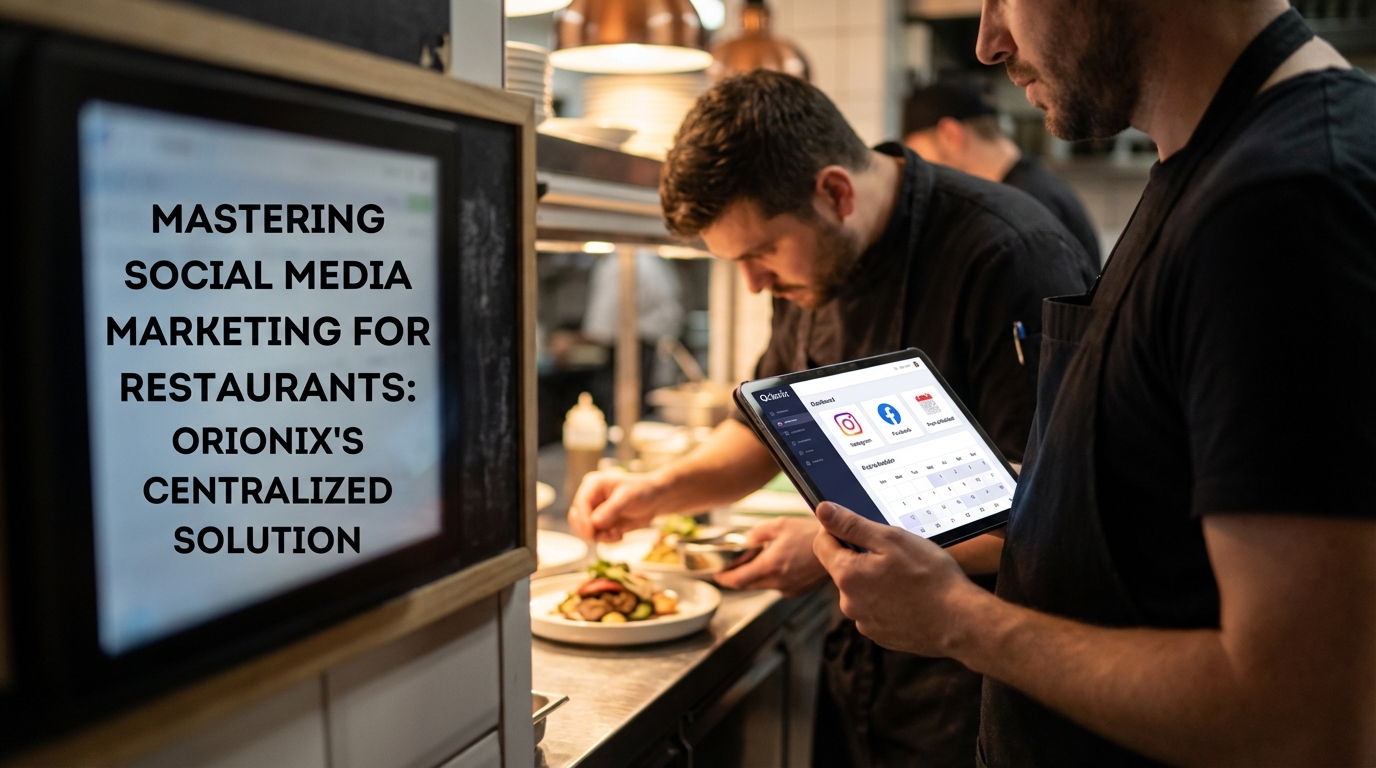
A centralized platform like Orionix streamlines restaurant social media marketing by allowing managers to plan, create, and publish content across multiple channels from a single dashboard. This saves time, ensures consistent branding, enables scheduled posting during optimal times, provides unified analytics, and reduces the complexity of managing multiple social media accounts simultaneously.
What content should restaurants post on social media platforms?
Restaurants should post diverse content including appetizing food photography, daily specials, new menu items, behind-the-scenes kitchen footage, chef profiles, customer testimonials, event announcements, seasonal promotions, and user-generated content. Mix educational content like recipes or cooking tips with entertaining posts. Maintain an 80/20 ratio: 80% engaging content and 20% promotional material for optimal audience engagement.
How often should restaurants post on social media for effective marketing?
Restaurants should post on Instagram 4-7 times per week, Facebook 3-5 times weekly, and create 2-3 TikTok videos per week for optimal engagement. Consistency matters more than frequency. Use Instagram Stories daily to maintain visibility. A centralized content management platform helps maintain this schedule efficiently by allowing batch creation and scheduled publishing across all platforms.
What digital marketing strategies work best for restaurants beyond social media?
Beyond social media, effective digital marketing strategies for restaurants include Google Business Profile optimization for local search, email marketing campaigns with exclusive offers, online ordering integration, influencer partnerships, paid advertising on Google and Facebook, customer review management, SMS marketing for reservations and promotions, and website optimization with menu integration and reservation systems.
Transform Your Restaurant’s Digital Presence with Strategic Social Media Marketing

In today’s competitive dining landscape, social media marketing for restaurants has become the secret ingredient to success. Whether you run a cozy neighborhood bistro or a bustling downtown eatery, your online presence can make or break your business. With over 4.8 billion active social media users worldwide, restaurants that master digital platforms consistently outperform those that don’t. 🍽️
The restaurant industry faces unique challenges in the digital age. Customers now discover dining options through Instagram feeds, make reservations based on Facebook reviews, and share their experiences across multiple platforms. Understanding how to leverage social media marketing effectively isn’t just about posting food photos—it’s about creating a comprehensive digital strategy that drives foot traffic and builds lasting customer relationships.
This comprehensive guide will walk you through proven strategies, platform-specific tactics, and actionable insights to elevate your restaurant’s social media presence. From choosing the right social media platforms to optimizing posting schedules, you’ll discover everything needed to transform casual scrollers into loyal customers.
Why Social Media Marketing for Restaurants is Non-Negotiable

The restaurant industry has undergone a dramatic transformation in recent years. Traditional advertising methods like print ads and billboards have given way to marketing digital marketing strategies that deliver measurable results and authentic engagement. 📱
The Shift in Customer Behavior
Modern diners don’t flip through phone books or newspaper ads—they scroll through Instagram feeds and check Google reviews. Before making dining decisions, 90% of customers read online reviews, and 75% discover new restaurants through social media platforms.
- Visual Discovery: Instagram and Pinterest drive restaurant discovery through stunning food photography
- Social Proof: User-generated content and reviews influence dining decisions more than traditional advertising
- Real-Time Engagement: Customers expect immediate responses to questions and comments
- Community Building: Social platforms allow restaurants to create loyal fan bases beyond physical locations
Measurable Business Impact
Restaurants with active social media presence report significant business improvements. Consistent posting increases brand awareness by 80%, while strategic content marketing can boost reservations by up to 40%.
| Metric | Impact | Platform |
|---|---|---|
| Brand Awareness | 80% increase | All platforms |
| Customer Engagement | 65% higher | Instagram, Facebook |
| Reservation Inquiries | 40% boost | Facebook, Google |
| Customer Loyalty | 3x stronger | Instagram Stories |
Choosing the Right Social Media Platforms for Your Restaurant
Not all social media platforms deliver equal results for restaurants. Success requires understanding where your target audience spends time and which platforms align with your restaurant’s brand identity. 🎯
Instagram: The Visual Storytelling Powerhouse
Instagram dominates restaurant marketing with its visual-first approach. The platform’s emphasis on high-quality imagery makes it perfect for showcasing mouth-watering dishes and behind-the-scenes kitchen moments.
Understanding the best time to post on Instagram significantly impacts engagement rates. Research shows that restaurants achieve maximum visibility posting between 11 AM-1 PM and 7 PM-9 PM on weekdays, when users are planning meals.
- Share stunning food photography during peak dining decision times
- Use Instagram Stories to showcase daily specials and limited-time offers
- Leverage Instagram Reels for quick recipe tips and kitchen tours
- Implement location tags to increase local discoverability
For detailed guidance on Instagram features, check out our comprehensive guide on Instagram Icons Explained to master the platform’s interface.
Facebook: Community Building and Customer Service
Facebook remains essential for restaurants targeting diverse demographics. The platform excels at community management, event promotion, and customer service interactions.
Key Facebook features for restaurants include:
- Business Pages: Centralized hub for menu, hours, and contact information
- Facebook Events: Promote special dinners, wine tastings, and seasonal celebrations
- Messenger Integration: Enable instant reservation inquiries and customer support
- Facebook Groups: Create exclusive communities for loyal customers and VIP members
TikTok: Reaching Younger Diners
TikTok has emerged as a powerful platform for restaurants targeting Gen Z and millennial audiences. Short-form video content showcasing food preparation, staff personalities, and dining experiences generates viral potential. 🎥
Successful TikTok strategies include recipe reveals, day-in-the-life content, and participating in trending food challenges.
Creating Compelling Content That Converts Browsers into Diners
Content quality separates successful restaurant social media accounts from forgettable ones. Strategic content creation requires balancing promotional posts with valuable, entertaining material that keeps followers engaged. ✨
The 80/20 Content Rule
Apply the 80/20 rule to restaurant social media: 80% valuable content (recipes, tips, behind-the-scenes), 20% promotional posts (special offers, reservations). This balance maintains audience interest while driving business objectives.
Content Types That Drive Engagement
| Content Type | Platform | Engagement Rate | Best For |
|---|---|---|---|
| Food Photography | High | Menu highlights, daily specials | |
| Behind-the-Scenes Videos | TikTok, Reels | Very High | Kitchen tours, prep work |
| Customer Testimonials | Medium-High | Building trust, social proof | |
| Recipe Tips | All platforms | High | Value-added content |
| Staff Spotlights | Instagram Stories | Medium | Humanizing brand |
Visual Content Best Practices
High-quality visuals are non-negotiable for restaurant marketing. Invest in proper lighting, composition, and editing to make dishes look irresistible.
- Use natural lighting whenever possible for authentic food photography
- Maintain consistent color schemes and filters aligned with brand identity
- Show food from multiple angles to highlight textures and details
- Include people enjoying meals to create emotional connections
Learn more about creating engaging visual content by exploring our guide on How to Add Your Own Audio to Instagram Reels for enhanced video content.
Optimizing Posting Schedules for Maximum Reach
Timing dramatically impacts social media performance. Understanding the best times to post on Instagram and other platforms ensures content reaches audiences when they’re most receptive. ⏰
Platform-Specific Timing Strategies
Each social platform has unique peak engagement windows based on user behavior patterns. Restaurants should tailor posting schedules to match when customers make dining decisions.
Instagram Optimal Times:
- Breakfast promotion: 7 AM – 9 AM
- Lunch rush: 11 AM – 1 PM
- Dinner planning: 5 PM – 7 PM
- Weekend brunch: Saturday/Sunday 9 AM – 11 AM
Facebook Peak Engagement:
- Weekday evenings: 6 PM – 9 PM
- Weekend afternoons: 12 PM – 3 PM
- Thursday/Friday: Highest engagement for weekend planning
Consistency Over Frequency
Regular posting schedules build audience expectations and algorithm favorability. Rather than sporadic bursts, maintain consistent presence with 3-5 weekly posts across primary platforms.
Using a social media and content management platform streamlines scheduling and ensures consistent posting. Tools like Hootsuite Social Media Scheduler enable restaurants to plan content calendars weeks in advance.
Growing Your Restaurant’s Social Media Following Organically
Building an authentic following takes time and strategy. While some restaurants look for shortcuts to gain followers on instagram for free, sustainable growth comes from genuine engagement and valuable content. 📈
Organic Growth Strategies
Focus on these proven tactics to build a loyal, engaged following without resorting to questionable free instagram followers website services that often deliver fake accounts:
- User-Generated Content: Encourage customers to tag your restaurant and share their experiences
- Local Hashtag Strategy: Use location-specific and cuisine-related hashtags to reach nearby diners
- Engagement Reciprocity: Actively respond to comments and engage with followers’ content
- Collaboration: Partner with local food bloggers and influencers for authentic exposure
- Contests and Giveaways: Run strategic promotions that encourage sharing and tagging
The Dangers of Fake Followers
Avoid services promising instant followers or engagement. Fake followers damage credibility, reduce authentic engagement rates, and can result in account penalties. Focus instead on attracting genuine food enthusiasts who become real customers. 🚫
For legitimate audience growth insights, explore our article on Instagram Follower Export Tool to analyze and understand your authentic audience demographics.
Leveraging User-Generated Content and Reviews
Customer-created content provides authentic social proof that influences dining decisions more effectively than branded posts. Smart restaurants actively cultivate and showcase user-generated content. 🌟
Encouraging Customer Content Creation
Create an environment and incentives that motivate customers to share their dining experiences:
- Design Instagram-worthy presentation and plating
- Create designated photo spots with branded elements
- Display your social media handle prominently throughout the restaurant
- Offer incentives like discounts for tagged posts and reviews
- Feature customer photos on your own social channels (with permission)
Managing Online Reviews Strategically
Reviews on social platforms and review sites significantly impact restaurant reputation. Develop a systematic approach to monitoring and responding to feedback:
| Review Type | Response Time | Approach |
|---|---|---|
| Positive Reviews | Within 24 hours | Thank customer, personalize response |
| Neutral Reviews | Within 12 hours | Address concerns, invite return visit |
| Negative Reviews | Within 6 hours | Apologize, offer resolution offline |
| Fake/Spam Reviews | Immediately | Report to platform, document |
Advanced Social Media Marketing Tactics for Restaurants
Once basic strategies are mastered, implement advanced tactics to differentiate your restaurant from competitors. These sophisticated approaches require more effort but deliver exceptional results. 💡
Instagram Stories and Highlights Strategy
Instagram Stories offer ephemeral content opportunities perfect for time-sensitive promotions and behind-the-scenes glimpses. Organize Stories into Highlights for permanent display on your profile.
Strategic Highlight categories for restaurants:
- Menu: Showcase signature dishes and seasonal offerings
- Reviews: Feature customer testimonials and positive feedback
- Events: Document special dinners, tastings, and celebrations
- Team: Introduce staff and highlight kitchen culture
- Behind-the-Scenes: Share preparation processes and sourcing stories
If you’re sharing content across platforms, learn How to Stop Sharing Instagram Stories to Facebook to maintain platform-specific content strategies.
Influencer Partnerships and Collaborations
Partnering with local food influencers expands reach to engaged, relevant audiences. Focus on micro-influencers (10K-100K followers) who maintain authentic connections with followers and align with your restaurant’s values.
Paid Social Advertising for Restaurants
Strategic paid campaigns amplify organic efforts and target specific demographics. Facebook and Instagram ads enable precise targeting based on location, interests, and dining behaviors.
Effective restaurant ad campaigns include:
- Geo-targeted promotions reaching nearby potential customers
- Retargeting campaigns for website visitors who haven’t made reservations
- Event promotion ads for special occasions and seasonal menus
- Video ads showcasing dining atmosphere and signature dishes
Managing Your Restaurant’s Social Media Presence Efficiently
Consistent social media management requires significant time and resources. Smart restaurants leverage tools and systems to maintain presence without overwhelming staff. ⚙️
Content Management Platforms
Centralized platforms streamline content creation, scheduling, and analytics across multiple channels. Rather than logging into each platform separately, manage everything from a unified dashboard.
Solutions like Social Media Management Hootsuite enable restaurants to plan content calendars, schedule posts in advance, and monitor engagement from a single interface.
Building a Content Calendar
Monthly content calendars ensure consistent posting and strategic messaging. Plan content around:
- Seasonal menu changes and ingredient availability
- Local events and holidays
- Restaurant milestones and anniversaries
- Industry trends and food holidays
- Promotional campaigns and special offers
Team Roles and Responsibilities
Clearly define who handles different aspects of social media management. Even small restaurants benefit from designating specific responsibilities:
| Role | Responsibilities | Time Commitment |
|---|---|---|
| Content Creator | Photography, video, caption writing | 5-10 hours/week |
| Community Manager | Responding to comments, messages | 3-5 hours/week |
| Strategy Lead | Planning, analytics, optimization | 2-4 hours/week |
| Crisis Manager | Negative reviews, complaints | As needed |
For restaurants looking to build dedicated marketing teams, explore Social Media Marketing Positions to understand different role requirements.
Measuring Success: Analytics and KPIs for Restaurant Social Media
Data-driven decision making separates successful campaigns from wasted efforts. Track meaningful metrics that directly correlate with business objectives. 📊
Essential Metrics to Monitor
Focus on metrics that indicate real business impact rather than vanity numbers:
- Engagement Rate: Percentage of followers interacting with content (likes, comments, shares)
- Reach and Impressions: How many unique users see your content
- Website Clicks: Traffic driven from social platforms to reservation pages
- Conversion Rate: Percentage of social visitors making reservations
- Customer Acquisition Cost: Marketing spend divided by new customers gained
Platform-Specific Analytics Tools
Each platform provides native analytics offering valuable insights. Instagram Insights, Facebook Analytics, and TikTok Analytics reveal audience demographics, content performance, and optimal posting times.
Third-party analytics platforms aggregate data across channels, providing comprehensive performance overviews and competitive benchmarking capabilities.
Adjusting Strategy Based on Data
Regular performance reviews enable strategic refinements. Monthly analytics reviews should identify:
- Top-performing content types and topics
- Optimal posting times for your specific audience
- Engagement trends and seasonal patterns
- Audience demographic shifts
- Conversion funnel bottlenecks
Common Social Media Marketing Mistakes Restaurants Make
Even experienced restaurant marketers fall into common traps that undermine social media effectiveness. Avoid these frequent pitfalls to maximize your marketing impact. ⚠️
Inconsistent Posting and Abandonment
Starting strong then abandoning social accounts damages credibility more than never starting. Customers interpret inactive accounts as signs of business problems or lack of professionalism.
Over-Promotion and Sales Focus
Constantly pushing reservations and promotions alienates followers. Remember the 80/20 rule—prioritize valuable, entertaining content over hard sells.
Ignoring Negative Feedback
Deleting negative comments or failing to respond creates public relations disasters. Address criticism professionally and transparently to demonstrate commitment to customer satisfaction.
Poor Quality Visual Content
Blurry photos, poor lighting, and unappetizing food presentation waste opportunities. Invest in basic photography skills or professional content creation to showcase dishes properly.
Buying Followers or Engagement
Fake followers and purchased engagement destroy account credibility and algorithm performance. Focus on authentic growth strategies that attract genuine customers.
Understanding proper account management helps avoid mistakes. If you need to make changes to your social presence, learn how to deactivate Instagram temporarily or how can you delete an Instagram account permanently when necessary.
Future Trends in Restaurant Social Media Marketing
The social media landscape constantly evolves. Forward-thinking restaurants prepare for emerging trends to maintain competitive advantages. 🚀
Video Content Dominance
Short-form video content continues gaining prominence across all platforms. TikTok’s success has prompted Instagram Reels, YouTube Shorts, and Facebook video prioritization. Restaurants must develop video content capabilities to remain relevant.
Social Commerce Integration
Direct purchasing through social platforms eliminates friction between discovery and transaction. Instagram Shopping, Facebook Shops, and TikTok Shopping enable seamless ordering experiences without leaving apps.
Augmented Reality Experiences
AR filters and virtual menu previews create immersive brand experiences. Restaurants experiment with AR features allowing customers to visualize dishes before ordering or try virtual restaurant tours.
Sustainability and Values-Based Marketing
Consumers increasingly support businesses aligned with their values. Restaurants showcasing sustainability practices, local sourcing, and community involvement resonate with conscious diners.
AI-Powered Personalization
Artificial intelligence enables hyper-personalized content delivery and customer service. Chatbots handle reservation inquiries while AI analytics predict trending content topics and optimal posting strategies.
For insights on leveraging advanced marketing tools, explore resources on Top SEO Marketing Tools and Mastering Search Engine Marketing to complement your social media efforts.
Building a Comprehensive Digital Marketing Strategy
Social media marketing works best as part of an integrated marketing digital marketing approach. Successful restaurants coordinate social efforts with other digital channels for maximum impact. 🎯
Integrating Social with Website and SEO
Drive social media traffic to an optimized website designed for conversions. Ensure your site loads quickly, displays beautifully on mobile devices, and makes reservations effortless.
Social signals influence search engine rankings, while SEO-optimized content provides material for social sharing. This symbiotic relationship amplifies both channels’ effectiveness.
Email Marketing Coordination
Capture email addresses from social followers to build owned communication channels. Email marketing complements social media by delivering personalized offers and updates directly to interested customers.
Online Reputation Management
Monitor and manage your restaurant’s reputation across all digital touchpoints—social platforms, review sites, and search results. Consistent messaging and responsive customer service build trust across channels.
Local Marketing Integration
Combine social media with local SEO, Google Business Profile optimization, and community partnerships. Restaurants thrive when digital presence reinforces physical location advantages.
Understanding comprehensive digital strategies helps restaurants compete effectively. Learn more about working with online marketing companies and local SEO audit tools to strengthen your overall digital presence.
Getting Professional Help with Your Restaurant’s Social Media
Many restaurants reach points where professional assistance makes sense. Understanding when and how to get help ensures smart investment decisions. 👥
When to Consider Professional Management
Consider hiring social media professionals when:
- Your restaurant lacks internal expertise or time for consistent management
- Current efforts produce minimal results despite significant time investment
- You’re expanding to multiple locations requiring coordinated strategies
- Negative reviews or PR issues require crisis management expertise
- You want to scale quickly with paid advertising campaigns
Building Internal Capabilities
For restaurants preferring in-house management, invest in team training and certification. Programs like the Hootsuite Social Marketing Certification provide structured learning paths for developing professional-level skills.
Hybrid Approaches
Many successful restaurants use hybrid models—handling daily posting internally while outsourcing strategy development, paid advertising, or content creation to specialists.
Transform Your Restaurant’s Social Media Success Today
Mastering social media marketing for restaurants requires commitment, creativity, and strategic thinking. The restaurants thriving in today’s competitive landscape treat social media as essential infrastructure rather than optional marketing activity. 🌟
Start by selecting 2-3 platforms where your target customers spend time. Develop consistent content calendars focused on valuable, engaging material rather than constant promotion. Monitor performance metrics to identify what resonates with your audience, then refine strategies accordingly.
Remember that social media success doesn’t happen overnight. Building authentic followings and converting social engagement into restaurant reservations takes time and persistence. Stay patient, remain consistent, and continuously adapt based on performance data and emerging trends.
The investment in social media marketing pays dividends through increased brand awareness, customer loyalty, and ultimately, more filled tables. Restaurants that master these digital channels create sustainable competitive advantages that drive long-term success.
Ready to streamline your restaurant’s social media management and take your digital marketing to the next level? Visit Orionix to discover how our centralized content management platform helps restaurants plan, create, and publish compelling content across all channels from a single, intuitive dashboard. Transform your social media strategy today and start filling more tables tomorrow! 🚀
Article created using IntentRank