
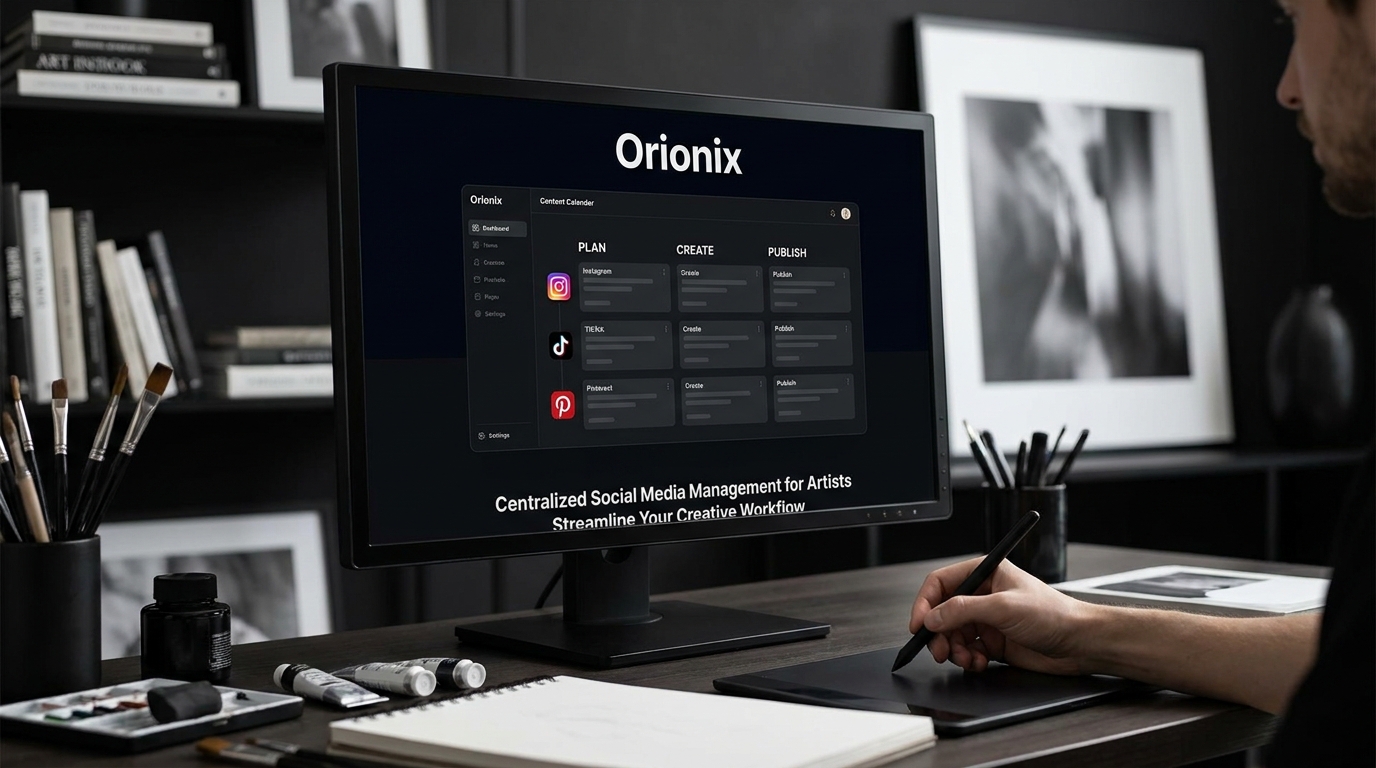
TL;DR: Social media for artists is essential for building an online presence, showcasing portfolios, and connecting with potential buyers. Artists should focus on visual platforms like Instagram and Pinterest, post consistently, engage authentically with followers, use relevant hashtags, and leverage tools like Orionix to efficiently manage multiple social channels from one centralized dashboard.
Frequently Asked Questions
What is the best social media platform for artists to showcase their work?
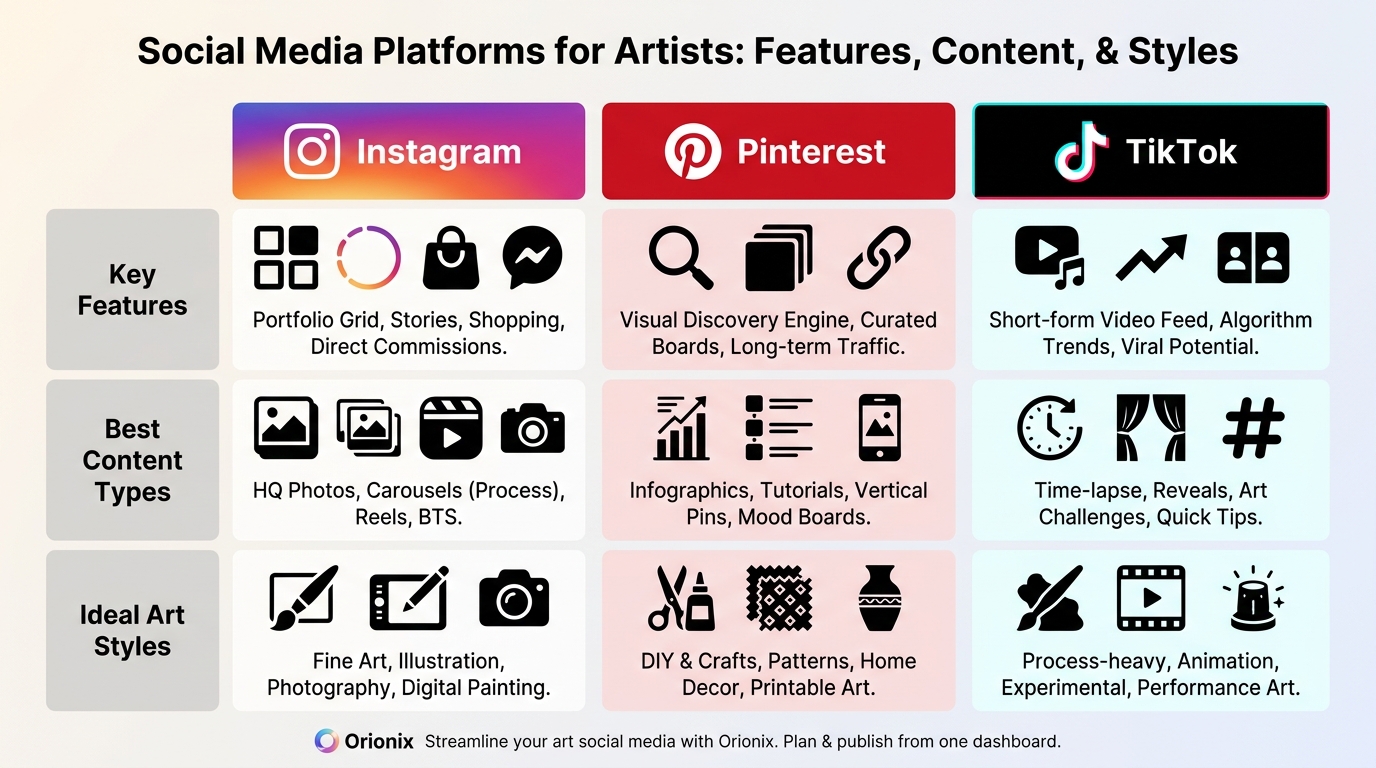
Instagram is widely considered the best social media platform for artists due to its visual-first format and built-in artist community. Pinterest and TikTok are also excellent choices for reaching art enthusiasts. The ideal platform depends on your art style and target audience. Using a centralized content management platform like Orionix allows artists to maintain presence across multiple social media platforms simultaneously without overwhelming their workflow.
How can artists effectively use social media marketing to sell their art?
Artists can leverage social media marketing by consistently posting high-quality images of their work, using relevant hashtags, engaging with followers, and sharing behind-the-scenes content. Successful strategies include posting at optimal times when your audience is most active, running targeted ads, collaborating with other artists, and directing followers to your online store or portfolio. Tools like Orionix streamline this process by managing multiple platforms from one dashboard.
What is the best time to post on Instagram for artists?
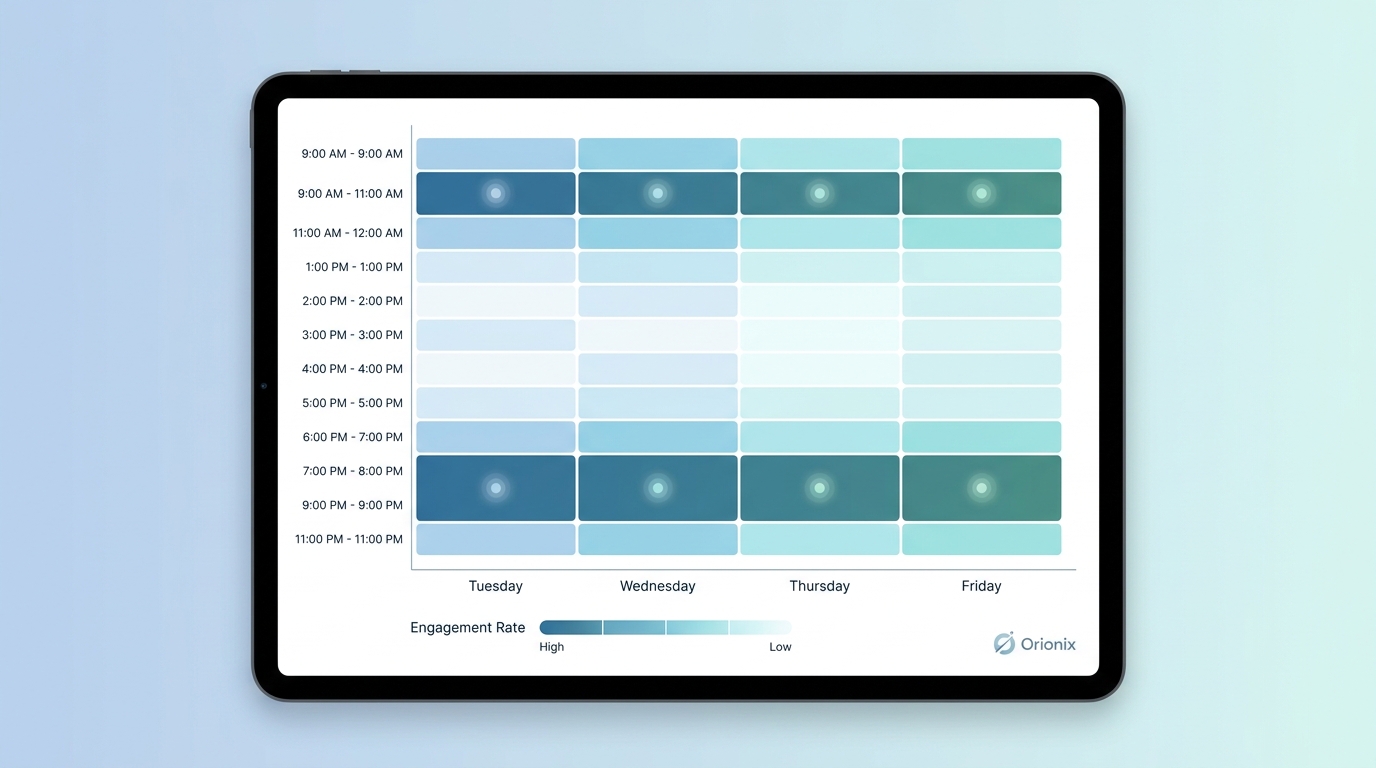
The best times to post on Instagram for artists are typically Tuesday through Friday between 9-11 AM and 7-9 PM EST, when engagement rates are highest. However, optimal posting times vary based on your specific audience location and behavior. Analyze your Instagram Insights to identify when your followers are most active. Content management platforms can schedule posts automatically during these peak engagement windows to maximize visibility.
How often should artists post on social media platforms?
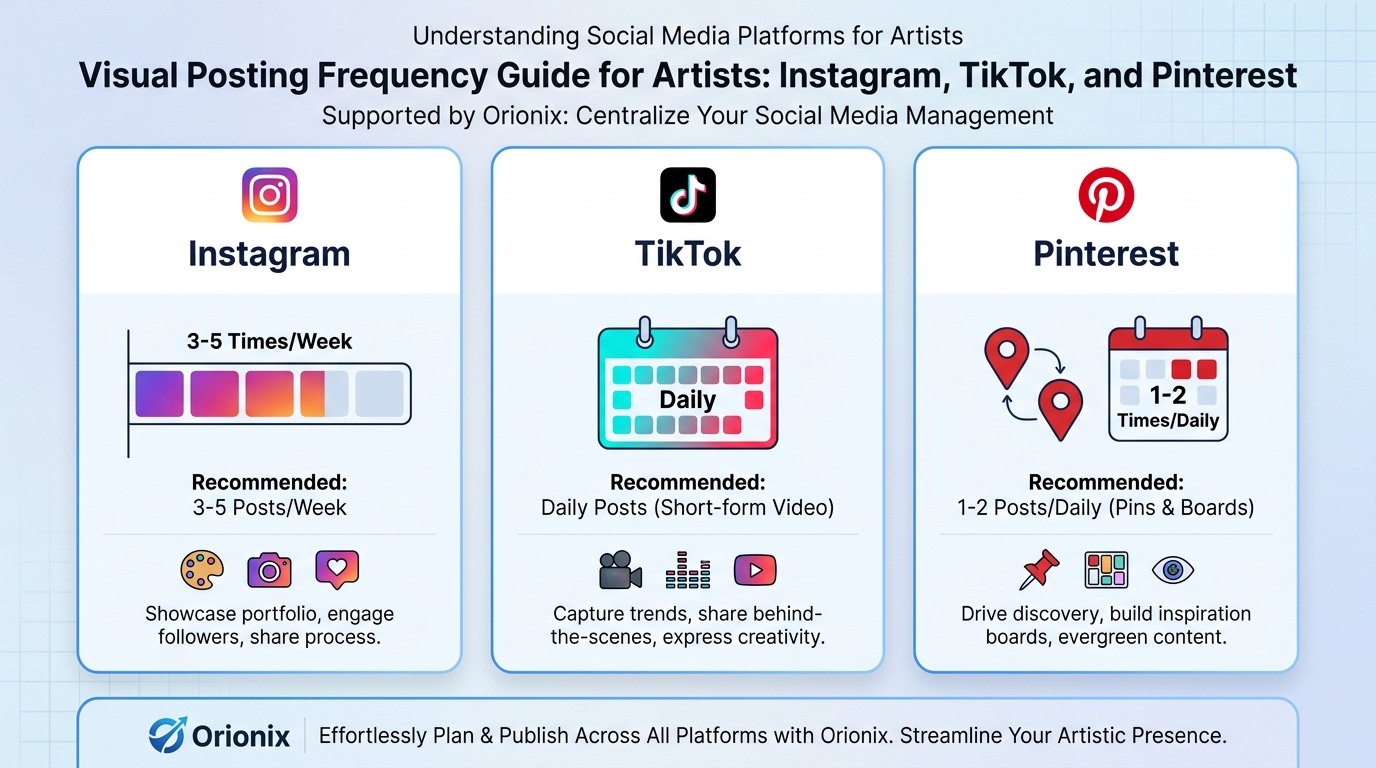
Artists should aim to post 3-5 times per week on Instagram, daily on TikTok, and 1-2 times daily on Pinterest for optimal engagement. Consistency matters more than frequency. Quality content posted regularly performs better than sporadic posting. Using a centralized platform like Orionix helps artists maintain consistent posting schedules across multiple social media channels without dedicating excessive time to content management.
What type of content should artists share on social media for maximum engagement?
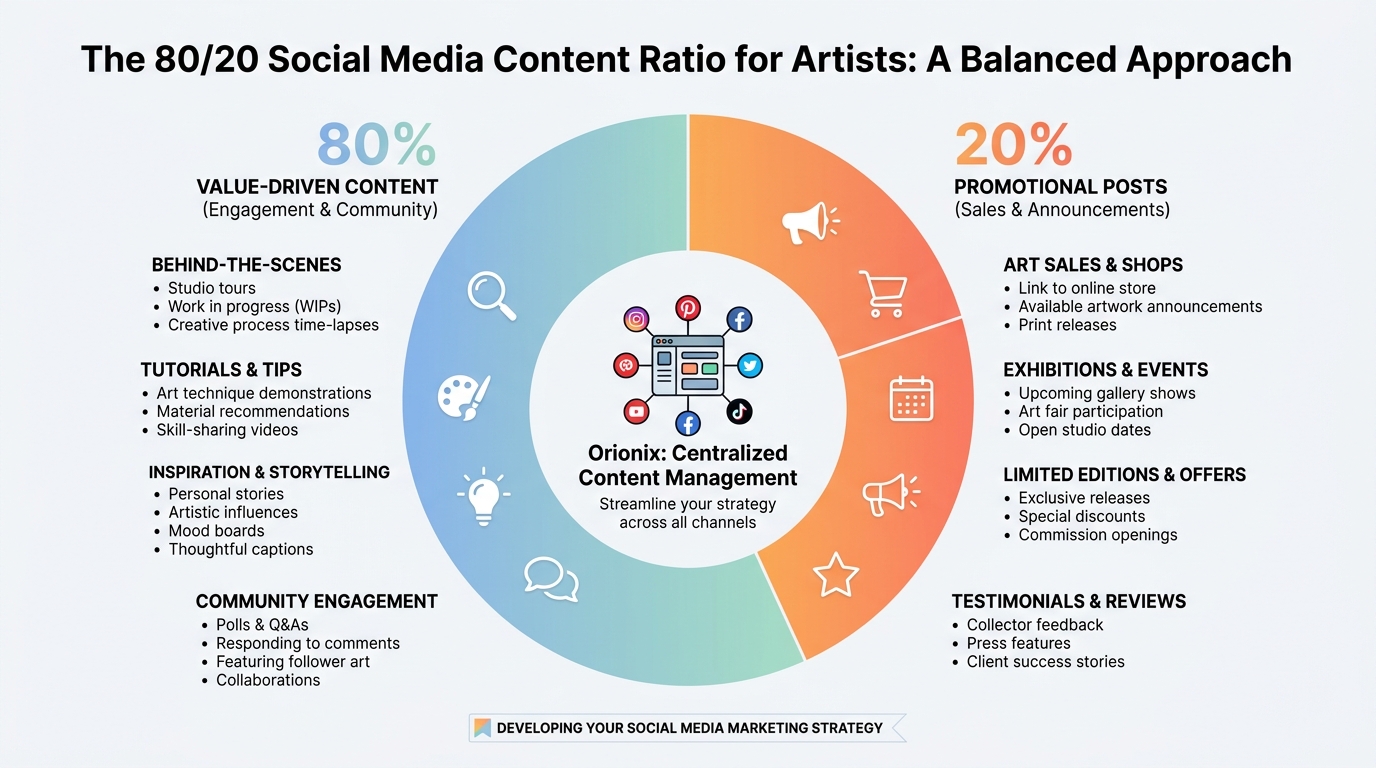
Artists should share a mix of finished artwork, work-in-progress shots, time-lapse videos, behind-the-scenes content, artist stories, and engagement posts like polls or questions. Educational content explaining techniques or inspiration sources also performs well. Aim for 80% value-driven content and 20% promotional posts. Authentic, personal storytelling helps build deeper connections with your audience and differentiates you in the competitive art market.
How do artists manage multiple social media accounts efficiently?
Artists can efficiently manage multiple social media accounts by using centralized content management platforms that allow planning, creating, and publishing content across various channels from a single dashboard. Orionix streamlines this process by eliminating the need to log into each platform separately. Batch-creating content, scheduling posts in advance, and repurposing content across platforms saves significant time while maintaining consistent online presence.
Should artists deactivate or delete underperforming Instagram accounts?
Before deleting an Instagram account, artists should consider deactivating it temporarily to test engagement without it. To deactivate Instagram, go to Settings > Account > Deactivate Account. Deletion is permanent and should only be done if you’re certain. Sometimes rebranding or adjusting your content strategy is more effective than starting over. Evaluate your analytics and audience feedback before making this decision.
What digital marketing strategies work best for emerging artists on social media?
Emerging artists should focus on organic growth strategies including consistent posting, strategic hashtag use, collaborating with other artists, engaging authentically with their community, and creating shareable content. Digital marketing tactics like Instagram Reels, Pinterest SEO, and TikTok trends can increase visibility. Email list building through social media and using analytics to refine strategy are crucial. Affordable tools like Orionix help manage these efforts efficiently across platforms.
Introduction: Why Social Media for Artists Is Essential in 2026
In today’s digital landscape, social media for artists has become an indispensable tool for building careers, connecting with audiences, and monetizing creative work. Whether you’re a painter, musician, photographer, or digital creator, understanding how to leverage social media platforms effectively can mean the difference between obscurity and success. 🎨
The art world has fundamentally shifted from traditional galleries and physical exhibitions to digital-first engagement. Artists who master social media marketing can bypass traditional gatekeepers, build direct relationships with collectors and fans, and create sustainable income streams from their craft.
This comprehensive guide explores proven strategies, platform-specific tactics, and essential tools that will help you transform your artistic practice into a thriving online presence. From content creation to audience engagement, we’ll cover everything you need to know about social media and building your artistic brand.
Understanding Social Media Platforms for Artists
Choosing the Right Platforms for Your Art
Not all social media platforms serve artists equally well. Each platform has unique strengths, audience demographics, and content formats that favor different artistic disciplines. Understanding these distinctions helps you invest your time and energy where it matters most. 📱
Visual artists typically thrive on Instagram, Pinterest, and TikTok, where image and video content dominates. Musicians and performing artists often find success on YouTube, TikTok, and Instagram Reels. Writers and conceptual artists may prefer Twitter (X) and LinkedIn for thought leadership and community building.
| Platform | Best For | Content Type | Audience Engagement |
|---|---|---|---|
| Visual artists, photographers, illustrators | Images, Reels, Stories | High engagement, younger demographics | |
| TikTok | Process videos, performance art, music | Short-form video | Viral potential, Gen Z audience |
| YouTube | Tutorials, long-form content, musicians | Long-form video | Searchable, monetization options |
| Crafts, design, illustration | Images, infographics | High conversion for sales | |
| Commercial artists, designers | Professional content, articles | B2B connections, networking |
Instagram: The Artist’s Primary Platform
Instagram remains the cornerstone platform for most visual artists. With over 2 billion monthly active users, it offers unparalleled reach and engagement opportunities. The platform’s visual-first design naturally showcases artwork, while features like Stories, Reels, and Shopping create multiple touchpoints with your audience.
Understanding how do you delete an instagram account or manage your presence effectively is crucial for maintaining a professional online identity. Sometimes artists need to rebrand or start fresh, making account management knowledge essential.
The best times to post on Instagram vary by audience, but general research suggests weekdays between 10 AM and 3 PM typically see higher engagement. However, analyzing your specific audience insights provides more accurate timing for your followers. ⏰
Developing Your Social Media Marketing Strategy
Defining Your Artistic Brand Identity
Before diving into content creation, establish a clear brand identity that reflects your artistic vision and values. Your social media presence should feel cohesive across all platforms, creating a recognizable aesthetic and voice that resonates with your target audience.
Consider these essential elements when developing your brand:
- Visual consistency: Use consistent color palettes, filters, and composition styles
- Voice and tone: Develop a authentic communication style that reflects your personality
- Content pillars: Identify 3-5 core themes that guide your content creation
- Value proposition: Clearly articulate what makes your art unique and valuable
Content Planning and Creation
Successful social media marketing requires consistent, high-quality content that balances promotional posts with value-driven engagement. The 80/20 rule applies well to artists: 80% of content should educate, inspire, or entertain, while only 20% should directly promote sales or services.
Digital marketing for artists involves understanding content types that resonate:
- Process videos: Show your creative process from concept to completion
- Behind-the-scenes content: Give followers exclusive access to your studio and daily life
- Educational content: Share techniques, tips, and knowledge about your craft
- Finished work showcases: Present completed pieces with context and storytelling
- Personal stories: Connect emotionally by sharing your artistic journey
For comprehensive guidance on creating effective content strategies, explore content marketing blogging techniques that can be adapted for artistic purposes.
Optimizing Posting Schedules
Timing significantly impacts your content’s reach and engagement. While the best time to post on Instagram depends on your specific audience, data suggests that understanding your followers’ active hours maximizes visibility. 📊
Use Instagram Insights or third-party analytics tools to identify when your audience is most active. Generally, posting during these windows increases initial engagement, which signals to the algorithm that your content deserves broader distribution.
Consider using social media management platforms to schedule content in advance, maintaining consistency even during busy creative periods or when inspiration strikes at inconvenient times.
Building and Engaging Your Audience
Growing Your Follower Base Organically
Building an authentic following takes time and strategic effort. Focus on attracting engaged followers who genuinely appreciate your work rather than chasing vanity metrics. Quality always trumps quantity when it comes to building a sustainable artistic career. 🌱
Effective strategies for organic growth include:
- Hashtag research: Learn how do you follow hashtags on Instagram to understand trending topics in your niche
- Consistent posting schedule: Maintain regular content flow to stay visible in followers’ feeds
- Engagement reciprocity: Actively comment on and engage with other artists’ content
- Collaboration opportunities: Partner with complementary artists for cross-promotion
- Community participation: Join art challenges, trends, and community initiatives
For detailed tactics, check out how to gain followers on Instagram for free in 2026 and 7 proven strategies for getting more followers.
Creating Meaningful Engagement
Engagement extends beyond likes and comments—it’s about building genuine relationships with your audience. Respond thoughtfully to comments, ask questions in your captions, and create opportunities for followers to participate in your creative journey.
Interactive content formats that boost engagement include:
- Polls and questions in Instagram Stories
- Caption prompts that encourage comments
- User-generated content campaigns
- Live streaming sessions showing your creative process
- Q&A sessions about your techniques and inspiration
Managing Your Community Effectively
As your audience grows, community management becomes increasingly important. Understanding features like what happens when you restrict someone on Instagram helps maintain a positive, supportive environment for your followers.
Set boundaries and protect your creative space by:
- Establishing clear community guidelines
- Addressing negative comments professionally
- Using platform tools to filter spam and harassment
- Knowing how to unfollow on Instagram to curate your own feed mindfully
Leveraging Social Media Marketing for Revenue
Monetization Strategies for Artists
Social media marketing transforms from a promotional tool into a revenue engine when approached strategically. Artists can monetize their social presence through multiple channels, creating diversified income streams that support their creative practice. 💰
| Method | Platform | Revenue Potential | Best For |
|---|---|---|---|
| Direct sales | Instagram Shopping, Facebook Marketplace | High | Original artwork, prints |
| Commissions | All platforms | High | Custom work, portraits |
| Digital products | Instagram, Pinterest | Medium-High | Templates, presets, tutorials |
| Sponsorships | Instagram, TikTok, YouTube | Medium-High | Established influencers |
| Patreon/Membership | All platforms (external link) | Medium | Exclusive content, community |
| Ad revenue | YouTube, Facebook | Low-Medium | Video content creators |
Building Sales Funnels Through Content
Effective marketing digital marketing strategies guide potential customers through a journey from discovery to purchase. Your social content should strategically move followers through awareness, consideration, and decision stages.
Create a content funnel that includes:
- Awareness content: Shareable, inspiring posts that attract new audiences
- Engagement content: Educational and behind-the-scenes material that builds relationships
- Conversion content: Clear calls-to-action and shopping opportunities
- Retention content: Exclusive updates and appreciation for existing customers
Collaborating with Brands and Galleries
As your social presence grows, opportunities for brand partnerships and gallery representation increase. Document your engagement metrics, audience demographics, and unique value proposition to present to potential partners professionally.
Musicians can explore specific strategies through social media marketing for music artists, which offers tailored approaches for building a fanbase and promoting releases.
Tools and Resources for Artist Social Media Management
Essential Social Media Management Tools
Managing multiple social media platforms efficiently requires the right tools. Professional artists invest in platforms that streamline content creation, scheduling, and analytics, freeing up more time for actual creative work. 🛠️
Consider exploring social media management with Hootsuite or similar platforms that offer comprehensive solutions for content planning and publishing across multiple channels.
Key features to look for in management tools include:
- Multi-platform scheduling capabilities
- Visual content calendar for planning
- Analytics and performance tracking
- Team collaboration features (if working with assistants)
- Mobile accessibility for on-the-go management
Content Creation and Editing Software
High-quality visual content requires professional tools. While your primary art-making software varies by medium, social-specific tools help optimize content for platform requirements and audience preferences.
Popular tools for artists include:
- Canva: Templates and design tools for graphics and promotional materials
- Adobe Creative Suite: Professional-grade editing for photos and videos
- CapCut or InShot: Mobile video editing for Reels and TikTok content
- Lightroom: Photo editing and preset creation for consistent aesthetics
- Procreate: Digital illustration with built-in time-lapse recording
Analytics and Performance Tracking
Data-driven decisions improve your social media marketing effectiveness. Regularly review analytics to understand what content resonates, when your audience engages most, and which platforms drive the best results for your specific goals.
Key metrics to monitor include:
- Engagement rate (likes, comments, shares per post)
- Follower growth rate and demographics
- Reach and impressions trends
- Click-through rates on links
- Conversion rates for sales or inquiries
Understanding SEO and keyword research principles can also help optimize your social profiles and content for discoverability beyond platform algorithms.
Advanced Strategies for Social Media Success
Repurposing Content Across Platforms
Maximize your content investment by adapting material for multiple platforms. A single studio session can generate a YouTube tutorial, Instagram Reels, TikTok videos, Pinterest pins, and blog content—each formatted for its specific platform and audience. ♻️
Learn how do you repost on Instagram to effectively share and repurpose content while maintaining proper attribution and engagement.
Content repurposing strategies include:
- Breaking long videos into short clips for Reels and TikTok
- Creating carousel posts from blog content or tutorials
- Designing Pinterest graphics from Instagram posts
- Transcribing video content into written posts
- Compiling Stories highlights into permanent guides
Leveraging User-Generated Content
Encourage customers and fans to share photos of your work in their spaces or using your products. User-generated content provides authentic social proof while expanding your reach to new audiences through your supporters’ networks.
Create campaigns that incentivize sharing by:
- Developing branded hashtags for customers to use
- Featuring customer photos in your Stories or feed
- Running contests that reward sharing and tagging
- Creating shareable packaging or unboxing experiences
Troubleshooting Common Issues
Technical issues and platform changes are inevitable. Staying informed about common problems helps you respond quickly and maintain your online presence without interruption.
Common issues artists encounter include:
- Understanding why stories aren’t available on Instagram and how to resolve viewing issues
- Recovering from accidental deletions using how to restore deleted posts on Instagram guides
- Knowing what happens if you delete the Instagram app versus deactivating your account
- Learning how to deactivate Instagram temporarily when you need breaks without losing your account
Building a Sustainable Social Media Presence
Avoiding Burnout and Maintaining Creativity
The pressure to constantly create content can drain artistic energy and lead to burnout. Establishing sustainable practices protects your creative wellbeing while maintaining an effective social media presence. 🧘
Strategies for sustainable social media management include:
- Batching content creation during high-energy periods
- Scheduling posts in advance to maintain consistency
- Setting boundaries around social media time and engagement
- Taking planned breaks and communicating them to your audience
- Focusing on quality over quantity in your posting frequency
Staying Current with Platform Changes
Social media platforms constantly evolve their features, algorithms, and best practices. Successful artists stay informed about changes while maintaining their authentic voice and creative vision.
Keep up with platform updates by:
- Following official platform blogs and creator resources
- Joining artist communities that share tips and strategies
- Experimenting with new features early to gain algorithmic favor
- Attending webinars and workshops on social media marketing
- Reading industry blogs like UseOrionix blog for updates and strategies
Diversifying Your Online Presence
While social media platforms are powerful tools, building an audience you own through email lists and your own website creates stability. Platform algorithms and policies change, but your email list remains under your control. 📧
Diversification strategies include:
- Building an email list through newsletter signups
- Creating a professional website or portfolio
- Maintaining presence across multiple platforms
- Developing alternative revenue streams beyond social sales
- Creating downloadable resources that capture contact information
For more insights on building comprehensive digital strategies, explore how to increase website traffic organically to complement your social media efforts.
Learning from Successful Artist Social Media Campaigns
Case Study Insights
Studying successful artists’ social media strategies reveals patterns and techniques you can adapt to your own practice. While every artistic journey is unique, certain principles consistently drive results across different mediums and audiences. 🎯
Common success factors include:
- Authenticity: Sharing genuine stories and maintaining a consistent voice
- Consistency: Regular posting schedules that keep audiences engaged
- Value delivery: Providing educational, inspirational, or entertaining content
- Community building: Actively engaging with followers and creating belonging
- Strategic experimentation: Testing new formats while maintaining brand identity
Industry-Specific Approaches
Different artistic disciplines benefit from tailored approaches. Visual artists emphasize stunning imagery, musicians focus on audio-visual content, and performance artists leverage video platforms for maximum impact.
Restaurants and food artists can learn from social media marketing for restaurants strategies that emphasize visual appeal and experiential content—principles that translate well to other artistic fields.
Measuring Success Beyond Vanity Metrics
True success in social media for artists extends beyond follower counts and likes. Focus on metrics that align with your actual goals: sales conversions, commission inquiries, gallery interest, collaboration opportunities, and meaningful community connections.
Meaningful success indicators include:
- Revenue generated from social media traffic
- Quality of audience engagement (thoughtful comments, shares)
- Professional opportunities arising from your presence
- Growth in email subscribers and website traffic
- Personal satisfaction and creative fulfillment
Professional Development and Career Growth
Social Media Marketing Positions for Artists
Understanding social media deeply can open career opportunities beyond your own artistic practice. Many artists develop expertise that leads to consulting, teaching, or social media marketing positions that complement their creative work. 💼
Career opportunities include:
- Social media manager for galleries or art organizations
- Content creator for art supply brands
- Digital marketing consultant for fellow artists
- Online course instructor teaching social media strategies
- Brand ambassador for creative products and services
Continuous Learning and Skill Development
The digital landscape evolves rapidly, making continuous learning essential. Invest in developing both your artistic skills and your marketing knowledge to stay competitive and relevant.
Valuable learning resources include:
- Online courses on digital marketing and social media strategy
- Industry conferences and networking events
- Books and podcasts about creative entrepreneurship
- Peer learning groups and mastermind communities
- Platform-specific creator education programs
Resources like how to use AI for content creation can help streamline your workflow and enhance your content production capabilities.
Finding Your Niche and Unique Voice
In crowded social media spaces, specificity creates opportunity. Rather than trying to appeal to everyone, identify your unique perspective, style, and audience niche. Focused positioning attracts the right followers and opportunities. 🎨
Develop your niche by:
- Identifying what makes your artistic approach distinctive
- Understanding who benefits most from your work
- Creating content that speaks directly to that audience
- Building expertise and authority in your specific area
- Consistently delivering on your unique value proposition
Conclusion: Transform Your Artistic Career with Strategic Social Media
Social media for artists represents far more than promotional channels—these platforms offer unprecedented opportunities to build careers, connect with audiences worldwide, and create sustainable income from creative work. Success requires strategic thinking, consistent effort, and authentic engagement that honors both your artistic vision and your audience’s needs. ✨
The artists thriving in today’s digital landscape understand that social media marketing isn’t separate from their creative practice—it’s an extension of it. Every post, story, and interaction contributes to building relationships, establishing authority, and creating opportunities that traditional art world structures could never provide.
Whether you’re just beginning your social media journey or looking to optimize an established presence, the strategies outlined in this guide provide a roadmap for sustainable growth. Remember that building an engaged audience takes time, but the investment pays dividends through increased visibility, sales opportunities, and meaningful connections with people who genuinely appreciate your work.
Ready to streamline your social media management and take your artistic career to the next level? Visit UseOrionix to discover how our centralized platform can help you plan, create, and publish content across all your channels from a single dashboard, giving you more time to focus on what you do best—creating amazing art. 🚀
Article created using IntentRank